 ABOUT US
NEWS

MOUNTAIN TO SEA, PAST TO PRESENT
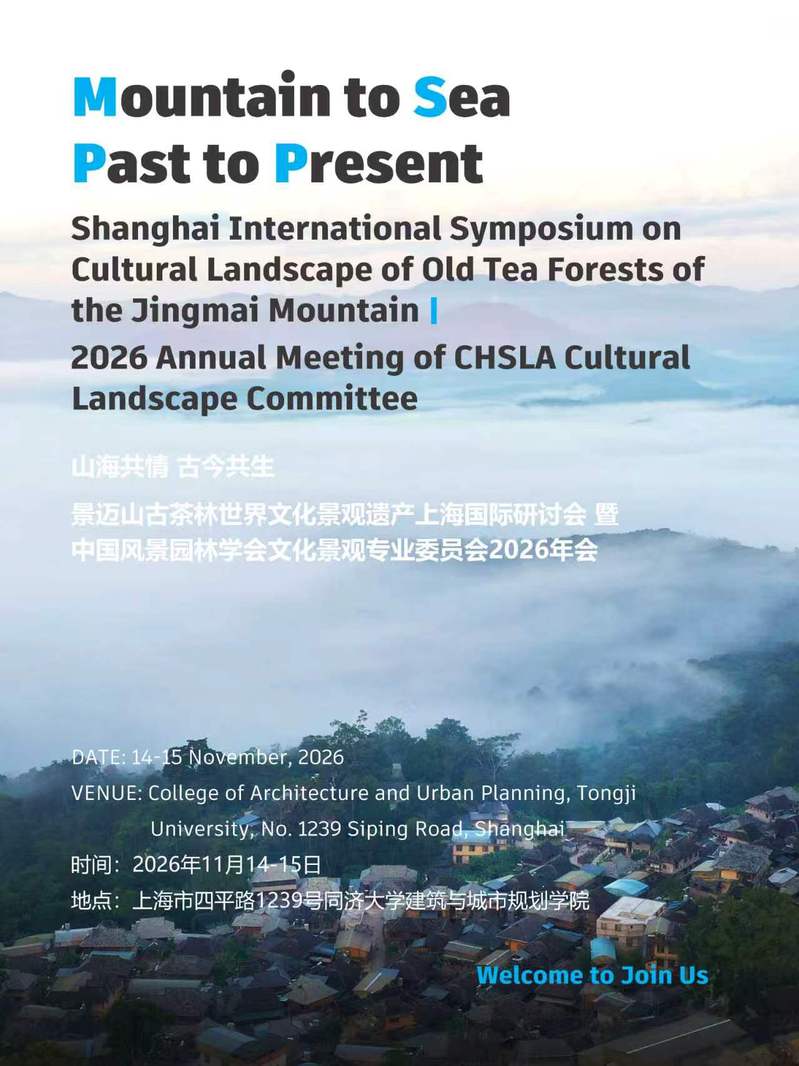
Shanghai International Symposium on Cultural Landscape of Old Tea
Forests of the Jingmai Mountain | 2026 Annual Meeting of CHSLA
Cultural Landscape Committee
【Program】
The Shanghai International Symposium on Cultural Landscape of Old Tea Forests of the Jingmai Mountain — "Mountain to Sea, Past to Present" — together with the 2026 Annual Meeting of the CHSLA Cultural Landscape Committee, will be held at Tongji University in Shanghai on November 14–15, 2026. The symposium is co-hosted by Tongji University and the ICOMOS–IFLA International Scientific Committee on Cultural Landscapes, and co-organized by the College of Architecture and Urban Planning of Tongji University, the CHSLA Cultural Landscape Committee, and the College of Urban and Environmental Sciences of Peking University. The symposium invites leading heritage experts, conservation practitioners, and postgraduate students from China and abroad to participate. The academic programme will include keynote presentations, roundtable meetings, a thematic exhibition, and displays of intangible cultural heritage of the ethnic minorities, and will also hold the 2026 annual meeting of the CHSLA Cultural Landscape Committee. This symposium will advance the research and practice in the conservation of cultural landscape heritage, and promote mutual exchange and appreciation of landscape civilizations between China and the world.
01 EVENT BACKGROUND AND THEME INTERPRETATION
Throughout the long course of human civilization, few landscapes have connected the three dimensions of economic livelihood, ecological wisdom, and cultural belief as profoundly as the relationship between tea and people. The Cultural Landscape of Old Tea Forests of the Jingmai Mountain in Pu'er, Yunnan Province, China, is the embodiment of this relationship. Centered on understory tea cultivation, within a landscape system comprising old tea forests, traditional villages, and protective forest belts, the Blang and Dai peoples and other indigenous communities have sustained a millennium-old wisdom of planting tea trees beneath the forest canopy while preserving the natural ecosystem to the greatest extent—forming a composite agricultural landscape where production, ecology, and daily life are highly coordinated. This ethos of coexistence—taking from nature without over-transforming it—has made the Jingmai Mountain the world's first World Cultural Heritage site themed on tea, offering a living Chinese footnote to the concept of a community of life for humanity and nature.
The significance of the Jingmai Mountain lies in the fact that it epitomizes and gives rise to a host of global issues concerning the shared future of humanity. As a global beverage spanning East and West, tea carries the memory of trade networks and the mutual learning among civilizations; the Jingmai Mountain, as a living specimen, attests to the universal value of tea cultural landscapes as carriers of cultural diversity. In an era of accelerating urbanization, the Jingmai Mountain's rural landscape model—harmonizing production, ecology, and life—offers a reference for the sustainable development of rural heritage worldwide. Moreover, as a landscape that is still growing, still yielding tea, and still enacting faith and daily life, the Jingmai Mountain also brings to the academic frontier the shared human proposition of safeguarding living heritage. Far from being a question confined to China alone, these are universal issues that contemporary heritage governance must confront as a whole. Against this backdrop, this symposium will focus its academic discussions on the following themes:
Value Recognition, Holistic Conservation, and Community Participation regarding Rural Cultural Landscapes. A rural cultural landscape is a composite product shaped by the long-term interaction between humans and nature. Its value goes far beyond the physical space; it embodies the knowledge systems, belief frameworks, and livelihoods passed down through generations within the community. This theme aims to explore how to establish mutually supportive governance pathways among value recognition, holistic conservation, and community empowerment.
Conservation, Monitoring, and Sustainable Development of Tea Cultural Landscapes in Asia. Tea cultural landscapes are a world heritage type that spans East and West, carrying the memory of trade networks and the mutual learning of civilizations. This theme will focus on how to establish a framework of values for tea cultural landscapes through transnational dialogue. By comparing the experiences of tea-producing regions around the world, we hope to identify replicable and scalable global pathways that balance the conservation of the heritage itself, the monitoring of ecological health, and the support of sustainable community livelihoods.
Safeguarding Living Heritage and Constructing Cultural Identity in Multi-ethnic Regions. Multi-ethnic regions are often rich reservoirs of cultural diversity and among the most concentrated areas of living heritage. This theme will explore how, within the context of multi-ethnic cohabitation, to help communities build and strengthen their cultural identity amid modernisation while safeguarding cultural diversity, so that heritage conservation becomes a force for uniting ethnic sentiments and fostering social harmony, thereby offering experience and inspiration for heritage governance in multi-ethnic regions.
Digital Technology and the Communication of World Heritage Values and Public Education. Digital technology is profoundly reshaping the ways in which the values of heritage are understood, communicated, and taught. This theme will focus on how digital technology can empower the interpretation, communication, and public education of cultural landscape World Heritage Sites, exploring the transformative pathway from professional conservation to public awareness, and from static display to interactive experience, so that the value of heritage can transcend geographical and generational boundaries and be seen, understood, and actively safeguarded by a broader public.
We look forward to building on China's World Heritage Sites and leveraging digital technology as a bridge, so that researchers worldwide can share the living heritage experience of Jingmai Mountain, and so that the value of heritage may be seen, understood, and safeguarded by more people in the digital age—together, seeking a sustainable future of past coexisting with present for cultural landscapes across the world.
02 EVENT OVERVIEW
Date: November 14–15, 2026
Venue: College of Architecture and Urban Planning, Tongji University, 1239 Siping Road, Shanghai, China
Hosted by:
ICOMOS-IFLA International Scientific Committee on Cultural Landscapes
Chinese Society of Landscape Architecture (CHSLA) Cultural Landscape Committee
Tongji University
Co-organized by:
College of Architecture and Urban Planning, Tongji University
College of Urban and Environmental Sciences, Peking University
Supported by:
Shanghai Society of Landscape Architecture
World Heritage Institute of Training and Research for the Asia and the Pacific Region under the auspices of UNESCO, Shanghai Centre (WHITR-AP Shanghai)
Research Base for the Inheritance and Development of Chinese National Architectural Culture, Tongji University
Media Partners:
Chinese Landscape Architecture
Landscape Architecture
Landscape Architecture Journal
Built Heritage
03 EVENT SCHEDULE
Agenda (continuously updated):
Date/Time | Agenda | Venue |
November 14 (Morning) | 08:30-09:30 Opening Ceremony | Auditorium A106, Wenyuan Building, CAUP |
09:30-11:30 Keynote Presentations | ||
November 14 (Noon) | 12:00-13:00 Annual Meeting of the Cultural Landscapes Committee (for members of the committee) | WHITRAP Level 3, Wenyuan Building |
November 14 (Afternoon) | 13:30-14:30 Cultural Landscape of Old Tea Forests of the Jingmai Mountain Keynote Presentations | Auditorium A106, Wenyuan Building, CAUP |
14:30-15:00 Guided Tour of the World Heritage Thematic Exhibition on the Jingmai Mountain Ancient Tea Forests | Bell Hall Exhibition Space, CAUP | |
15:00-18:00 Exhibition of the Tea Culture of the Ethnic Minorities of the Jingmai Mountain | Bell Hall Exhibition Space, CAUP | |
November 15 (Morning) | 08:30-12:00Keynote Presentations | Auditorium A106, Wenyuan Building, CAUP |
November 15 (Afternoon) | 13:30-15:00 Roundtable Meeting on International Cooperation in Cultural Landscape Conservation (for invited guests) | WHITRAP Level 3, Wenyuan Building |
13:30-15:00 Youth Forum on Cultural Landscape Conservation | Auditorium A106, Wenyuan Building, CAUP | |
15:00-16:00 Closing Ceremony | Auditorium A106, Wenyuan Building, CAUP |
Academic Extension Activities:
During November 16–19, 2026, visiting experts from China and abroad will carry out a series of research collaborations and teaching activities at Tongji University centered on cultural landscape heritage conservation. These include demonstration teaching sessions on cultural heritage conservation, research team seminars, on-site workshops on rural landscape heritage, and public lectures on cultural heritage conservation and sustainable development.
04 CHAIR OF THE SYMPOSIUM ACADEMIC COMMITTEE
FENG HAN | ICOMOS-IFLA International Scientific Committee on Cultural Landscapes
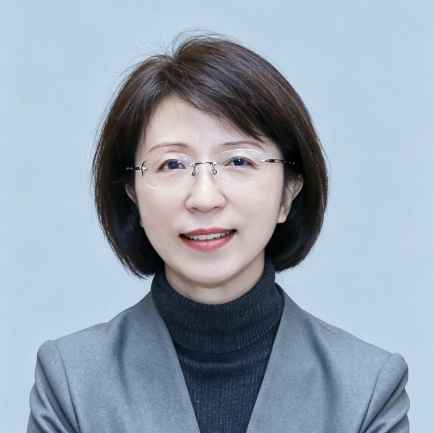
Professor and Doctoral Supervisor at Tongji University; Vice-President of the ICOMOS-IFLA International Scientific Committee on Cultural Landscapes (ISCCL); Director of the IFLA Working Programme 09 -Heritage; and Expert of the World Commission on Protected Areas (WCPA) of the International Union for Conservation of Nature (IUCN). She has long worked at the forefront of World Heritage cultural landscape conservation, dedicating herself to the theories, methods and practices of cultural landscape and world heritage conservation. She has led numerous UNESCO World Heritage global demonstration projects, China pilot projects, and master plans for World Heritage sites, and has been awarded the UNESCO World Heritage Education Innovation Award, the UNESCO Sustainable Development Award, the First Prize of the National Outstanding Urban and Rural Planning and Design Award, and the First Prize of the Science and Technology Progress Award of the Chinese Society of Landscape Architecture.
CAROLINA CASTELLANOS | UNESCO WHITRAP (Shanghai)
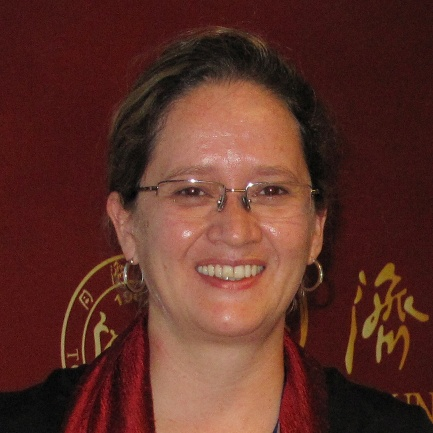
Currently Head of Research Unit at WHITR-AP Shanghai. For the past 30 years, she has been serving as a consultant for UNESCO World Heritage Centre, ICCROM, ICOMOS, IUCN, the World Monuments Fund, Getty Conservation Institute and other international heritage organizations as well as national government agencies, covering a variety of issues from management system design to cultural heritage policymaking. She has presided over heritage planning projects, using heritage as the driving force and promoting factor of sustainable development, and carried out field protection projects around the world. She served as World Heritage Advisor for ICOMOS for over a decade, focusing on the protection and management of World Heritage worldwide, and carried out several reactive monitoring and technical assistance missions for this purpose.
CHEN YANG | Chinese Society of Landscape Architecture Cultural Landscape Committee

Associate Professor and doctoral supervisor at Tongji University. Chair of the CHSLA Cultural Landscape Committee; Expert Member of the ICOMOS-IFLA International Scientific Committee on Cultural Landscapes and China Representative on its Committee of Voting Members; Expert Member of the ICOMOS International Scientific Committee on Cultural Heritage Documentation (CIPA); Getty Scholar for 2026–2027. His research and practice focus on the conservation and management planning of cultural landscapes, with a particular interest in the intelligent conservation of landscape heritage. He has led digital conservation projects at multiple World Heritage Sites and national heritage sites, and has been awarded the Second Prize of the OWH International Competition on World Heritage Digital Conservation, and the UNESCO World Heritage Education Innovation Award.
05 INVITED GUESTS AND SPEAKERS (To be updated)
Invited International Guests:
PETER DEBRINE(online)| UNESCO World Heritage Centre
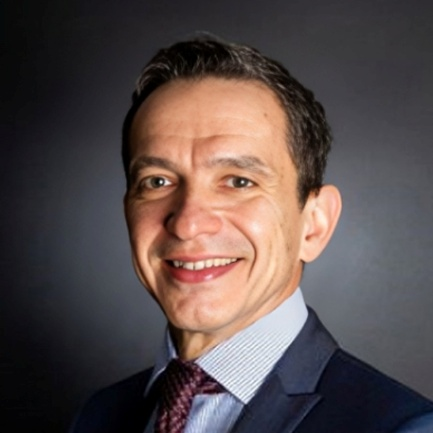
Currently a Senior Programme Officer at the UNESCO World Heritage Centre and Head of the World Heritage and Sustainable Tourism Programme. Since 2011, he has led the UNESCO flagship initiative, the World Heritage and Sustainable Tourism Programme, serving as the principal designer and driving force behind this global strategy. He spearheaded the development of the digital platform World Heritage Journeys and successfully led major transnational projects such as the Sustainable Tourism Strategy for the Silk Road Heritage Corridor.
MÓNICA LUENGO | ICOMOS-IFLA International Scientific Committee on Cultural Landscapes
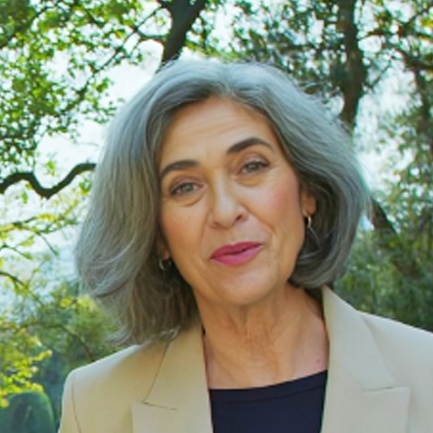
International Council on Monuments and Sites (ICOMOS) Chief Scientist for the Thematic Study on Asian Tea Cultural Landscapes; former President and Honorary Member of the ICOMOS–IFLA International Scientific Committee on Cultural Landscapes (ISCCL), and former Vice-President of the Spanish National Committee of ICOMOS. She has long devoted herself to the theoretical research, value assessment, inventorying, conservation and management of cultural landscapes, as well as advisory work on World Heritage nominations, and has gained extensive experience in teaching, lecturing and project practice around the world.
BRUNO ANDRE GOMES MARQUES | IFLA
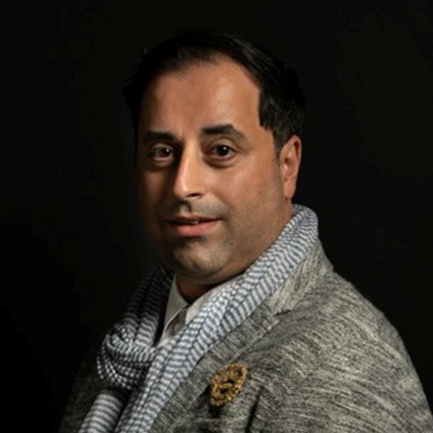
Currently President of the International Federation of Landscape Architects (IFLA) and Deputy Dean of the Faculty of Architecture and Design Innovation at Victoria University of Wellington, New Zealand. He has long undertaken academic leadership in research development and disciplinary building, curriculum and programme planning, and strategic operational management. His research focuses on place-making that integrates Indigenous methodologies into participatory design and landscape restoration, with particular attention to the deeper connections between landscape, cultural identity and human health and wellbeing. His research and practice draw on interdisciplinary collaboration across architecture, urban design, geography, industrial design, environmental psychology and physiotherapy, engaging objectively in the delivery of social, cultural and physical design outcomes.
GAMINI WIJESURIYA | UNESCO WHITRAP (Shanghai)
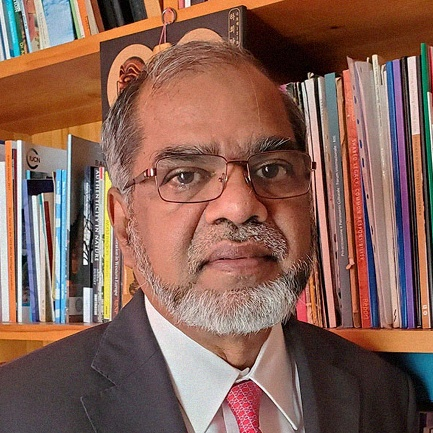
Currently Senior Advisor to the UNESCO Regional Centre for World Heritage Training and Research in the Asia-Pacific Region (Shanghai), and former Deputy World Heritage Coordinator at the International Centre for the Study of the Preservation and Restoration of Cultural Property (ICCROM). He is a pioneer and global advocate of the living heritage and people-centered conservation paradigm; in 2021 he received the ICCROM Award and was named a pioneer of world heritage by UNESCO. With over 45 years of professional experience, he has directly advised the UNESCO World Heritage Committee and led the development of core global capacity-building strategies and resource manuals.
WATARU ONO | ICOMOS CIIC
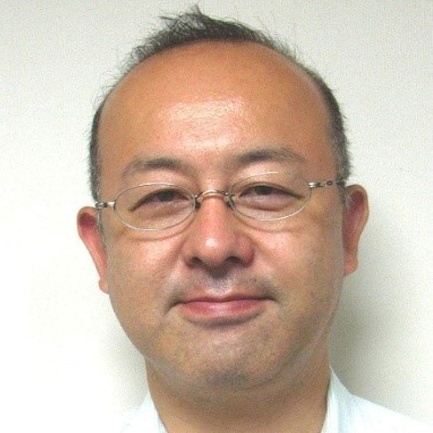
Currently a Board Member of the Japanese National Committee of ICOMOS, an Expert Member of the ICOMOS–IFLA International Scientific Committee on Cultural Landscapes (ISCCL), and Secretary-General of the ICOMOS International Committee on Cultural Routes (CIIC); he also serves as a Heritage Conservation Advisor at PREC Research Institute in Tokyo, Japan. With over 30 years of professional experience in the field of cultural heritage conservation, he has devoted himself in particular to research and practice on the conservation and sustainable development of cultural landscapes and cultural route heritage.
MARIO SANTANA QUINTERO | UNESCO Digital Twin of World Heritage

Currently Co-Chair of the UNESCO Chair on the Digital Twin of World Heritage, and Full Professor at Carleton University, Canada; former Vice-President and Secretary-General of the International Council on Monuments and Sites (ICOMOS). He is an internationally recognised researcher and a standard-setter in the digital documentation, modelling and information management of cultural heritage. Throughout his career he has led major heritage digitalisation projects across 38 countries worldwide, secured nearly CAD 7 million in competitive research funding, and mentored numerous high-calibre professionals at the international level.
HATTHAYA SIRIPHATTHANAKUN | SEAMEO SPAFA
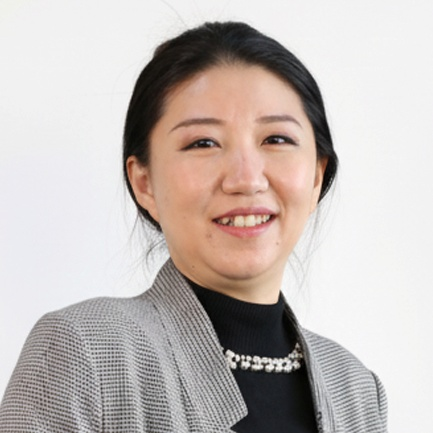
Currently Director of the SEAMEO Regional Centre for Archaeology and Fine Arts (SPAFA) and Secretary-General of the ICOMOS Thai National Committee; former ICOMOS Board Member. As the head of a UNESCO-recognised intergovernmental professional body in Southeast Asia, she serves as the primary focal point for policy coordination, capacity building and project implementation in cultural heritage conservation across the region. She has led a series of heritage conservation and disaster risk management projects covering Myanmar, Laos and Brunei, and built a professional network spanning Southeast Asia.
ONA VILEIKIS TAMAYO | ICOMOS CIPA

Currently Secretary-General of the ICOMOS International Scientific Committee for Heritage Documentation (CIPA), and Documentation Head for the Historic Environment at the Department of Culture and Tourism of Abu Dhabi. She has long worked in heritage conservation at international institutions such as UNESCO, ICOMOS, the International Institute for Central Asian Studies (IICAS), the World Bank and the World Monuments Fund, with expertise covering the implementation of the Convention Concerning the Protection of the World Cultural and Natural Heritage, heritage conservation and adaptive reuse, and Heritage Impact Assessment (HIA).
Invited Chinese Guests:
The list of domestic guests will be continuously updated in subsequent announcements.
06 INTRODUCTION TO THE THEMATIC EXHIBITION
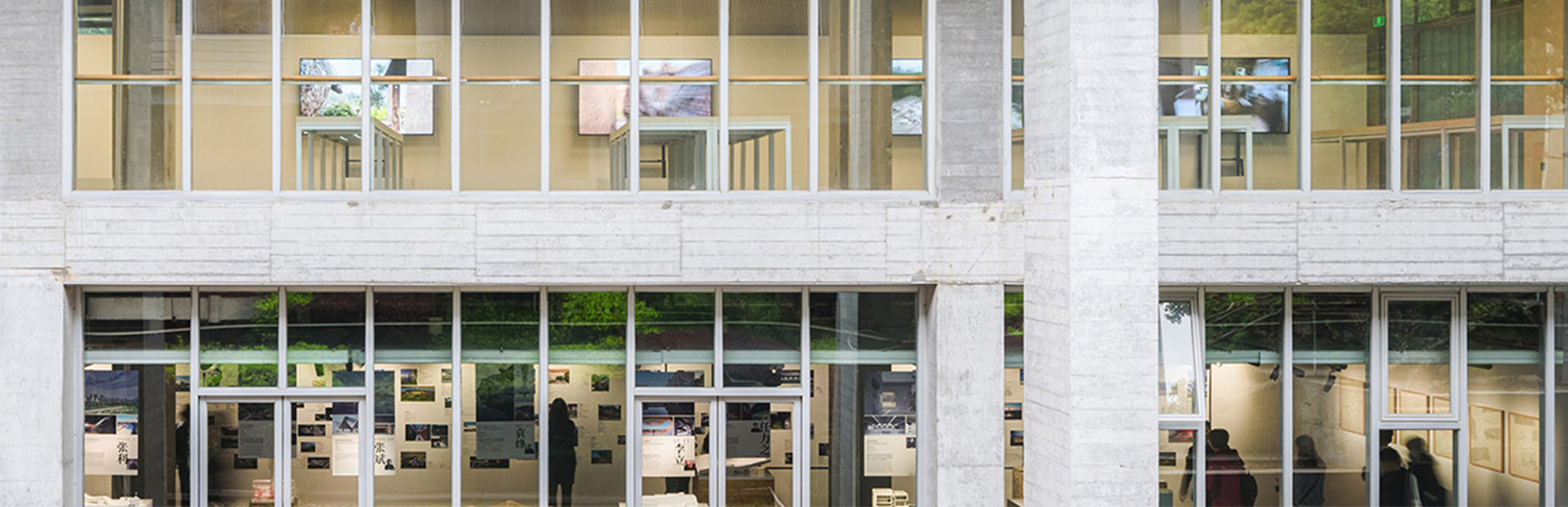
This exhibition is co-curated by the College of Urban and Environmental Sciences, Peking University, and the College of Architecture and Urban Planning, Tongji University. Through rich images and texts, it presents the heritage components and Outstanding Universal Value of the Cultural Landscape of Old Tea Forests of the Jingmai Mountain in Pu'er, introducing the heritage characteristics of the Jingmai Mountain ancient tea forests from the perspectives of historical culture and ecological wisdom. It also interprets the folk culture and traditional villages of Jingmai Mountain, and, from a global perspective and a Chinese viewpoint, presents the origin and evolution of tea plants of the genus Camellia. From the perspective of World Heritage nomination, the exhibition further provides a detailed introduction to the nomination journey of the Cultural Landscape of Old Tea Forests of the Jingmai Mountain, in light of the World Heritage evaluation criteria.
Venue: Bell Hall Exhibition Space, College of Architecture and Urban Planning, Tongji University
Dates: November 14–30, 2026
(Specific arrangements for the exhibition are subject to the final event notice.)
07 EXHIBITION OF THE TEA CULTURE OF THE ETHNIC MINORITIES OF THE JINGMAI MOUNTAIN
The Jingmai Mountain is home to such long-settled ethnic groups as the Blang and Dai peoples, who have cultivated a thousand years of ecological wisdom embodied in the principle of coexistence of forest and tea, harmony between people and land. This exhibition invites representatives of the local ethnic minorities and indigenous peoples of the Jingmai Mountain to present, through the thread of tea culture, the living landscape and cultural beliefs of the ancient tea mountains by way of displays and sharing. The programme features tea culture displays, ethnic costumes, traditional songs and instrumental music, as well as folk music and dance, offering visitors a close-up experience of the multi-ethnic wisdom of coexistence of forest and tea, harmony between people and land on the Jingmai Mountain, and an appreciation of the cultural depth of the Chinese nation—diverse yet unified, mutually enriching through exchange and integration.
Venue: Bell Hall Exhibition Space, CAUP, Tongji University
Time: 15:00–18:00, 14 November 2026
(Specific arrangements for the exhibition are subject to the final event notice.)
08 REGISTRATION AND PAYMENT
Registration Fee
Registration Period | Regular/Full Rate | CHSLA Members/ Discounted Rate | Students |
Early-bird (before 30 October) | ¥1,280 | ¥1180 | ¥880 |
After 30 October/ On-site registration | ¥1,680 | ¥1580 | ¥1280 |
Note: The conference fee covers group meals and conference materials during the event; it does not include travel or accommodation expenses. Attendees are responsible for booking their own accommodation. Apart from the working meals arranged by the conference, all other meals are at the attendees' own expense.
Registration:
Details regarding registration and payment will be announced in a subsequent notice; please stay tuned.
09 EVENT ORGANISING TEAM
Registration Team Lead:
Associate Prof. ZHOU Hongjun | Tel: +86-15861107151, Email: 35558277@qq.com
Forum Coordination Team Lead:
Associate Prof. DAI Daixin | Tel: +86-13601889081, Email: daidaixin@tongji.edu.cn
Conference Secretariat Team Lead:
Ms. CHEN Ying | Tel: +86-21-65983044

NO.1239 Rd. Siping, SHANGHAI


