 ABOUT US
ABOUT US


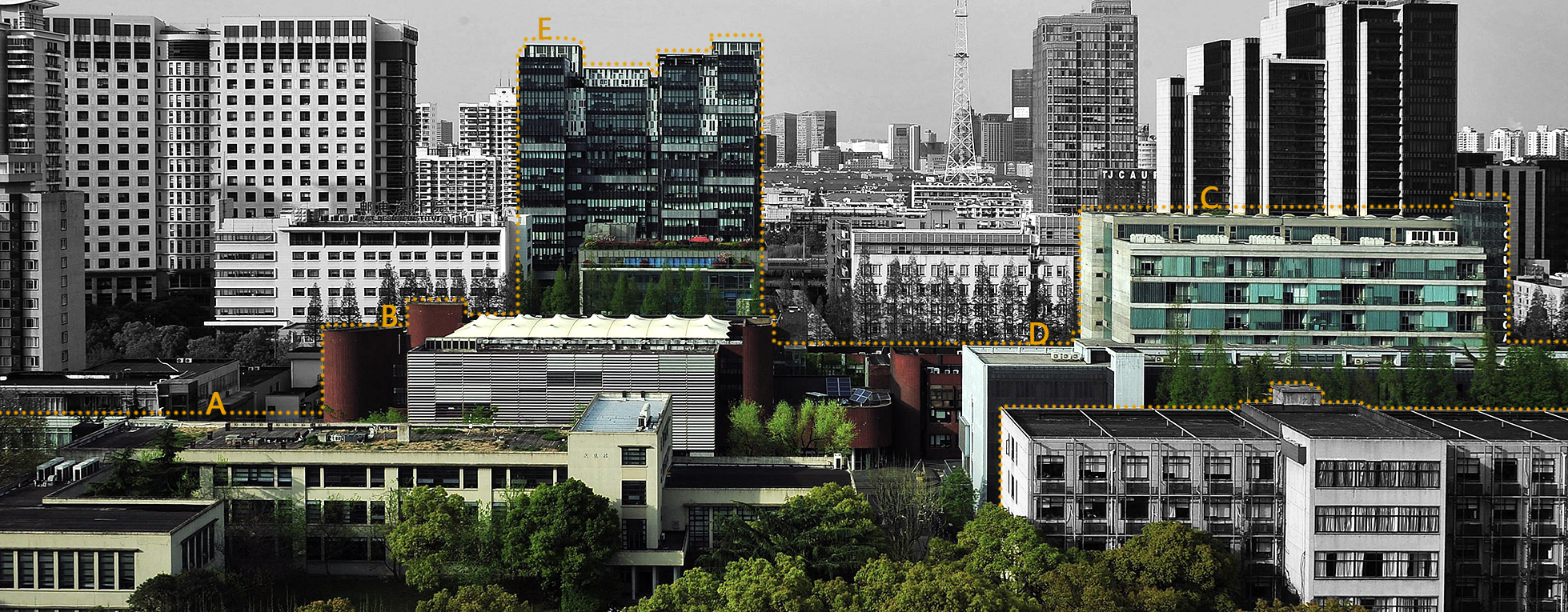
The College of Architecture and Urban Planning (CAUP) of Tongji University boasts a long and rich history that can be traced back to the former Department of Architecture. During the university and college system restructuring in 1952, the Department of Architecture was formed by consolidating the following: the Department of Civil Engineering at Tongji University, the Department of Architecture at St. John’s University and the Department of Architecture at Hangchow University and drew a part of its faculty from the Department of Civil Engineering at Fudan University, the Department of Civil Engineering at Shanghai Jiao Tong University and state-run Hangzhou National College of Art. In 1986, it was renamed the College of Architecture and Urban Planning. CAUP offers a broad range of academic programs with complete teaching and research framework.
The College of Architecture and Urban Planning (CAUP) is currently offering five undergraduate programs in architecture, urban and rural planning, landscape architecture, Conservation of Historic Architecture and urban design, three first-level doctoral programs in architecture, urban and rural planning, and landscape architecture, and six academic and professional master's degree programs.
The college values basic research, practice, innovation, diversity and openness, aiming to train students to be well-rounded in terms of knowledge, ability and personality. It has four programs listed among national first-class undergraduate programs, including architecture, urban and rural planning, landscape architecture, and Conservation of Historic Architecture.
For many years, the college has adhered to the concept of “integrating government, industry, academia, and research; serving national development; fostering interdisciplinary innovation; and embracing global diversity”. It focuses on the comprehensive development of “knowledge, competence, and character” in talent cultivation. The programs in Architecture, Urban and Rural Planning, Landscape Architecture, Historic Building Preservation Engineering and Building Environment and Energy Application Engineering have been listed as national first-class undergraduate programs, while Urban Design has been recognized as a national-level Emerging Engineering Education program. Advancing the digital intelligence transformation, the college has established a foundational digital intelligence curriculum for all programs and launched the Digital-Intelligent Spatial Design Interdisciplinary Innovative Talent Experimental Class.
The college has 235 full-time faculty members, 7 full-time advisors, 15 teaching assistants, 21 administrative staff members, and 102 full-time scientific researchers and postdoctoral researchers. There are currently 816 full-time undergraduate students, 1041 graduate students, 452 doctoral students, and 73 part-time students, totaling 2382 students, including 241 international students. It is one of the largest and most international colleges of architecture and urban planning in the world.
Undergraduate Programs
Architecture
Urban and Rural Planning
Landscape Architecture
Conservation of Historic Architecture
Urban Design
Building Environment and Energy Application Engineering
Master's Programs
Architecture (Academic Degree)
Town and Country Planning (Academic Degree)
Architecture (Professional Degree)
Urban and Rural Planning (Professional Degree)
Landscape Architecture (Professional Degree)
Heating, Gas Supply, Ventilating and Air Conditioning Engineering (Academic Degree)
Civil and Hydraulic Engineering (with specializations in Smart Environmental Construction and Control, AI Algorithms and Digital Design for Energy Systems, and High-Efficiency HVAC Systems) (Professional Degree)
Doctoral Programs
Architecture (Academic Degree)
Urban and Rural Planning (Academic Degree)
Landscape Architecture (Professional Degree)
Heating, Gas Supply, Ventilating and Air Conditioning Engineering (Academic Degree)
Resources and Environment (with specializations in Architectural Design, Urban and Rural Planning, Smart Environmental Construction and Control, AI Algorithms and Digital Design for Energy Systems, and High-Efficiency HVAC Systems) (Professional Degree)
Double Bachelor's Degree Programs
Architecture - Applied Physics
Urban and Rural Planning - Law

NO.1239 Rd. Siping, SHANGHAI


