 ABOUT US
NEWS

On the morning of September 16, the 2026 China–Austria Four-University International Joint Design Workshop opened at Building B, the College of Architecture and Urban Planning (CAUP), Tongji University. Thirty faculty and students from TU Wien (Austria), Southeast University, Shenzhen University, and Tongji University have gathered at the College to embark on a nine-day exploration of urban regeneration in Shanghai.
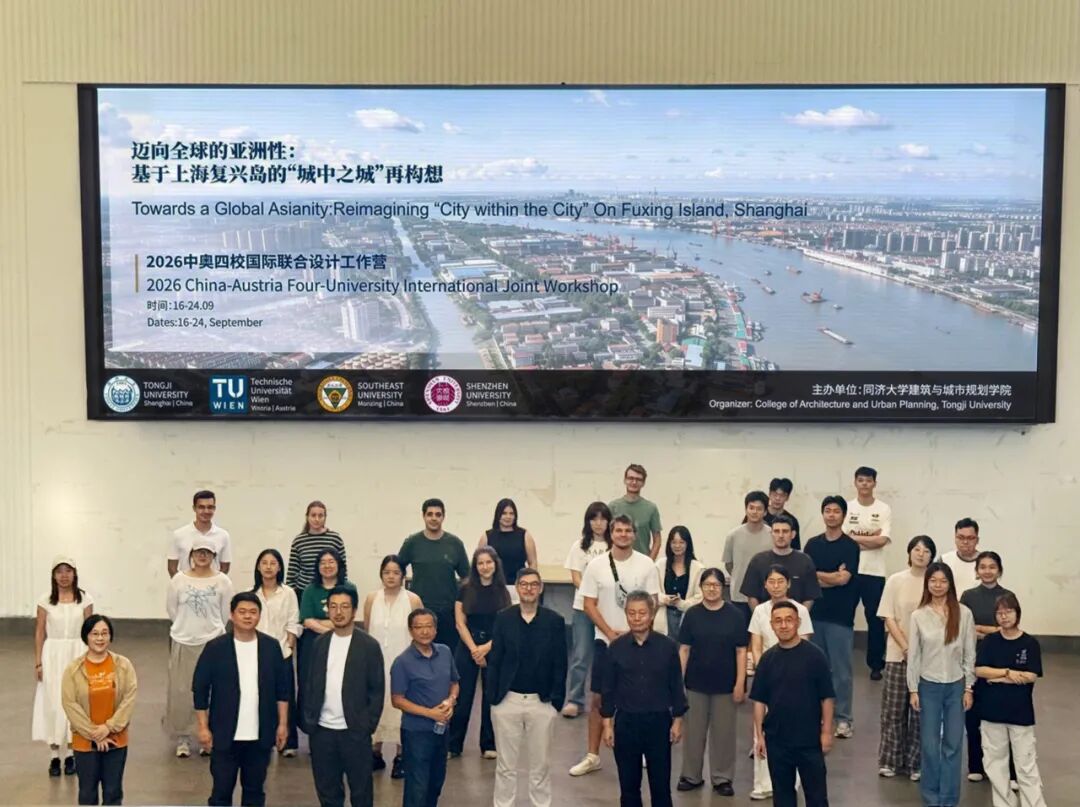
The Opening Ceremony
The opening ceremony was chaired by Yiming Wang, Assistant Professor at CAUP. Chen Chen, Professor and Vice Dean of CAUP in charge of international affairs; Sun Tongyu, Professor at CAUP; Kurt Weninger, Senior Lecturer at TU Wien; Tang Bin, Professor at Southeast University; Yang Zhengyuan, Associate Professor at Shenzhen University; Zhang Yuting, Director of CAUP’s International Affairs Office; and all participating students attended the ceremony.
Vice Dean Chen Chen delivered the opening address, extending a warm welcome to the visiting faculty and students and outlining the College’s longstanding strengths and future vision in international education and cross-national design pedagogy. Subsequently, Dr. Kurt Weninger, Professor Sun Tongyu, Professor Tang Bin, and Associate Professor Yang Zhengyuan took turns to speak, reviewing the workshop’s history, sharing their experiences and reflections from previous editions, encouraging the students to treasure this rare opportunity for cross-institutional and cross-border collaboration, and expressing their high expectations for the outcomes of this workshop.
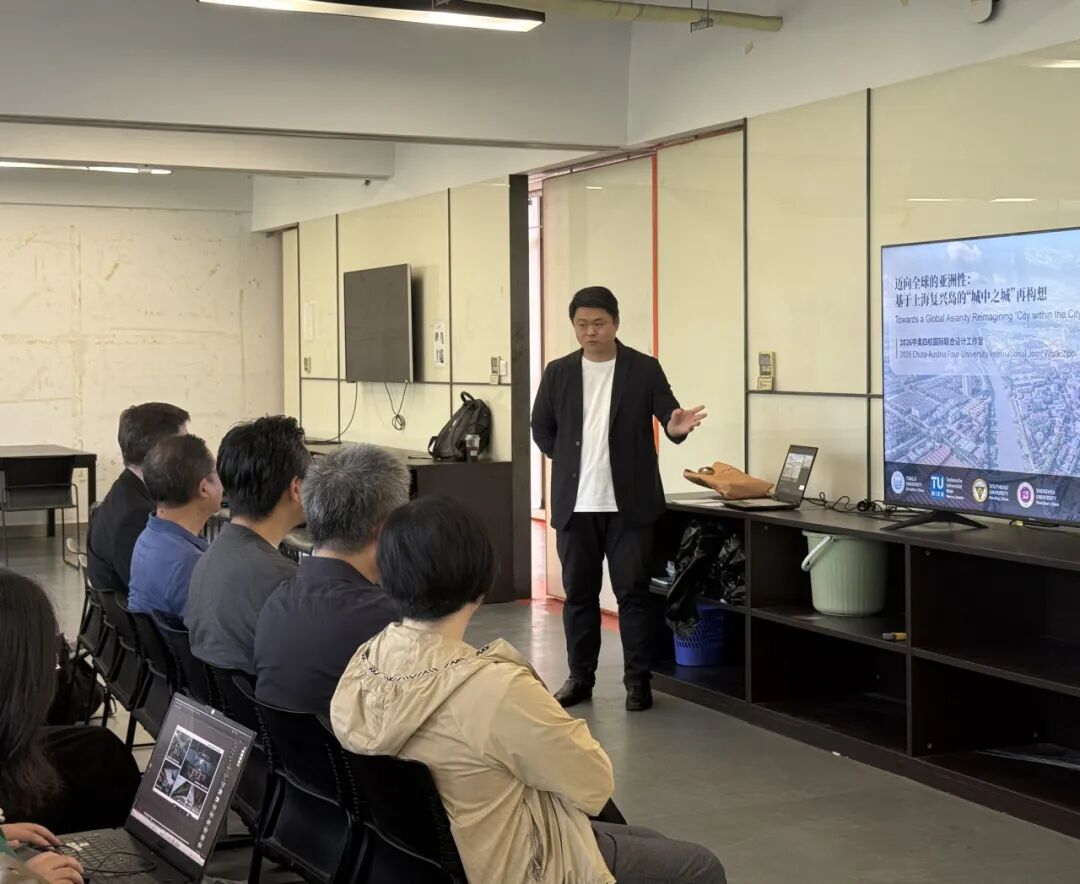
Vice Dean Prof. Chen Chen delivering opening address
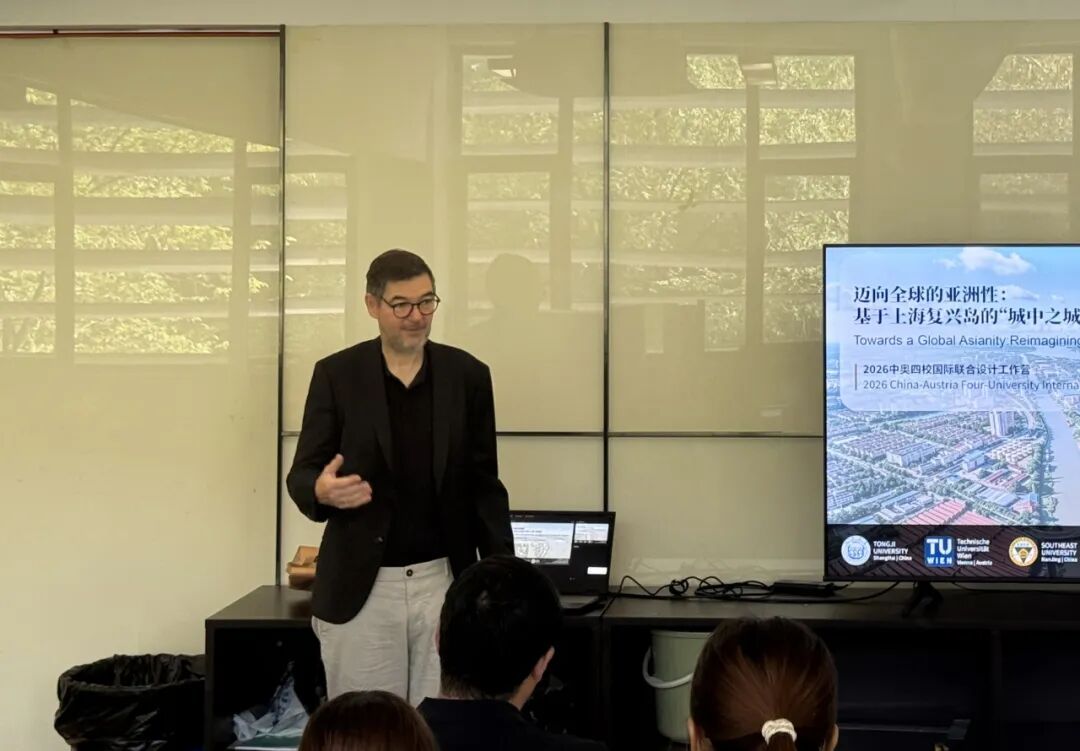
Dr. Kurt Weninger making a speech
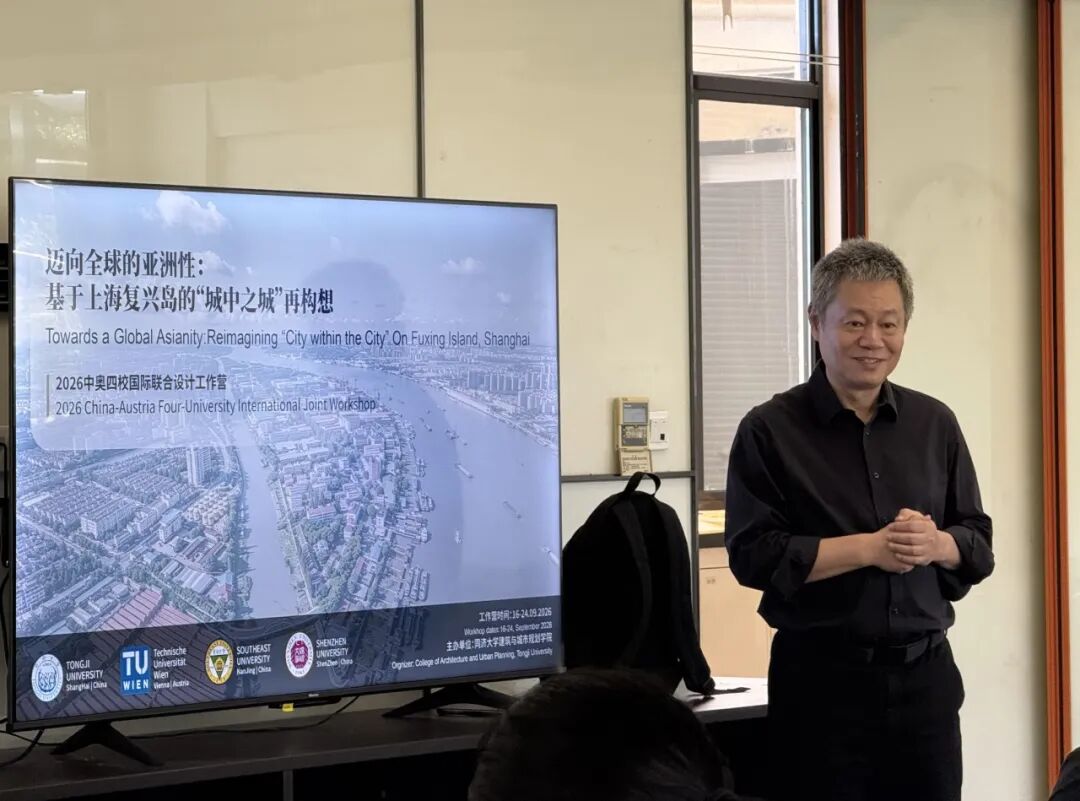
Prof. Sun Tongyu making a speech
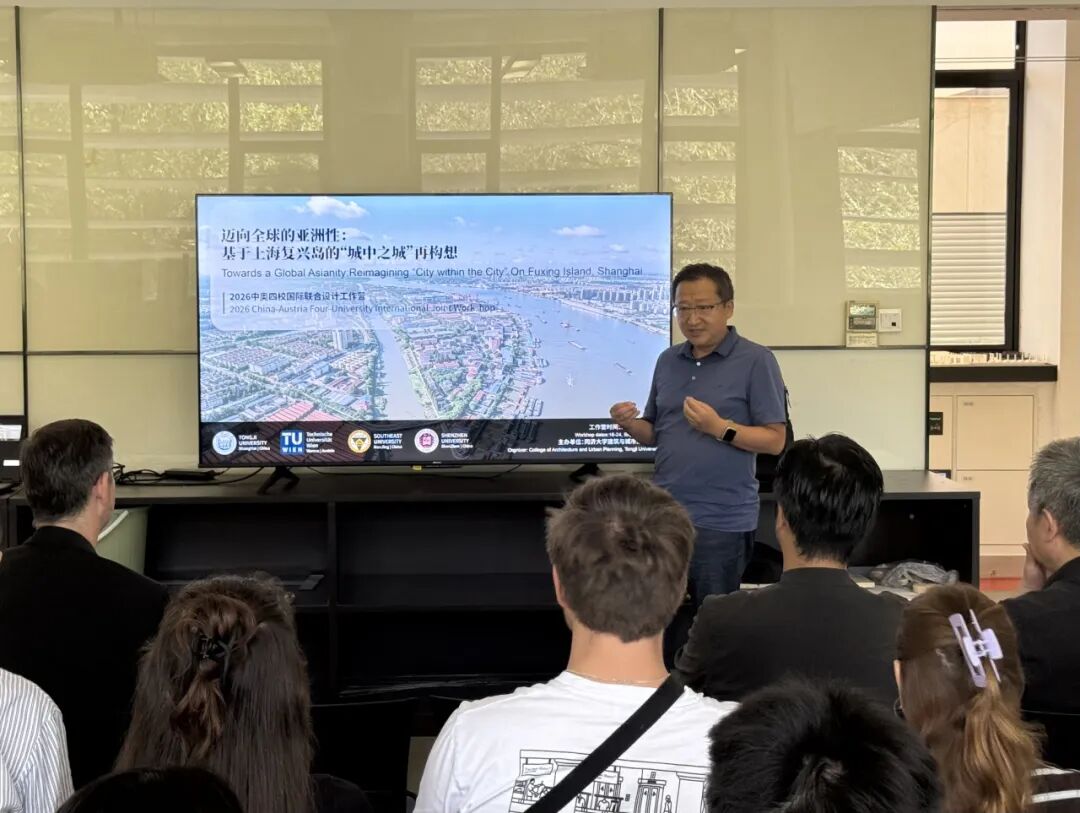
Prof. Tang Bin making a speech
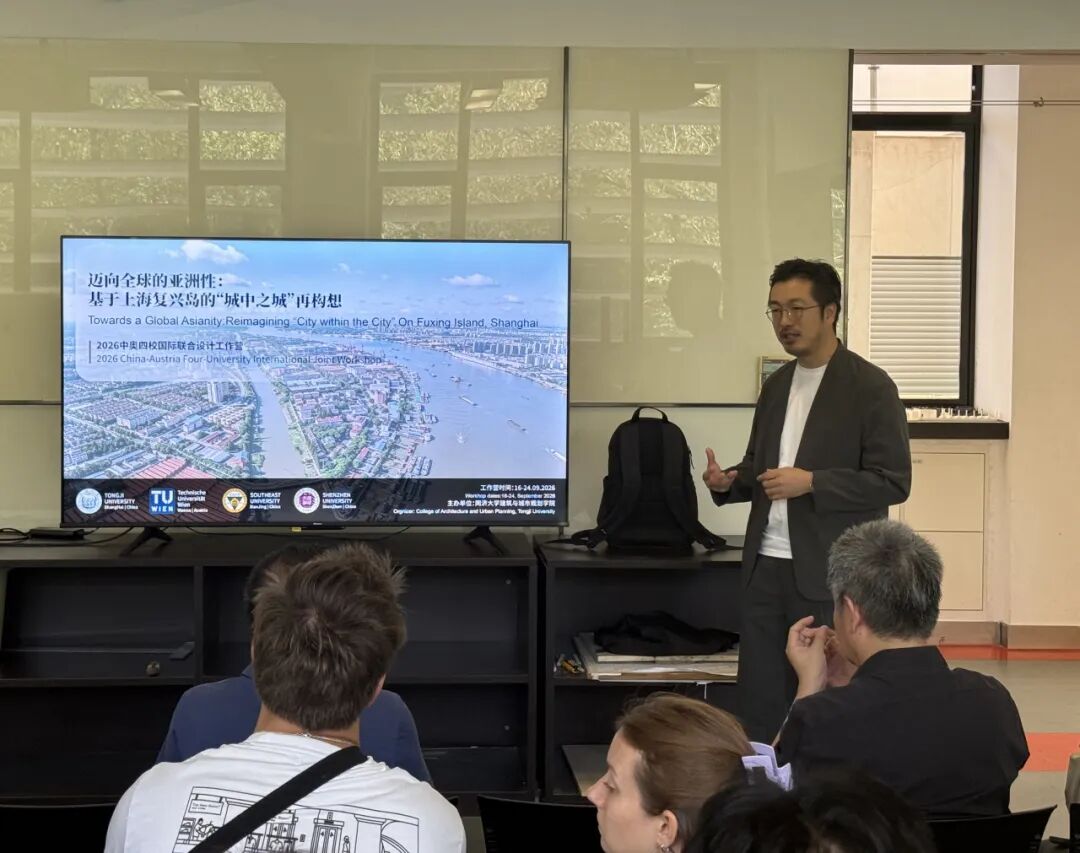
Associate Prof. Yang Zhengyuan making a speech
Following the remarks, Assistant Professor Yiming Wang presented and interpreted the workshop’s theme for all participants and faculty tutors. Professor Sun Tongyu delivered the opening keynote lecture, systematically introducing the One Sheet, Ten Drawings urban design methodology. In the afternoon, all participants traveled to the workshop’s design site — Fuxing Island — for an on-site survey of the island’s existing conditions, laying the groundwork for the upcoming urban regeneration design and discussions.
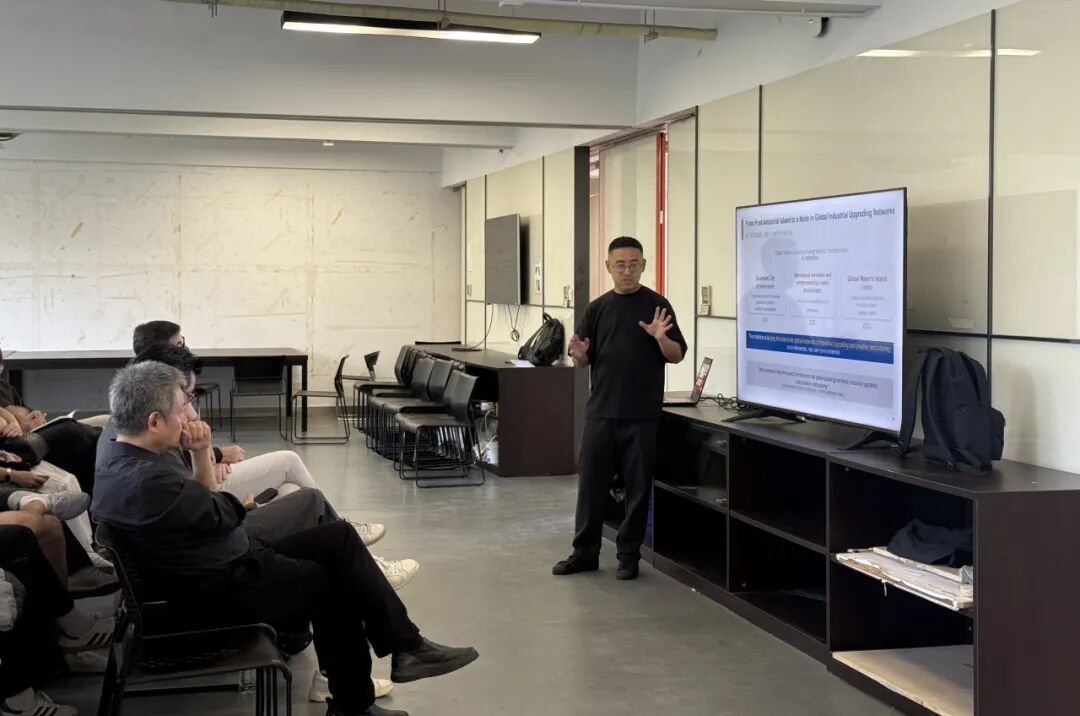
Assistant Prof. Yiming Wang interpreting the workshop’s theme and design tasks
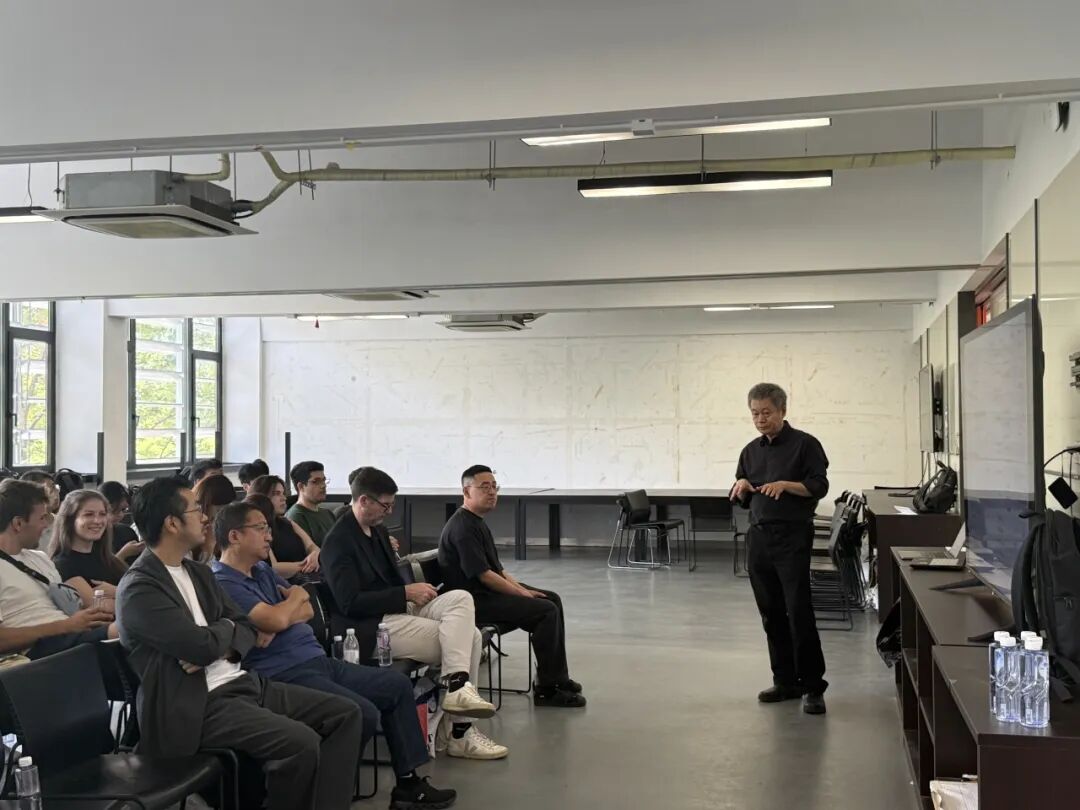
Prof. Sun Tongyu introducing urban design methods
On the morning of the 17th, Professor Tang Bin and Associate Professor Yang Zhenyuan gave lectures for the workshop. Professor Tang introduced the concept of “Infrastructure Urbanism”, related research, and design methods. Associate Professor Yang presented Shenzhen’s informal urbanization and urban renewal history, representative cases, and his design practice.
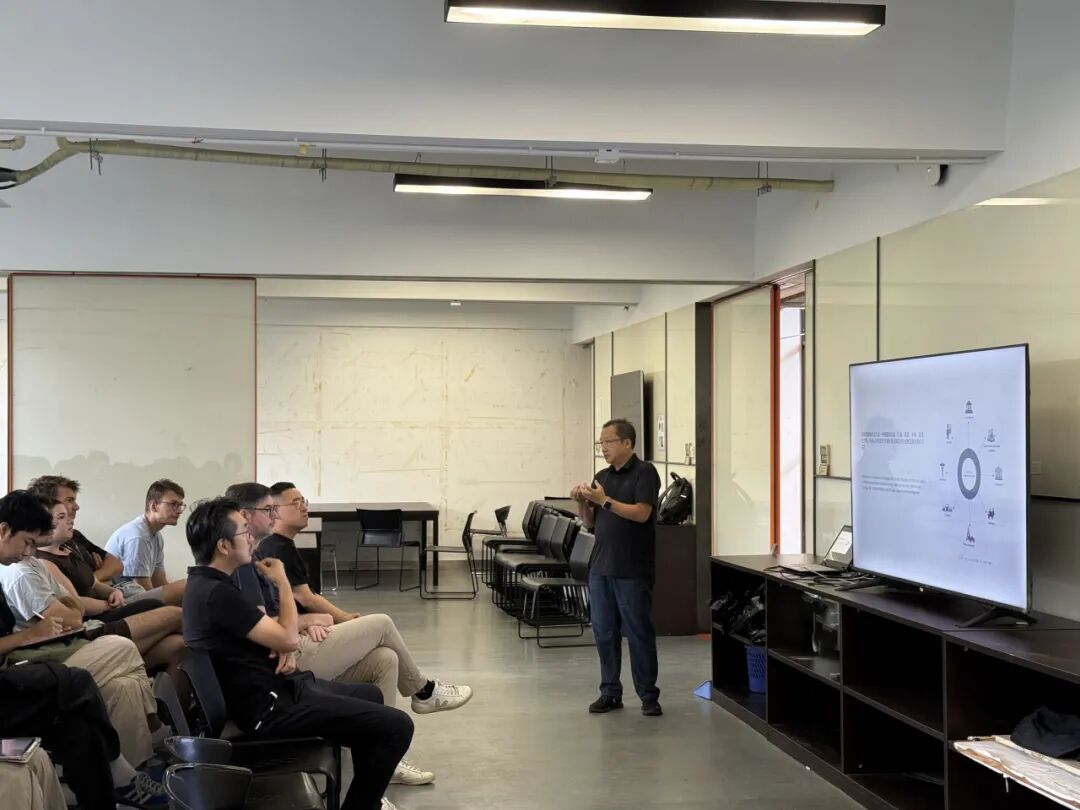
Prof. Tang Bin introducing infrastructure urbanism
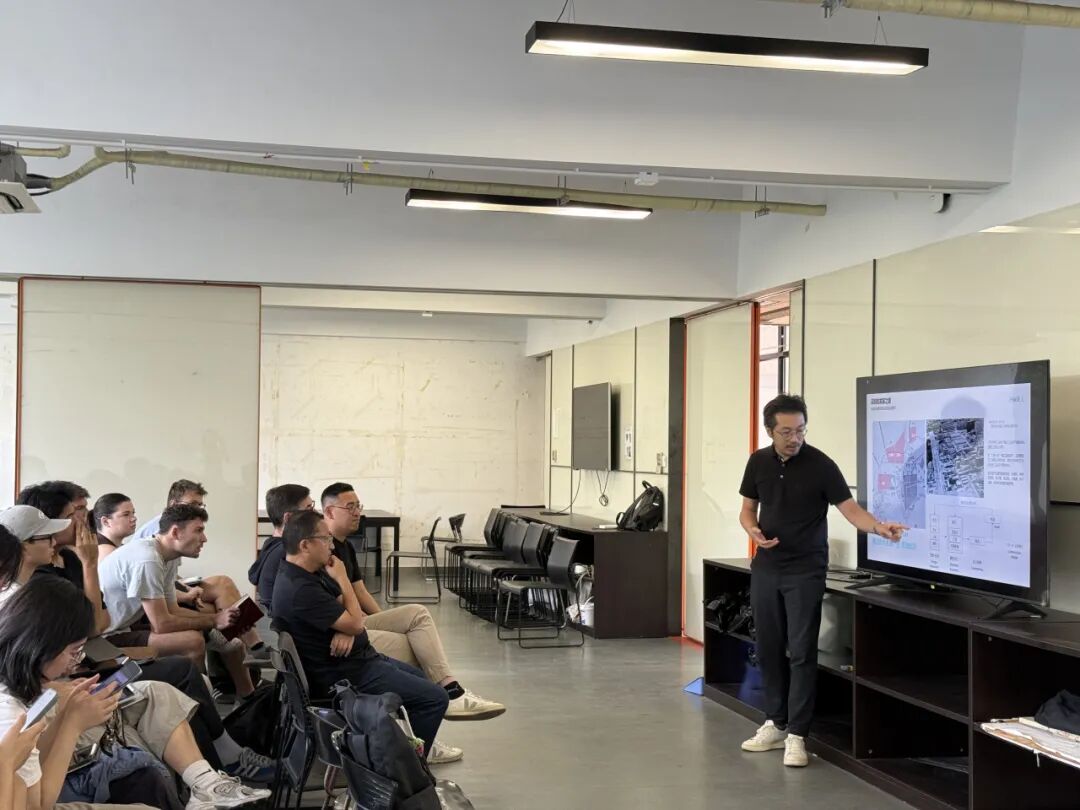
Associate Prof. Yang Zhenyuan introducing informal urbanism and regeneration in Shenzhen
Workshop Theme
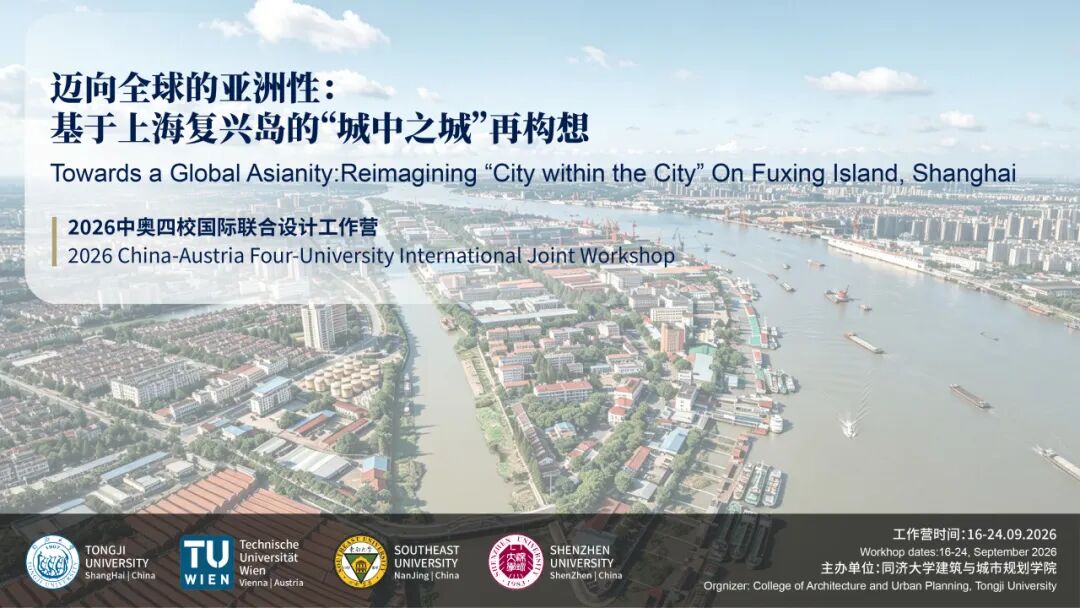
The theme of this year’s workshop is Towards a Global Asianity: Reimagining ‘City within the City’ On Fuxing Island, Shanghai. The workshop emphasizes that the City within the City is both an urban spatial typology and an active urban strategy for responding to change and transformation. By intensively concentrating urban elements and overlaying diverse functions and social relationships, it constructs a relatively self-sufficient urban system within defined spatial boundaries — efficiently utilizing land resources, generating spatial vitality, and forming a distinctive spatial order that is differentiated from yet deeply integrated into the surrounding urban fabric. From London’s Barbican Estate to New York’s Roosevelt Island and Singapore’s Punggol New Town, the City within the City has repeatedly served as a spatial phenomenon and experimental arena, bearing multiple attempts at restructuring global urban spatial configurations and reconstructing social and productive relations.
Asian megacities — exemplified by Shanghai — have, under the compounding pressures of rapid urbanization, extreme resource concentration, and land scarcity, generated a rich array of highly localized City within the City formations. These spaces embody the defining characteristics of High-density, Heterogeneity, and Hyper-hybridity, and manifest powerful bottom-up socio-spatial vitality and innovative potential. Within this distinctive urban condition, the intensive co-presence of functions and their spontaneous growth interweave to produce a dynamic urban order. This dense spatial grid embedded with layered functions represents the internal logic by which Asian cities negotiate between order and vitality under conditions of constrained land resources — and it is precisely this logic that constitutes the core of what may be called Asianity.
Turning to this workshop’s specific design site — Fuxing Island: in spatial terms, the island is entirely cut off from Yangpu’s urban hinterland by a canal, yet its geographic position is firmly embedded within the core territory of Shanghai’s city map. The inherent tension between spatial isolation from the central city and geographic centrality within it endows Fuxing Island with the quintessential formal characteristics of a City within the City: at once a heterogeneous enclave within the urban fabric, and a unique anchor point for urban transformation.
In recent years, in line with Yangpu District’s 14th Five-Year Plan and the ongoing urban renewal efforts, the government has pursued a clear strategic orientation toward globalization and high-technology for Fuxing Island. Visions such as Quantum City and Global Maker’s Island have been successively proposed as overarching strategic directions for the island’s transformation. Since 2023, Shanghai has comprehensively advanced the integrated remediation of Fuxing Island — clearing out low-efficiency enterprises, removing illegal structures, and treating pollution — and in 2025 launched a global call for top-level planning proposals. These measures mark Fuxing Island’s formal transition, from what was once an inward-looking post-industrial enclave, into the wider network of global spatial governance, industrial upgrading, and creative reconstruction.
Against this backdrop, the workshop takes Fuxing Island as a design laboratory to explore and experiment with urban design and development strategies for the City within the City. On one hand, the workshop is grounded in the Shanghai municipal government’s strategic vision for Fuxing Island’s future development, examining the possibilities for global industries to take root here. On the other hand, drawing on the island’s spatial anchoring within central Shanghai and its distinctive island morphology, it investigates how Asianity in Asian cities can be spatially expressed and transformed within the framework of a globalized City within the City. By reconstructing symbiotic relationships among residential, productive, cultural-entertainment, commercial, and public service functions, and by reactivating the flow of elements between the island and external urban systems, the workshop aims to respond to the diverse possibilities for the sustainable renewal of the future city and its society within the dual contexts of globalization and locality.
Workshop Schedule
For this workshop, Fuxing Island is divided into 6 zones according to their respective resource characteristics and future development potential. All participating students are divided into 6 groups with each group responsible for the urban regeneration design of one zone. Each group’s zone contains one of six program complexes — Residential, Production, Commercial, Public Services, Science & Education, or Cultural & Entertainment Exhibition — and each group must support its design strategy with case studies, exploring how the characteristics of Asian urban space usage are translated into urban and complex-scale architectural design. In addition, each group will assign one student to form a Master Planning Team, tasked with completing a regulatory urban design proposal for the island as a whole.
Specific Schedule:
September 16丨Opening ceremony and keynote lectures in the morning; site visit to Fuxing Island in the afternoon; group discussions in the evening.
September 17丨Keynote lectures in the morning; roundtable discussion 15:00–18:00.
September 18–19:丨Group design work 8:30–15:00; roundtable discussion 15:00–18:00.
September 20丨Mid-term review 9:00–11:30; city walk from 13:30 onward.
September 21–23丨Group design work 8:30–15:00; roundtable discussion 15:00–18:00.
September 24丨Final review at 9:30; closing ceremony at 11:45.
The final outcomes of this workshop will be exhibited in front of the Zhongting Lecture Hall in Building B, CAUP. All are welcome to visit.

NO.1239 Rd. Siping, SHANGHAI


