 ABOUT US
NEWS

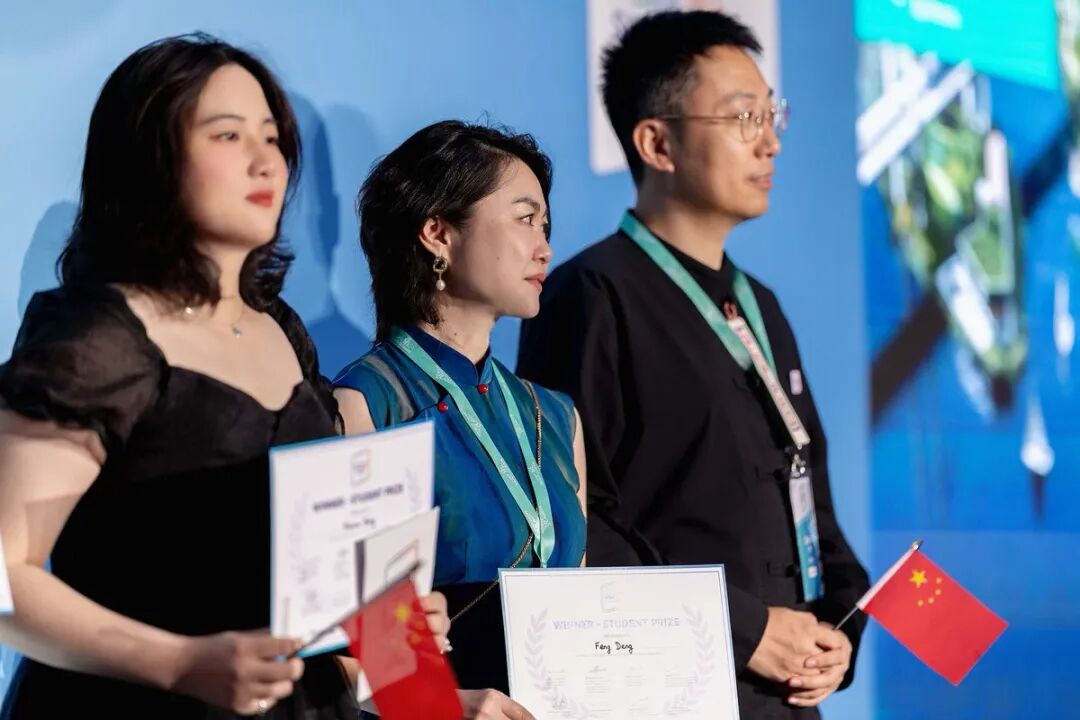
In June 2026, the global finals of the 21st Saint-Gobain International Architecture Student Contest were held in Belgrade, Serbia, bringing together 34 student teams from universities around the world to address urban renewal, ecological restoration and sustainable construction along the banks of the Sava River. A graduate team from the College of Architecture and Urban Planning (CAUP) at Tongji University — HUANG Nianci, GE Yuqian and ZONG Maicun, mentored by Associate Professors DENG Feng and QU Zhang — won the Student Prize with their project Meandering Confluence, ranking fourth overall and becoming the only award-winning team among the Asian participants.
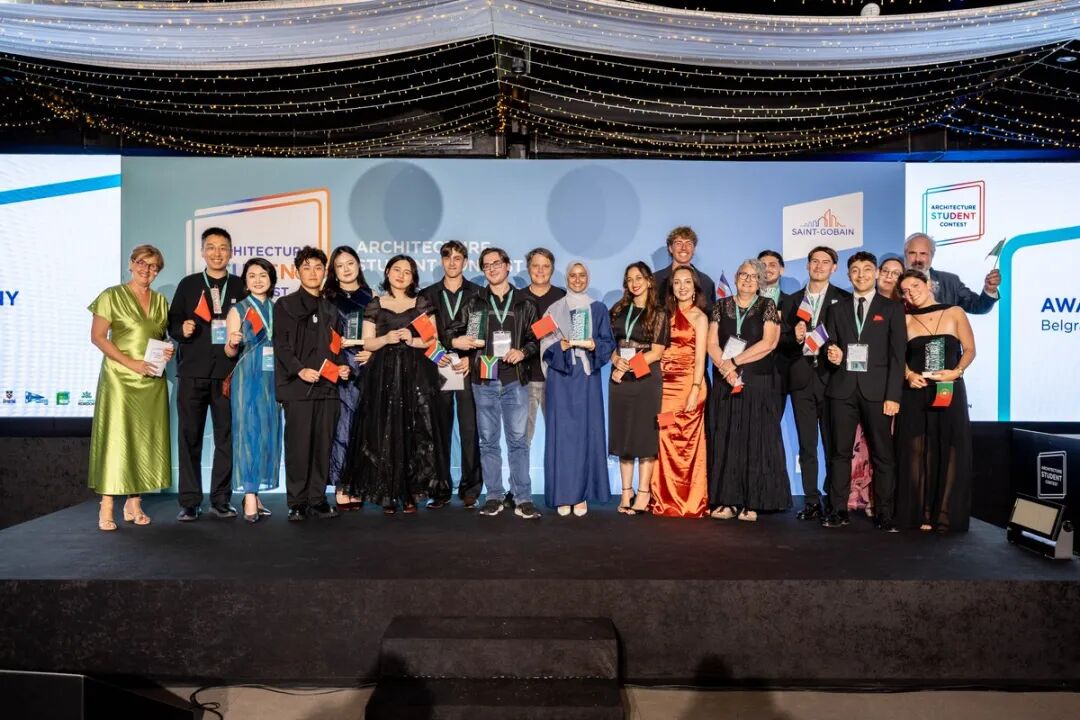
This year’s brief asked students to design athlete accommodation and public facilities in a waterfront context, and to renovate an existing sailing club, exploring new relationships between sports events, community life and riverbank ecology. Having won the China division and spent months on site research, scheme development and technical refinement, the team presented its vision for the Sava riverbank before the international jury.
In the final presentation, the three students took on the roles of an “architect”, a “resident” and a “local bird”, staging a dialogue about the future of the riverbank. The resident longs to reconnect with the river for walking, sport and public gathering; the bird needs continuous, undisturbed habitat; the architect must find a new balance between these demands. The device turned an abstract ecological question into tangible spatial claims and rendered the design logic legible within a tight presentation slot.
Meandering Confluence treats the riverbank not as a fixed boundary but as a dynamic transitional zone. The scheme withdraws buildings from the water’s edge, widens the ecological corridor and sculpts micro-topography in response to seasonal water levels, layering woodland, wetland and grassy slopes in a gradual transition from urban public space to natural habitat. A “layered riverbank” strategy reserves continuous space for riparian vegetation and birds near the water, routes slow-traffic paths so that people can approach the river without encroaching on core habitats, and concentrates pedestrian flows, sports and community functions closer to the city. Buildings are dispersed into the landscape, with optimised orientation and shading for natural light and ventilation, rooftop photovoltaics to cut operational energy, and the sailing club retained and renewed through functional replacement and vertical greening. Bird-watching facilities, restricted access routes and bird-friendly glazing minimise disturbance, while environmental performance simulation and whole-lifecycle assessment ensured that ecological strategy, spatial experience and technical performance reinforce one another.
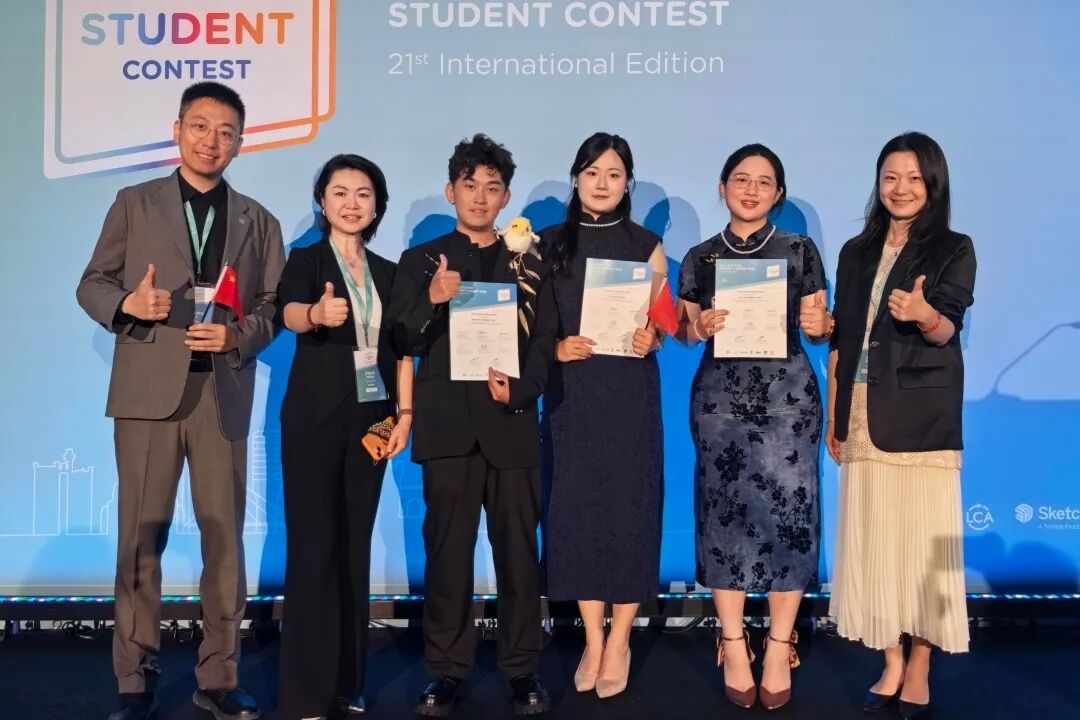

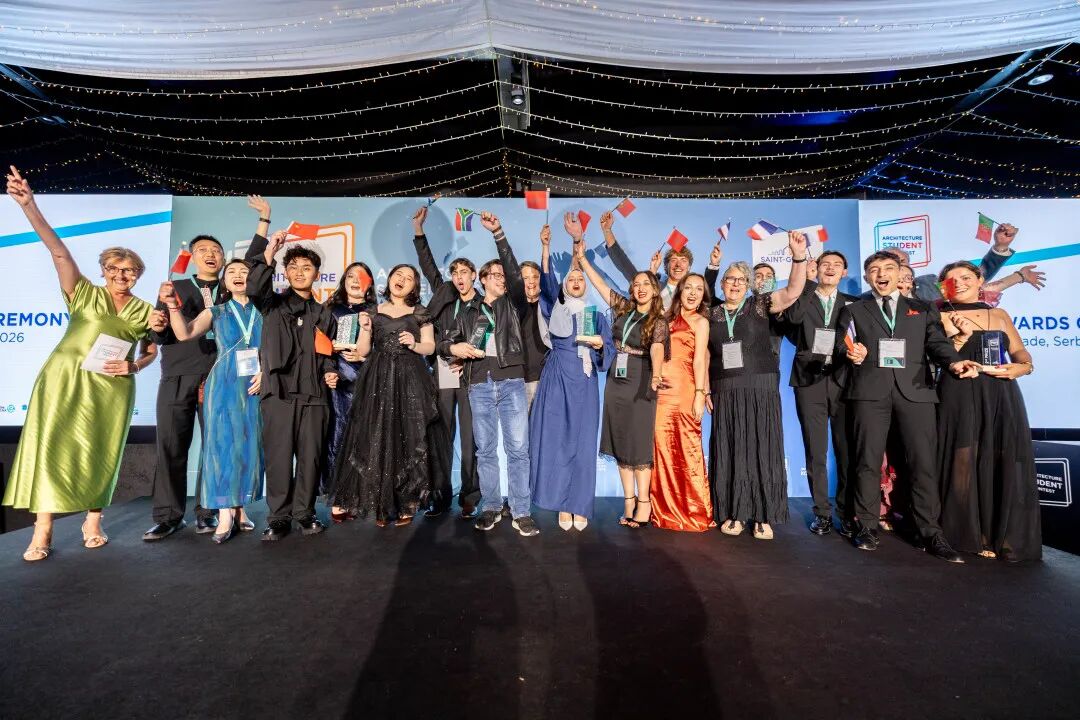
Beyond the awards — first, second and third prizes went to teams from South Africa, Portugal and France, with the Teachers’ Prize awarded to Morocco — the contest proved an open classroom for observing cities, exchanging methods and testing design judgement across cultures. The 22nd edition will be held in Madrid, Spain, in 2027.

NO.1239 Rd. Siping, SHANGHAI


