 ABOUT US
NEWS

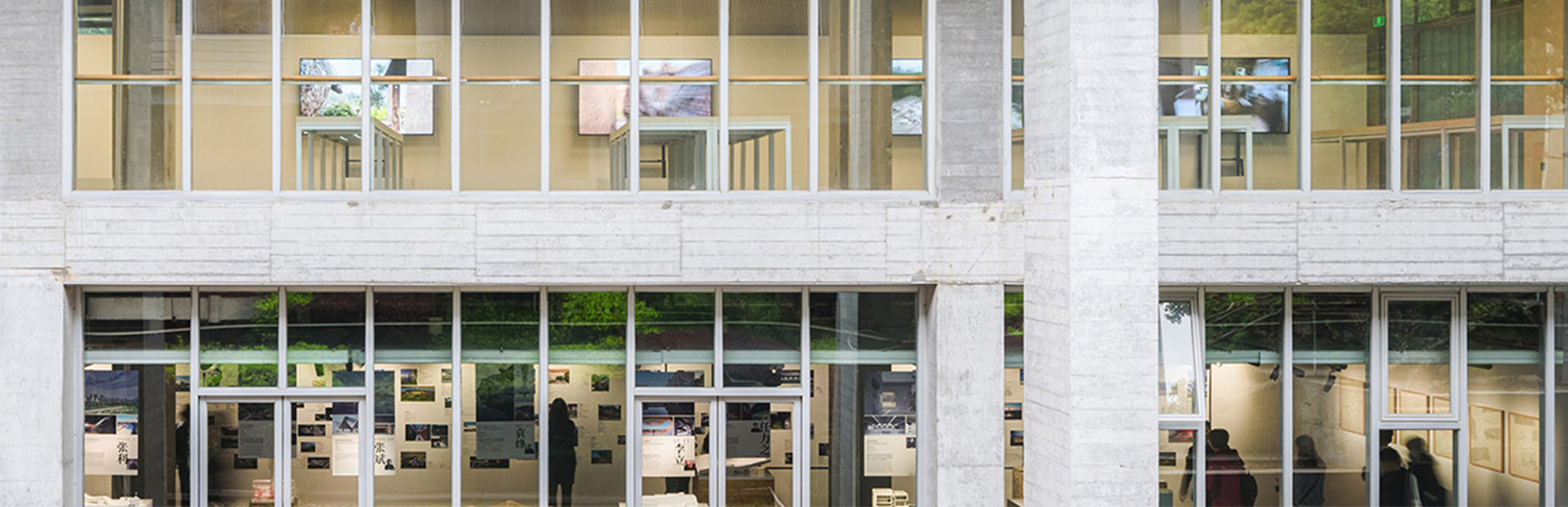
The 2026 joint undergraduate graduation studio “Crossing the Yangtze” from the Department of Architecture at the College of Architecture and Urban Planning (CAUP), Tongji University, has concluded with a showcase of eight student projects exploring the low-carbon regeneration of industrial heritage on Fuxing Island in Shanghai’s Yangpu District. Under the supervision of ZHU Yichen and LIU Yige, with external advisor SONG Jianjian, the studio centred on the passive spatial retrofit and locally sourced ecological material construction of Pavilion C in the island’s Shipyard Park — a former workshop of the China Zhonghua Shipyard that spans roughly 54 metres, runs 211 metres in length and rises 23.5 metres, the largest single factory building on the island.
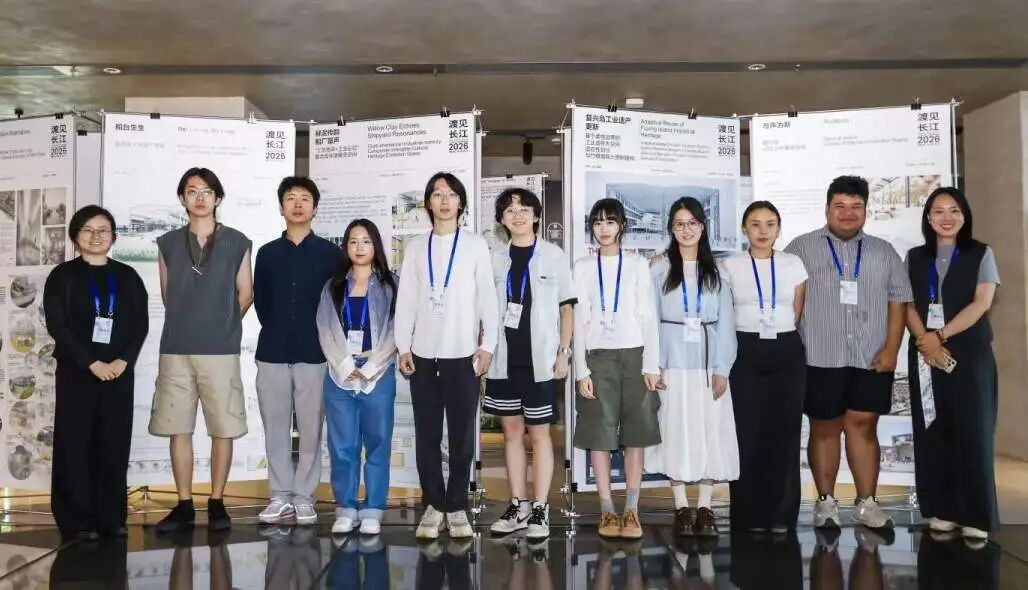
Fuxing Island, the only inland island in the Huangpu River, was once one of Shanghai’s most important industrial and warehousing bases, its warehouses, workshops and dock facilities bearing witness to the rise of modern Chinese industry. The studio was structured around two complementary approaches: passive spatial transformation, which uses spatial downsizing, section optimisation, climate zoning and natural ventilation and daylighting to establish an energy hierarchy of service, transitional and buffer spaces and to reduce reliance on mechanical air-conditioning; and ecological material construction, which investigates bamboo, reed, clay and timber from the Yangtze River Delta for their application in envelopes, shading, light-redirection, insulation and partitioning.
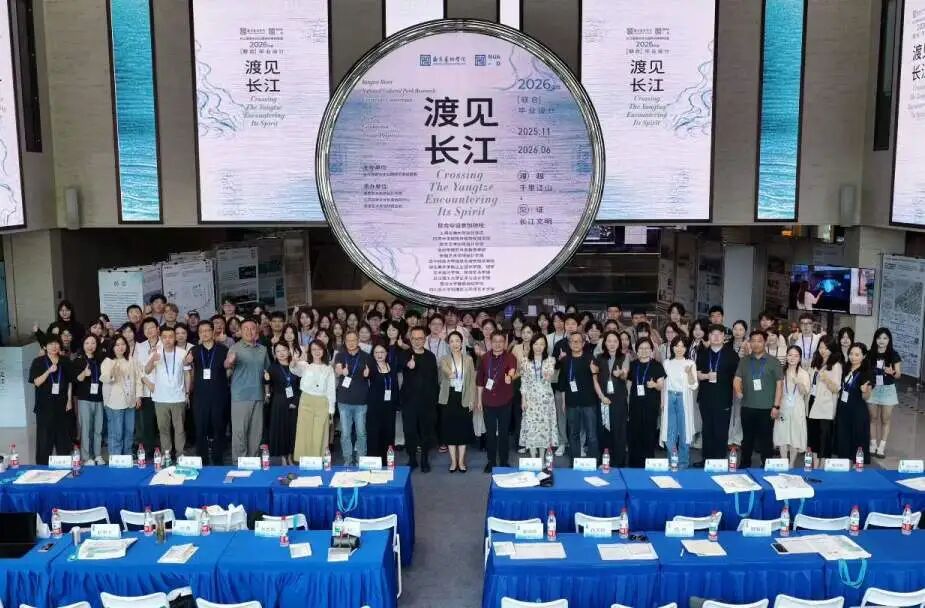
The work was presented at the first joint final review and exhibition of the “Crossing the Yangtze” university alliance for the Yangtze River National Cultural Park, where Tongji teams explored scenography, vernacular material construction and passive energy design, reworking the monumental industrial space into perceivable, wanderable contemporary public space. The synthesis of industrial heritage landscape and natural construction drew recognition from the expert jury.
The eight proposals ranged from a residency art centre framed by the spatial metaphor of the “grey realm” (ZHANG Danshengnan), a mirror-based co-working and exhibition scheme that reproduces the factory’s symmetry (ZHANG Yixiao), an ecological activation that “breaches the wall with bamboo” (LIU Yingrong), and an intangible-heritage exhibition space built on the national craft of willow-clay rammed construction (XU Jialuo), to a “maker ship” housing esports arenas, esports hotels and roadshow plazas for the island’s emerging creative population (FU Yu), a soundscape-driven sequence of acoustic public spaces (ZOU Jiaye), a shipyard-inspired cultural and commercial complex (HUANG Yinyu), and a water-centred vertical farm (CHI Mi).
For the students, the studio offered the full cycle of site research, concept generation, passive retrofit and ecological material experimentation — a demonstration of how low-carbon regeneration can proceed in a way that is at once heritage-conscious and firmly grounded in materials.
For detailed information and course outcome, please access: https://mp.weixin.qq.com/s/ojULrvcYNUj-jLLf8mnrHQ

NO.1239 Rd. Siping, SHANGHAI


