 ABOUT US
NEWS

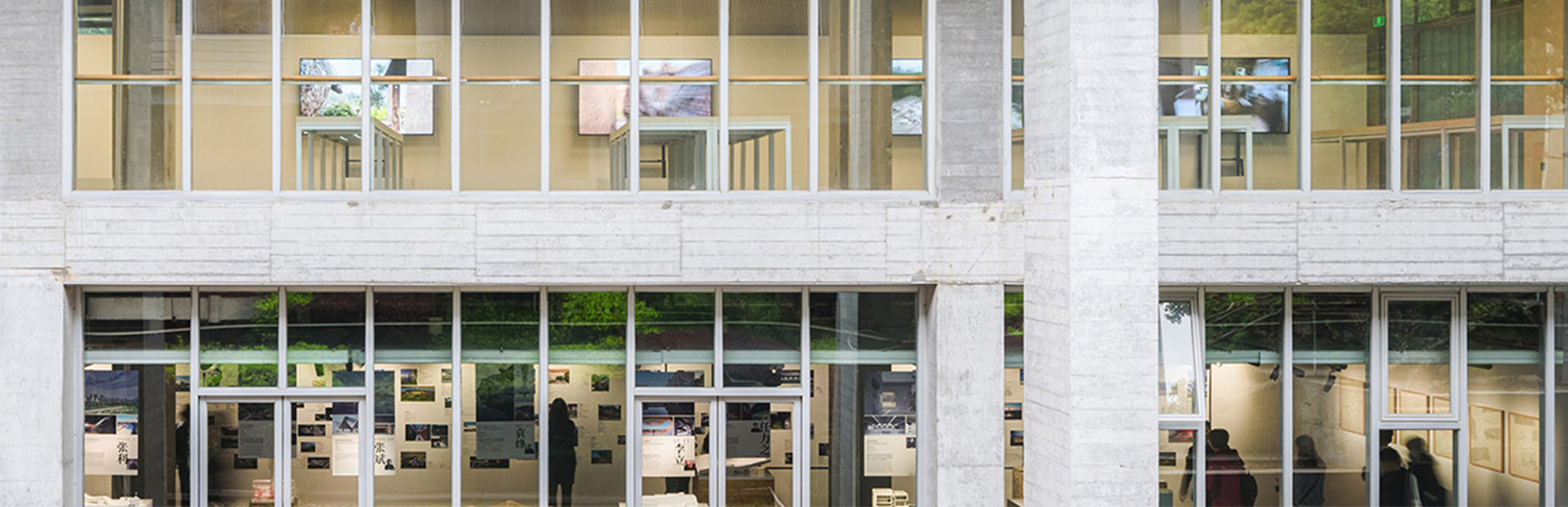
From July 15 to 20, 2026, the AI4CITIES-3 International Conference and Summer Workshop concluded its six-day program at Wenyuan Building, Tongji University. Organized by the College of Architecture and Urban Planning (CAUP) under the theme Symbiotic Planning: Human-Machine Co-Creation of Future Experimental Islands, the event brought together over 40 experts and scholars from across the globe and nearly 100 students for an intensive exploration of how artificial intelligence can be integrated into urban planning, spatial design, and city governance.
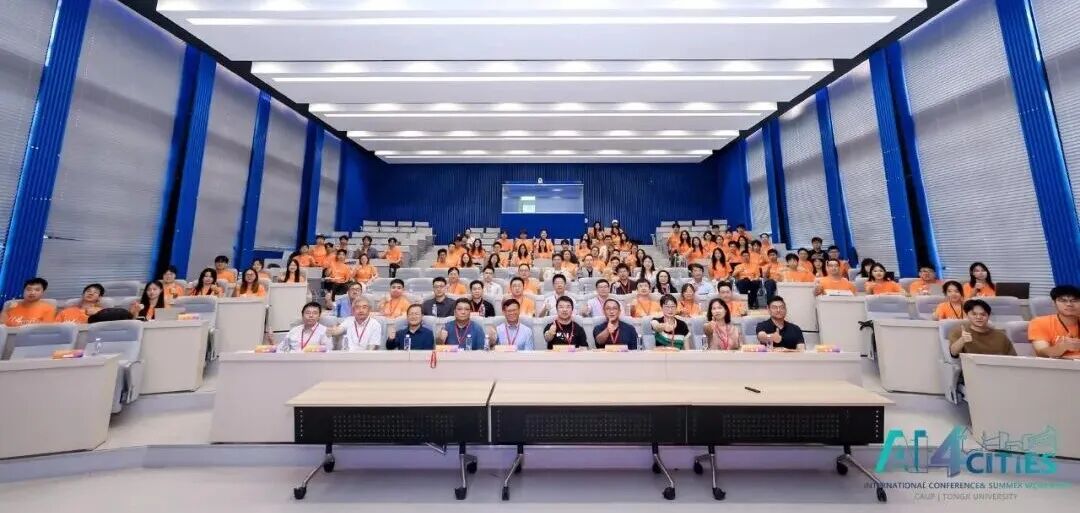
This year's edition marked a notable departure from previous iterations: for the first time, the workshop extended beyond the Tongji campus to Fuxing Island, where participants engaged directly with real urban conditions. Supported by organizations including Shanghai Yangpu Riverside Investment Development Group, WUPEN, Shanghai Tongji Urban Planning & Design Institute, the Yangpu District Planning and Natural Resources Bureau, and Alibaba Cloud, among others, the workshop used Fuxing Island as a shared testing ground for interdisciplinary inquiry.
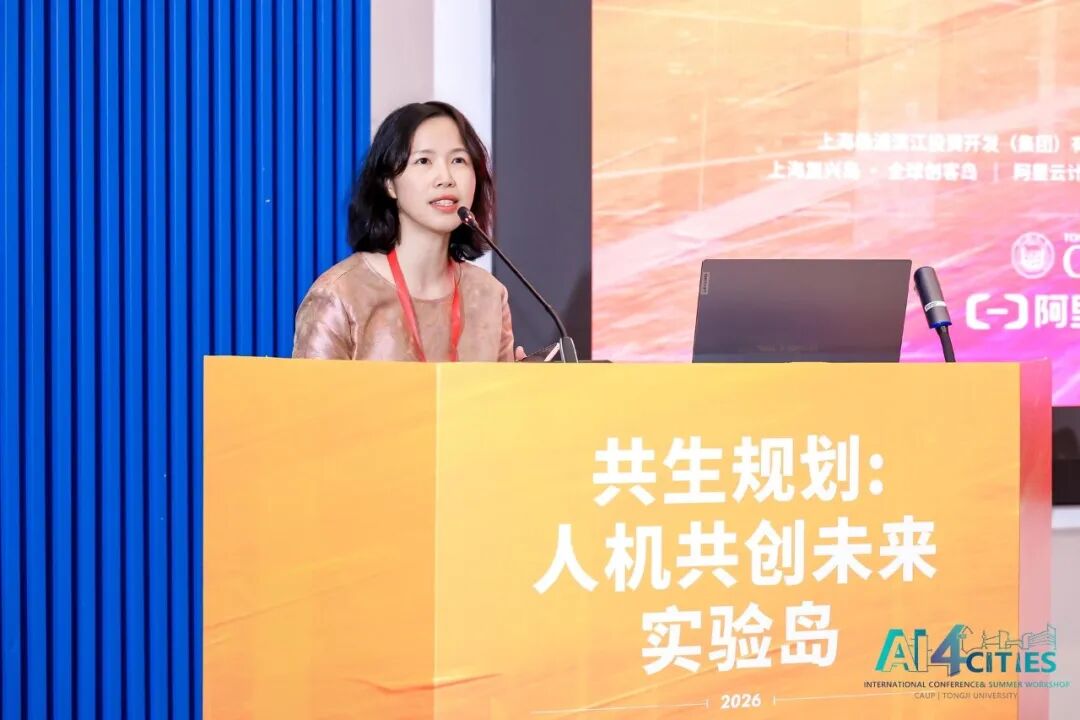
The closing ceremony on July 20 featured addresses by Prof. Wang Zhendong, Chair of CAUP, who underscored the need for architectural and planning disciplines to embrace technological transformation while preserving human-centered values and public responsibility. Prof. Peng Zhongren of the University of Florida, Chair of the Academic Committee, reflected on the evolution of AI4CITIES and called for deeper integration of AI into planning education and practice — not as an external tool, but as an embedded partner in the planning process. Xu Shaoming, General Manager of Shanghai Fuxing Island Technology Development Co., highlighted the workshop's relevance to Fuxing Island's ongoing renewal and its aspiration to become a frontier space that actively absorbs new technologies.
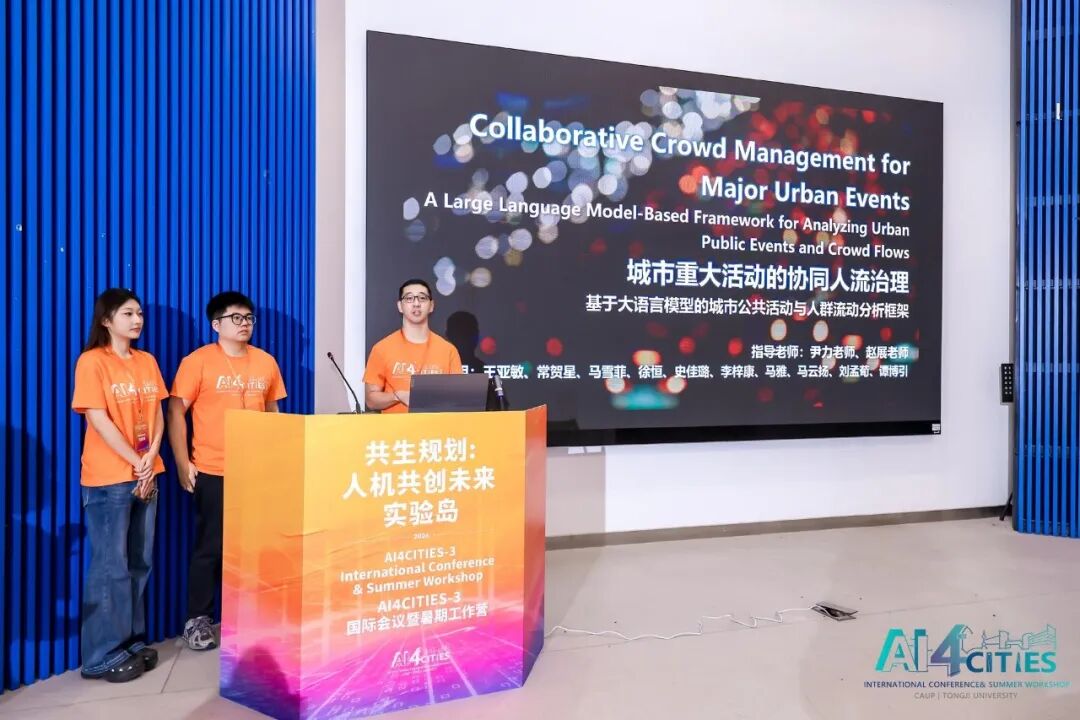
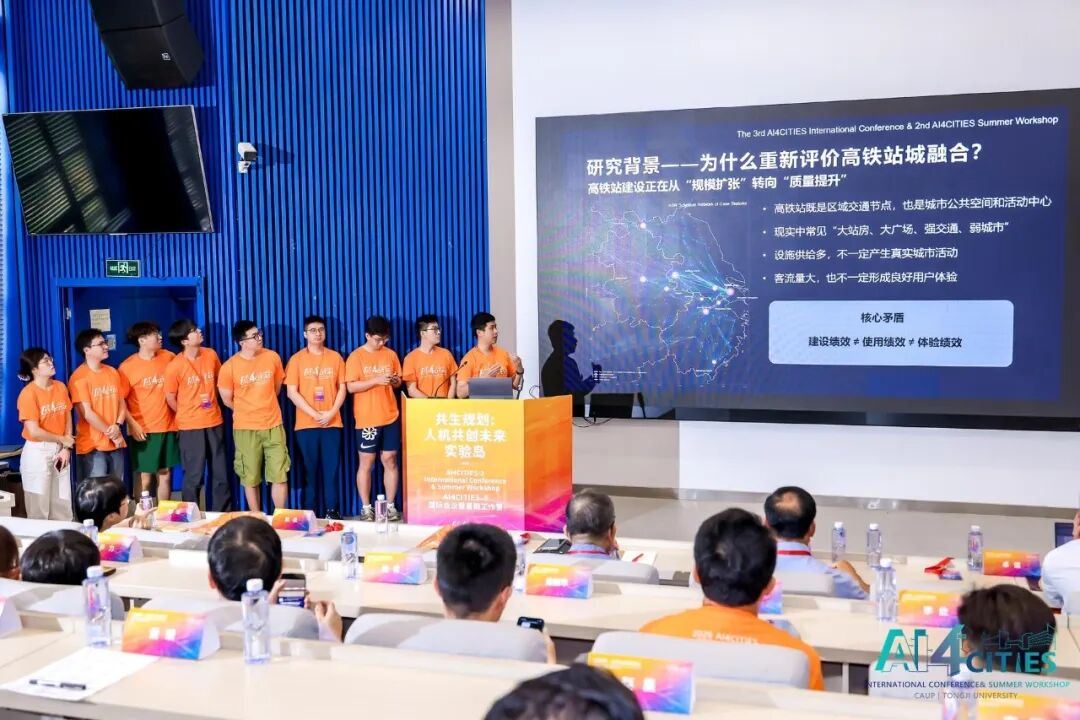
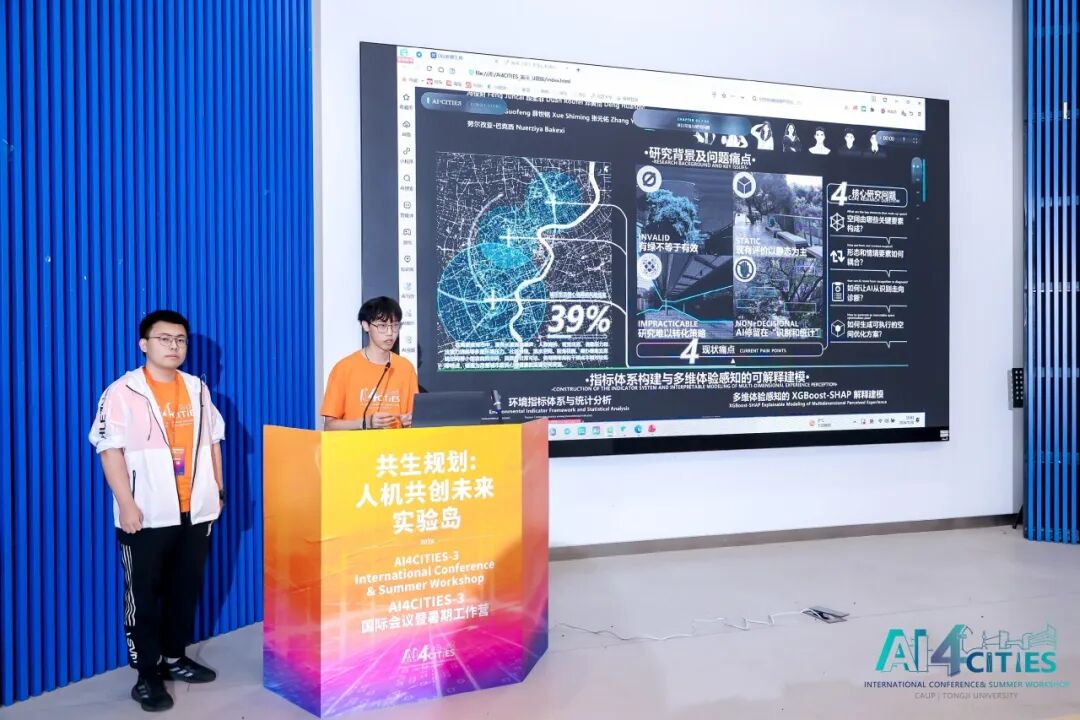
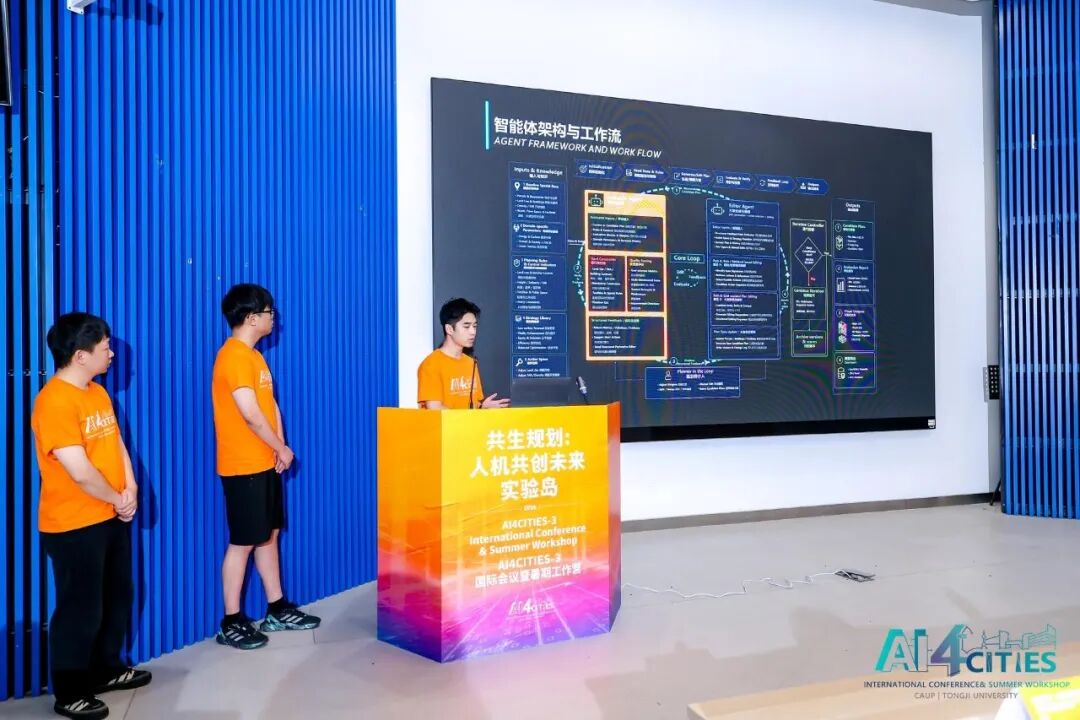
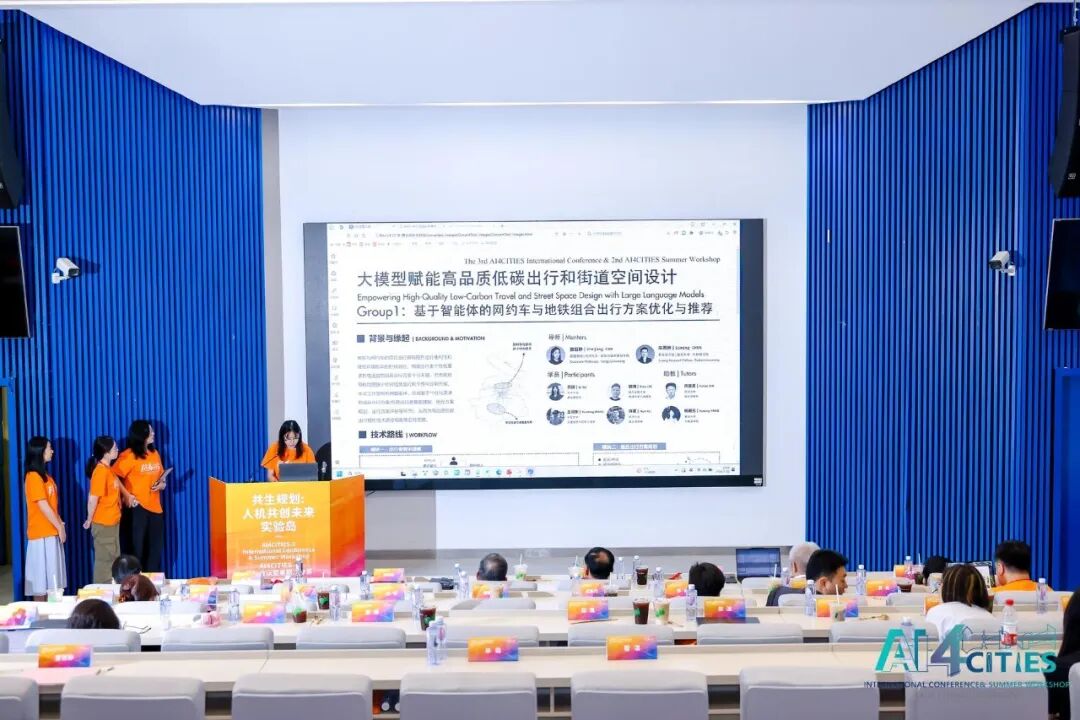
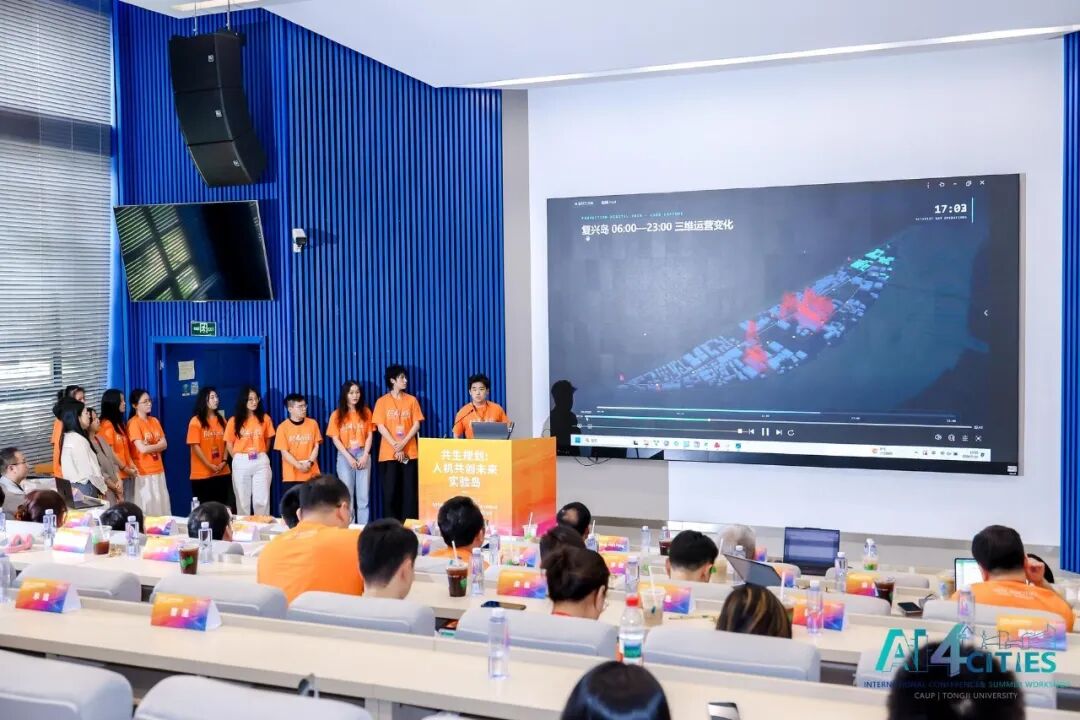
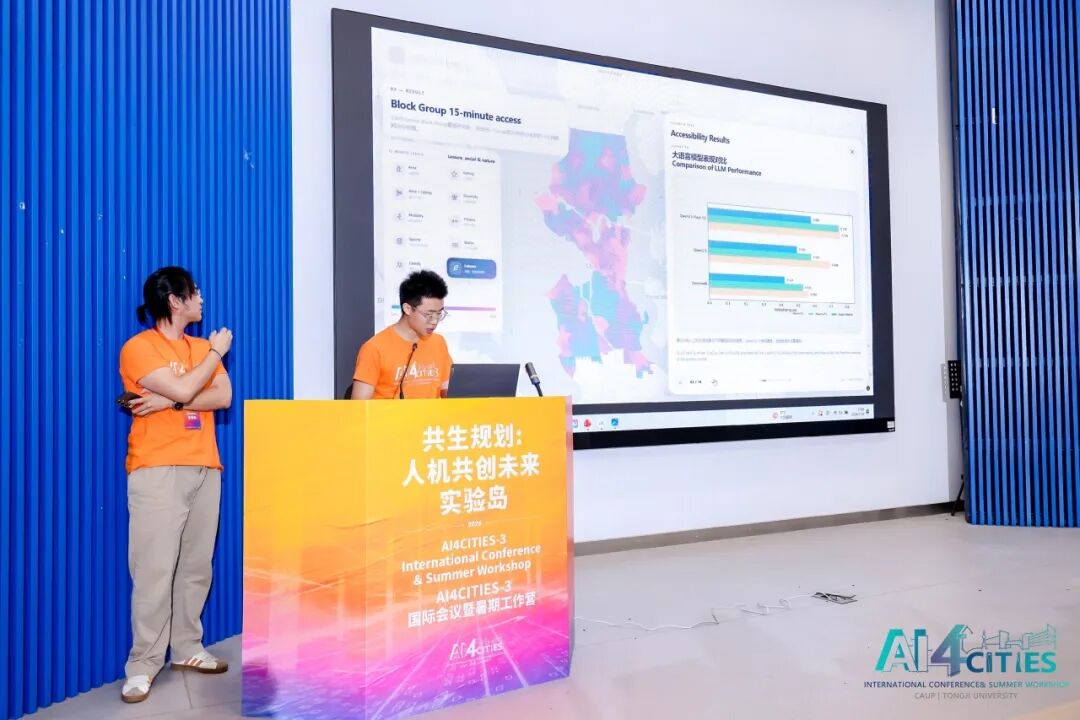
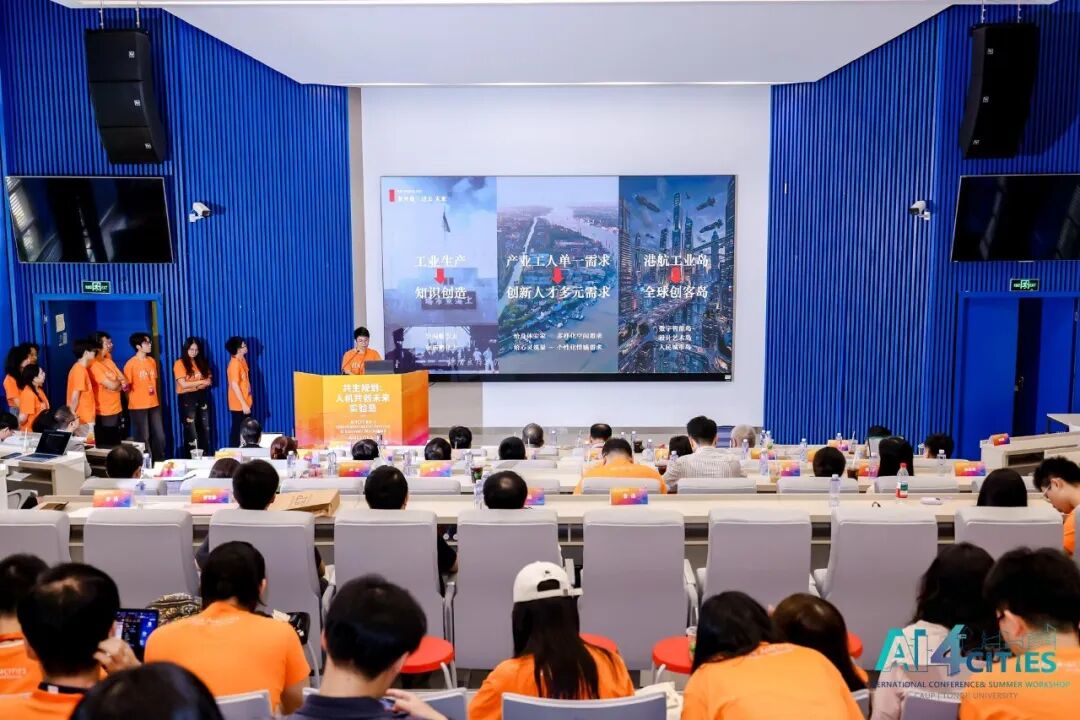
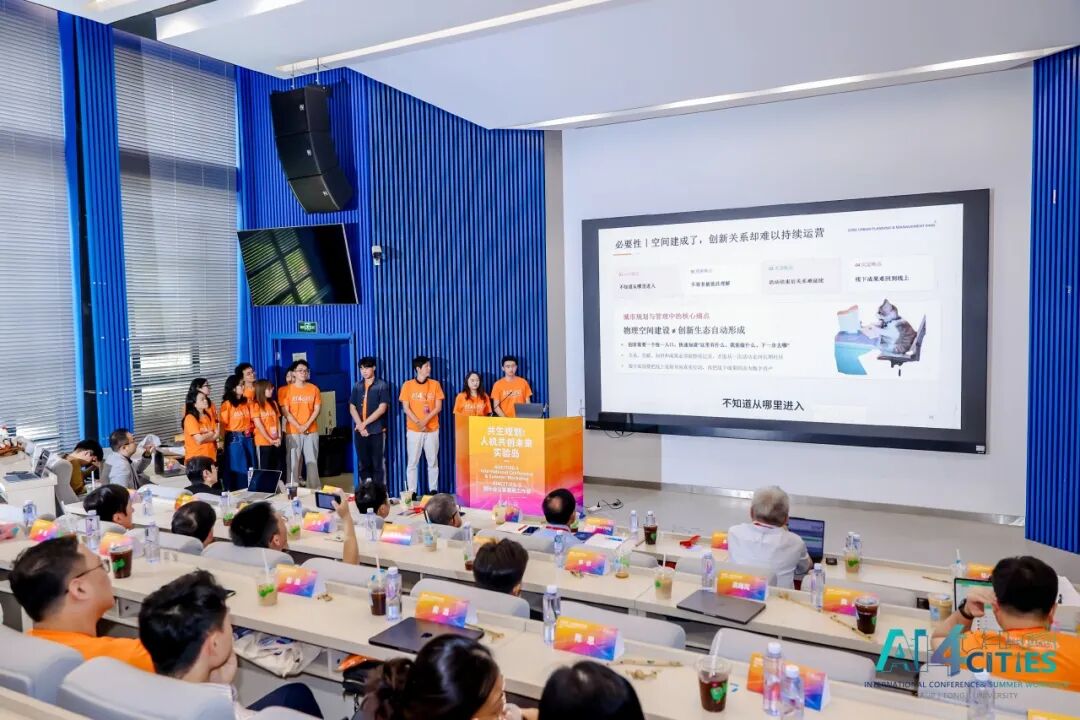
Nine student groups presented their work, spanning a broad range of topics: LLM-driven analysis of public activities and crowd flows, AI-assisted diagnosis of high-speed rail station–city integration, biophilic micro-space optimization using multimodal models and VR, planning agent platforms for urban renewal, large-model-enabled low-carbon mobility design, quantum AI for traffic planning, park activity equity assessment, innovation community regeneration, and a digital platform for Fuxing Island's maker ecosystem. The groups were guided by faculty from Tongji University, the University at Buffalo, Ohio State University, the University of Hong Kong, the University of Washington, Seoul National University, Fudan University, and other institutions.
A recurring theme across the presentations and expert reviews was that AI should function not as an autonomous decision-maker but as a collaborative partner — one that assists in organizing information, identifying problems, and expanding the space of possible solutions. Faculty reviewers including Prof. Pan Haixiao, Prof. Niu Xinyi, and Assoc. Prof. Cheng Yao emphasized that AI-generated outputs must remain subject to professional judgment, real-world constraints, and public value scrutiny, with human planners continuing to define problems, set rules, and interpret urban contexts.
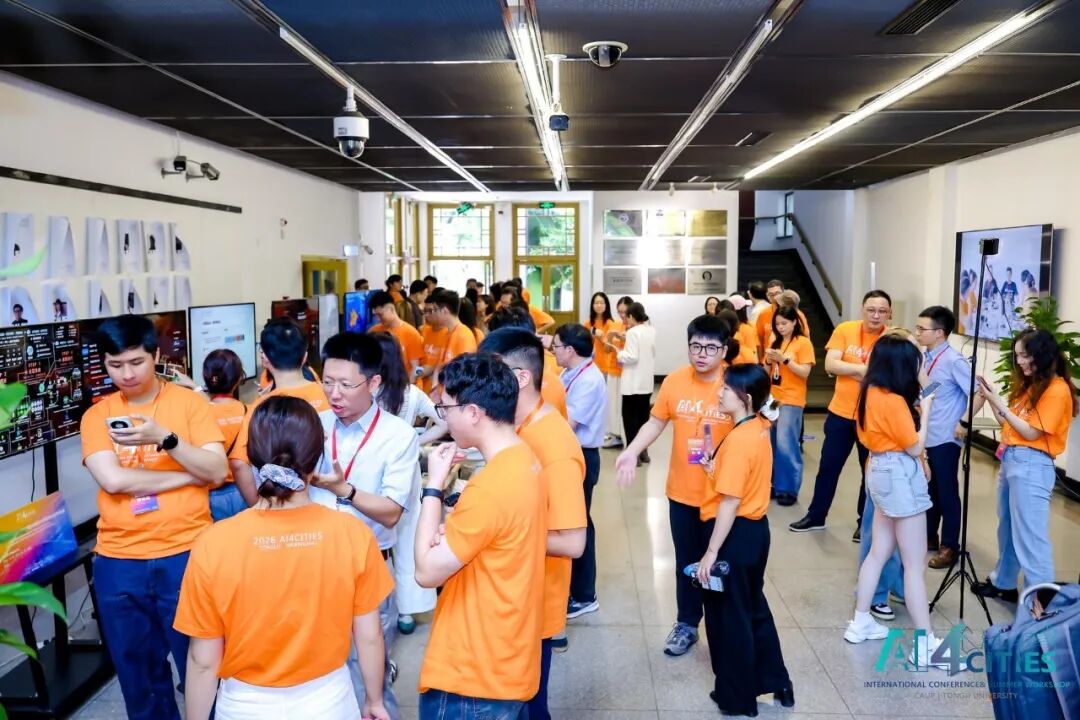
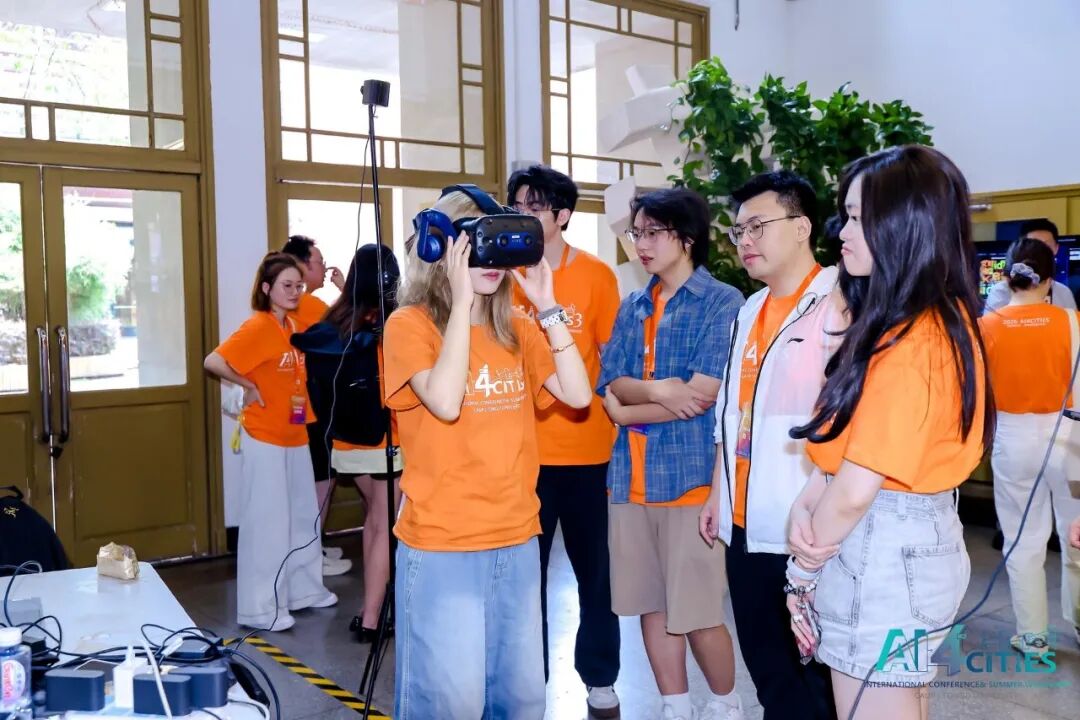
As the workshop drew to a close, participants reflected on a shared realization: technology acquires meaning only when it enters real urban contexts and responds to genuine human needs. The AI4CITIES initiative continues to bridge education, research, and urban practice — advancing a vision of cities that are more inclusive, resilient, and creative through human-machine symbiosis.

NO.1239 Rd. Siping, SHANGHAI


