 ABOUT US
NEWS


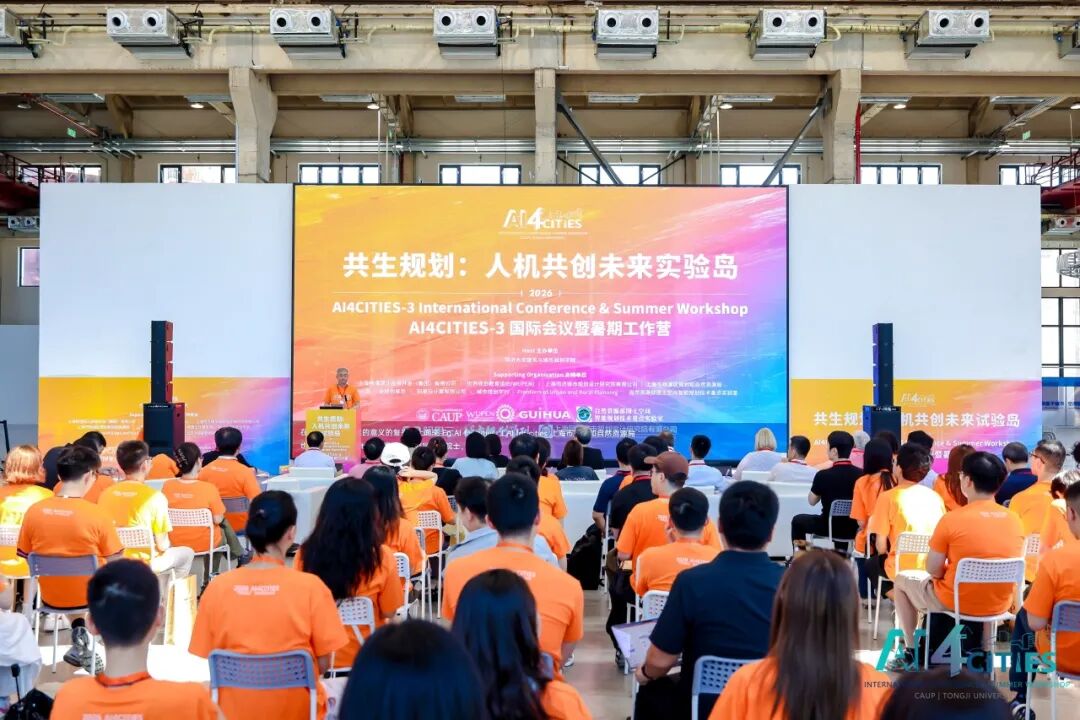
On 15 July 2026, the AI4CITIES-3 International Conference & Summer Workshop opened at the Fuxing Island Future City Innovation Pilot Zone in Shanghai. Themed “Symbiotic Planning: Human–AI Co-creation for a Future Experimental Island,” the event brings together scholars, practitioners, students and young researchers from urban planning, artificial intelligence, computer science, architecture, landscape architecture and geographic information science.
Set within an urban district undergoing active transformation, the workshop takes Fuxing Island as a real-world laboratory for exploring how human and machine intelligence may jointly contribute to the understanding, planning and governance of future cities.
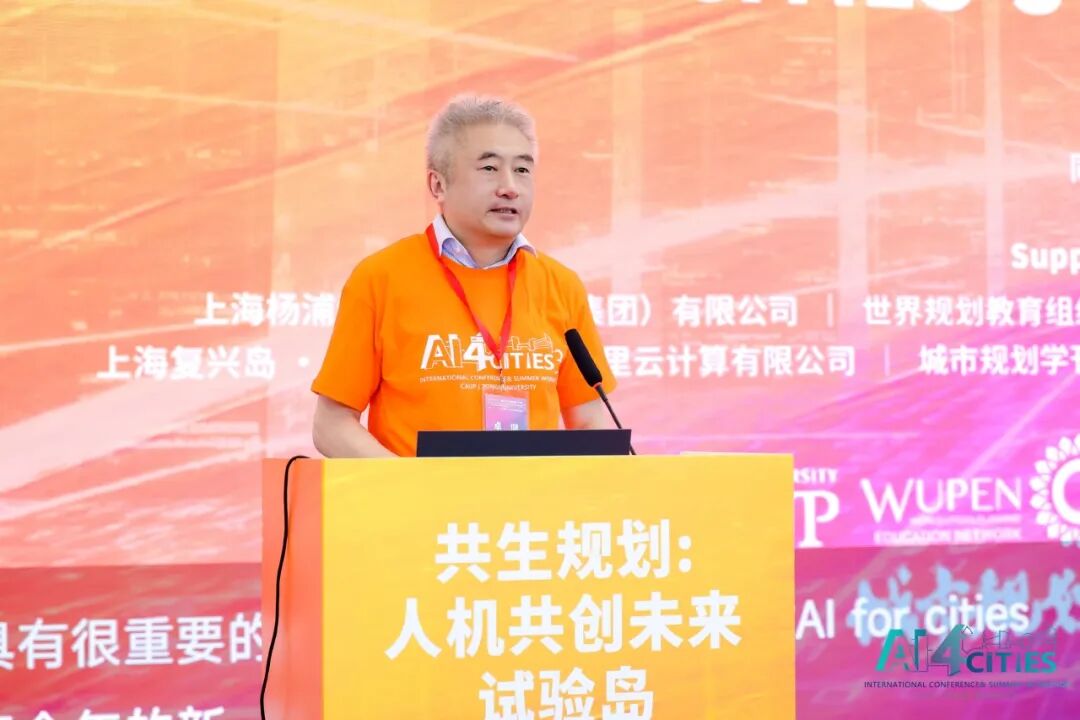
The opening ceremony was introduced by Professor Zhuo Jian, Chair of the Department of Urban Planning at Tongji University’s College of Architecture and Urban Planning (CAUP).
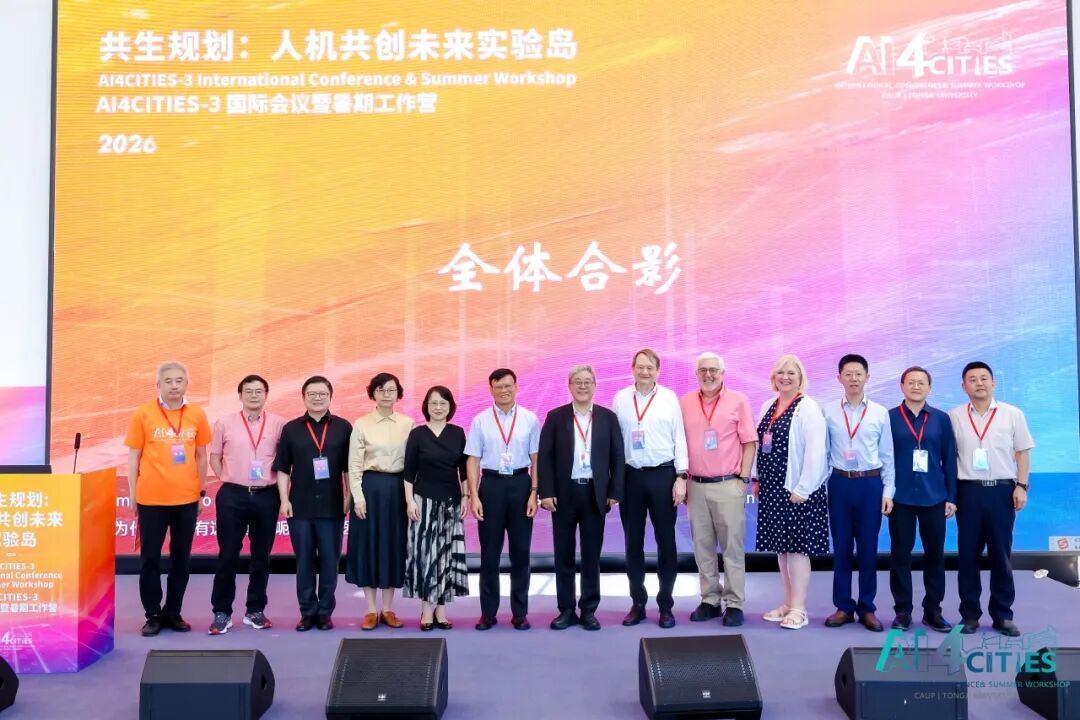
The event was attended by Professor Wu Zhiqiang, Member of the Chinese Academy of Engineering; Professor Otthein Herzog, Foreign Member of the Chinese Academy of Engineering; Sue Schwartz, President of the American Planning Association; Professor Chen Zhenhua, President of the International Association for China Planning; Professor John D. Landis of the University of Pennsylvania; Professor Liu Yu of Peking University; Professor Zhong-Ren Peng of the University of Florida; and representatives from Shanghai’s municipal and district planning authorities, Tongji University, Alibaba Cloud and partner institutions.
Opening remarks were delivered by Zhuang Lan of the Shanghai Municipal Bureau of Planning and Natural Resources, Sue Schwartz, Professor Chen Zhenhua and Professor Philip F. Yuan, Dean of CAUP. They welcomed the international and interdisciplinary community of mentors and participants and marked the formal opening of the conference and workshop.
The keynote session, chaired by Associate Professor Cheng Yao, featured four presentations:
·Wu Zhiqiang, “The AI City”
·John D. Landis, “A Planner’s Guide to the Coming Artificial Intelligence Realignment”
·Liu Yu, “Integrating Spatial Intelligence”
·Zhong-Ren Peng, “How AI Knows the City: Epistemic Governance and the Problem of Planning Evidence”
Together, the lectures examined how AI may reshape cities, urban economies, planning evidence and professional practice.
A roundtable chaired by Associate Professor Yin Jie subsequently focused on urban spatial agents. Scholars and practitioners discussed their potential as a new planning paradigm, the respective roles of human and machine intelligence in spatial governance, and the ethical and sustainability principles that should guide their development.
Associate Professor Liu Chao introduced the workshop schedule and expected outcomes. At 3:00 p.m., mentors and participants began their interdisciplinary group work on Fuxing Island.
By connecting academic debate with project-based experimentation, AI4CITIES-3 approaches AI not simply as a technical tool, but as part of a broader transformation in how urban knowledge is produced and planning decisions are made. The programme offers a platform for examining how technological innovation can be aligned with professional responsibility, spatial knowledge and the lived complexity of cities.
Organized by the College of Architecture and Urban Planning, Tongji University, the event is supported by public institutions, enterprises, professional networks, planning organizations and academic journals.

NO.1239 Rd. Siping, SHANGHAI


