 ABOUT US
NEWS

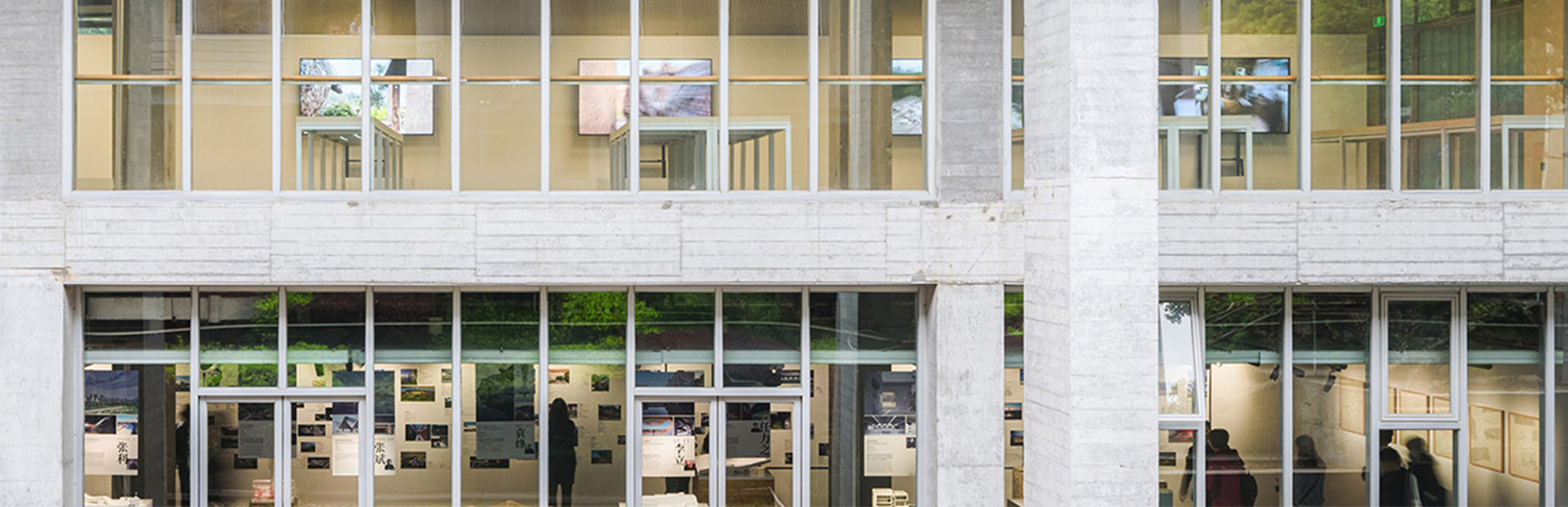
UNSW, ranked Australia’s top university in the latest QS World University Rankings, delivered a high-calibre academic backdrop for cross-border dialogue bridging computational design, artificial intelligence, robotic construction and regenerative material systems.
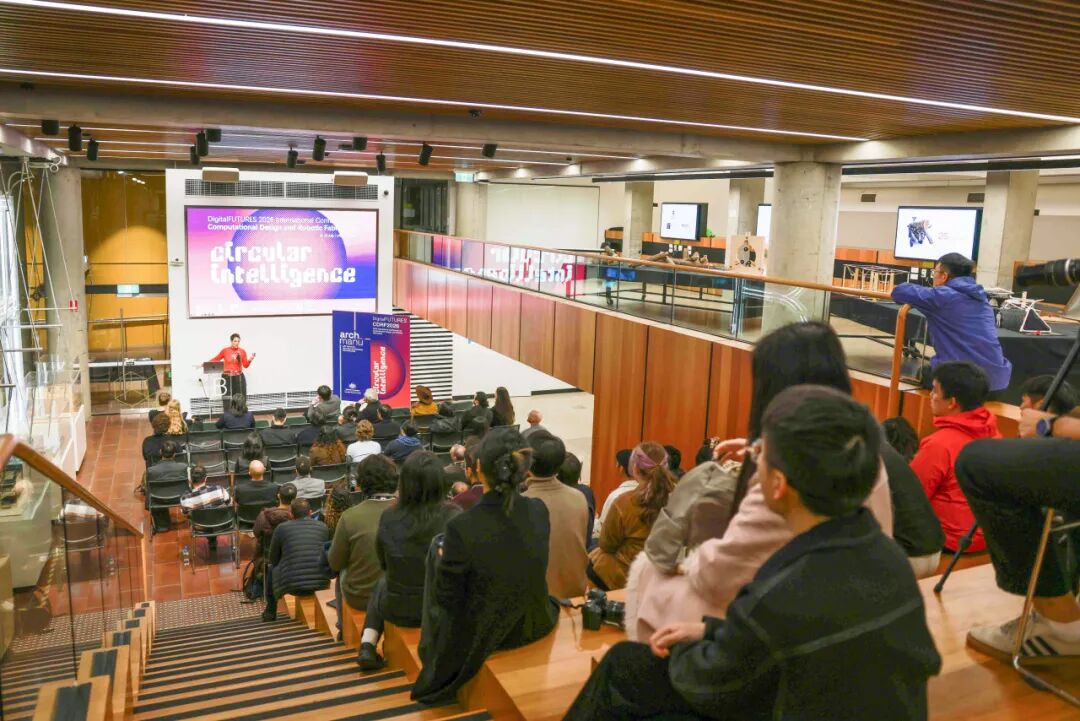
© Katherine Griffiths
Globally open call for papers yielded 377 submissions from 17 countries and 52 research bodies. Rigorous double-blind international peer review selected 49 papers for presentation, delivering an acceptance rate of 12.9%.
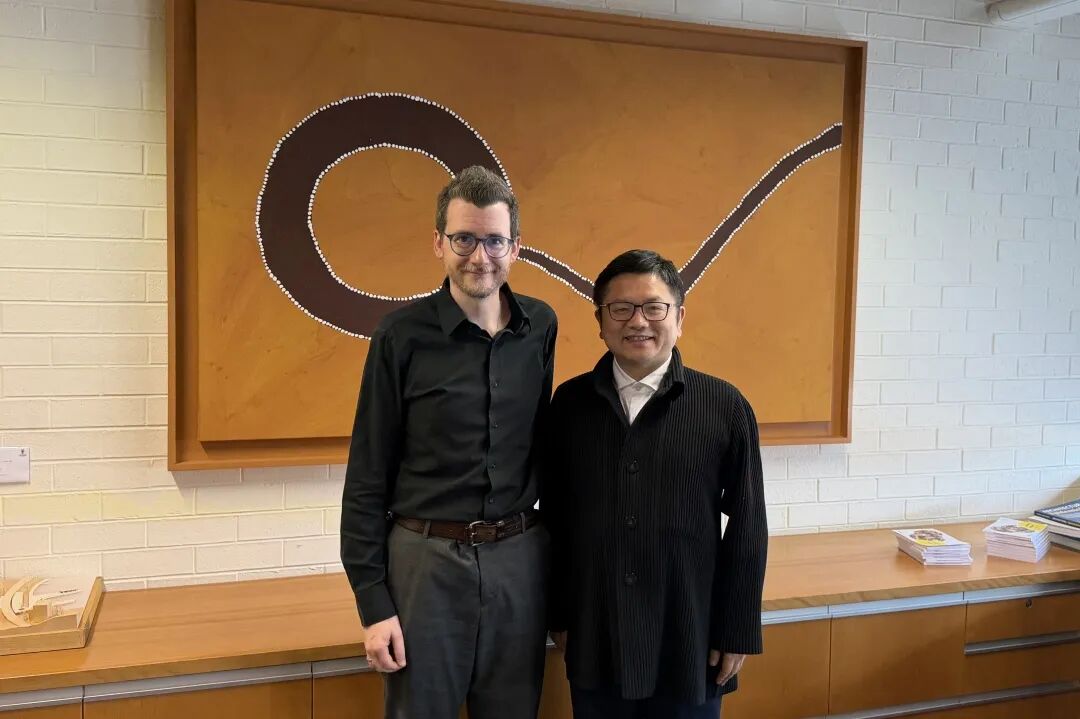
Professor Philip F. Yuan, Dean of the College of Architecture and Urban Planning (CAUP), Tongji University and co-founder of DigitalFUTURES, reflected on the network’s 15-year trajectory—from a small computational design exchange platform to a border-spanning alliance uniting academia, research labs and built-environment practitioners worldwide, catalysing collaborative progress in AI-driven design, robotic fabrication and advanced manufacturing. A formal portrait captured Professor Yuan alongside Professor Philip Oldfield, Dean of UNSW’s School of Built Environment, following keynote remarks.
A concurrent exhibition showcased cutting-edge prototypes and research outputs across computational design, human-robot collaborative fabrication, reclaimed circular materials and digital production pipelines. Full-scale demonstrator structures fabricated during masterclass sessions formed the centrepiece of the gallery display, open to all conference delegates throughout the three-day run.
Professor Christiane M. Herr (Southern University of Science and Technology) – The Edge of Architecture: Examined shifting disciplinary boundaries amid evolving ecological imperatives, advanced facade systems and pervasive digital technology.
Professor Sue Keay FTSE, Director of UNSW AI Institute – Governing AI by Design: Outlined frameworks to embed accountability, safety, ethics and societal impact into the full lifecycle of architectural AI deployment.
Professor Achim Menges (University of Stuttgart, Founding Director of ICD) – Integrative Computational Design and Construction for Transformative Architecture: Presented cross-disciplinary integration workflows unifying design, structural engineering, material science and robotic manufacturing to reimagine conventional construction paradigms.
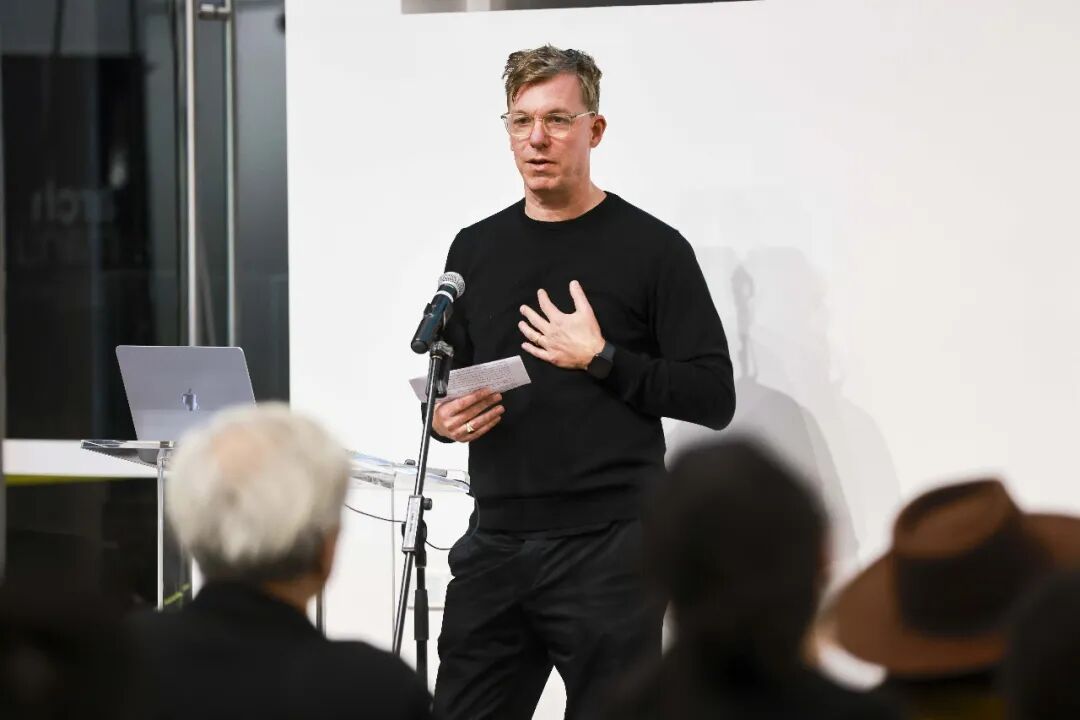
Professor Bronwyn Fox AO, UNSW Deputy Vice-Chancellor (Research & Enterprise), delivered institutional remarks mid-keynote sequence, commending CDRF 2026 for catalysing transnational innovation and interdisciplinary knowledge exchange within the built environment sector.Kathlyn Loseby, Principal at ADEIC Architects – Creating an Industry Academic Nexus to Tackle Urgent, Systemic Challenges in the AEC Industry: Addressed structural bottlenecks facing architecture, engineering and construction sectors, advocating sustained long-term collaborative partnerships between universities and industry stakeholders.
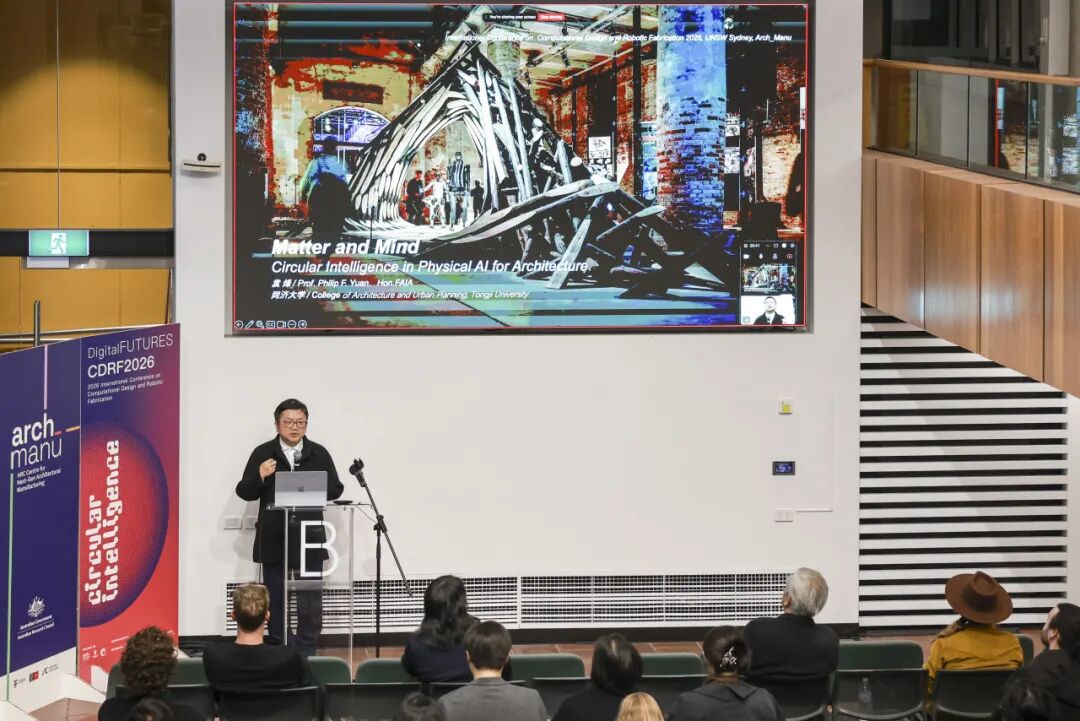
Professor Philip F. Yuan (Tongji University CAUP) – Mind and Matter: Circular Intelligence in Physical AI for Architecture: Explored intersections between digital data logic, material performance, robotic hardware and physical construction, unpacking how embodied intelligent systems redefine contemporary architectural production.
Across 9–10 July, eight thematic parallel sessions hosted oral presentations for all 49 accepted papers. Delegates shared original research covering AI semantic extraction for building assessment, graph relational modelling, multi-modal urban spatial datasets, predictive thermal performance control, sustainable design optimisation, complex curved component fabrication, constrained robotic assembly, timber/bamboo automated manufacturing, discrete modular construction and digital workflows for salvaged material reuse.
The closing session convened at 5:30 p.m. on 10 July, once again moderated by Dr Ivana Kuzmanovska. Conference Chair Professor Hank Haeusler delivered a comprehensive wrap-up of the event’s academic outputs, hands-on showcase achievements and international partnership milestones. Closing reflections were offered by Associate Professor Dingwen Bao (RMIT University) and Associate Professor Hua Chai (Tongji University).
Design Exploration and Construction workflow of Automated FRP Lamination – Zhuoyang Xin, Chenhao Wang, Joseph M. Gattas, Dan Luo
Embodied Circular Intelligence for Reclaimed Timber: Autonomous Scanning and 3D Reconstruction based on Humanoid Robots – Jiyu Liu, Yalei Zhu, Yunning Feng, Philip F. YUAN
Bridging Ecology and Design: A Multimodal Models Framework for Site-Adaptive Urban Vertical Landscapes – Daxu Wei, Christiane M. Herr

NO.1239 Rd. Siping, SHANGHAI


