 ABOUT US
NEWS

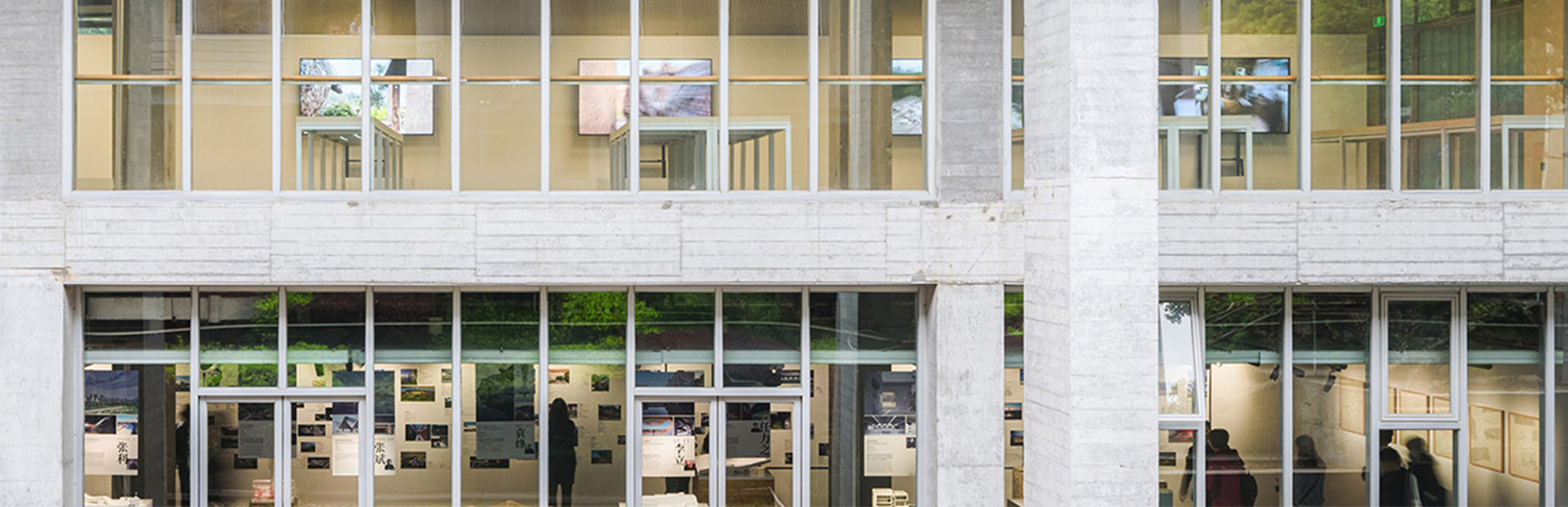
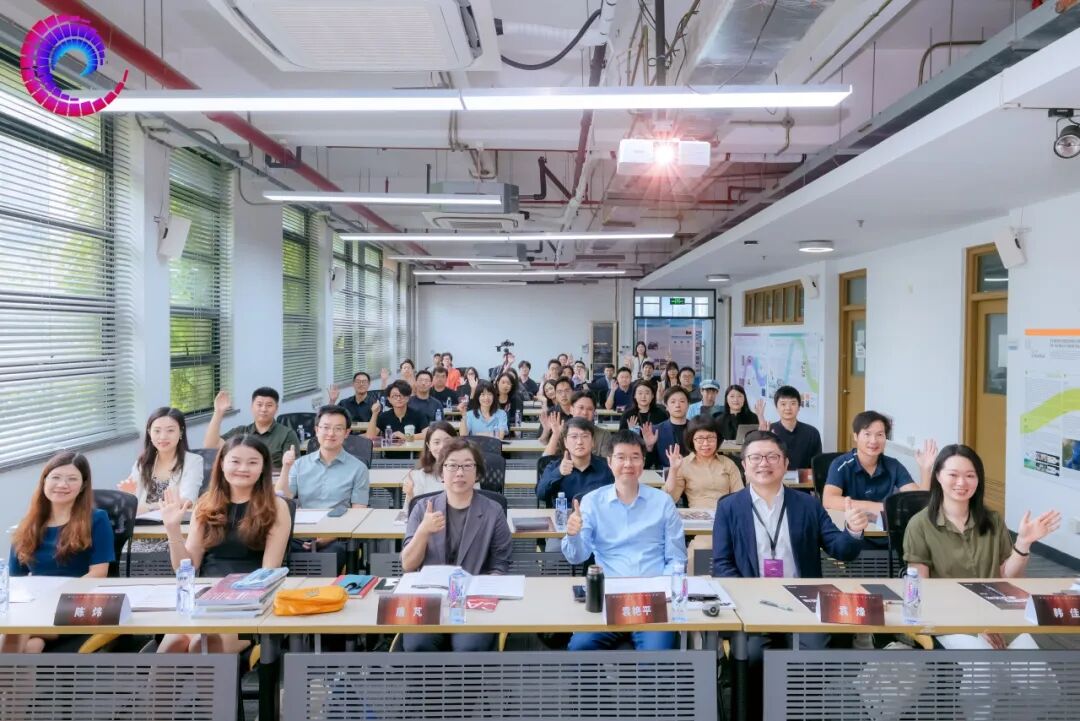
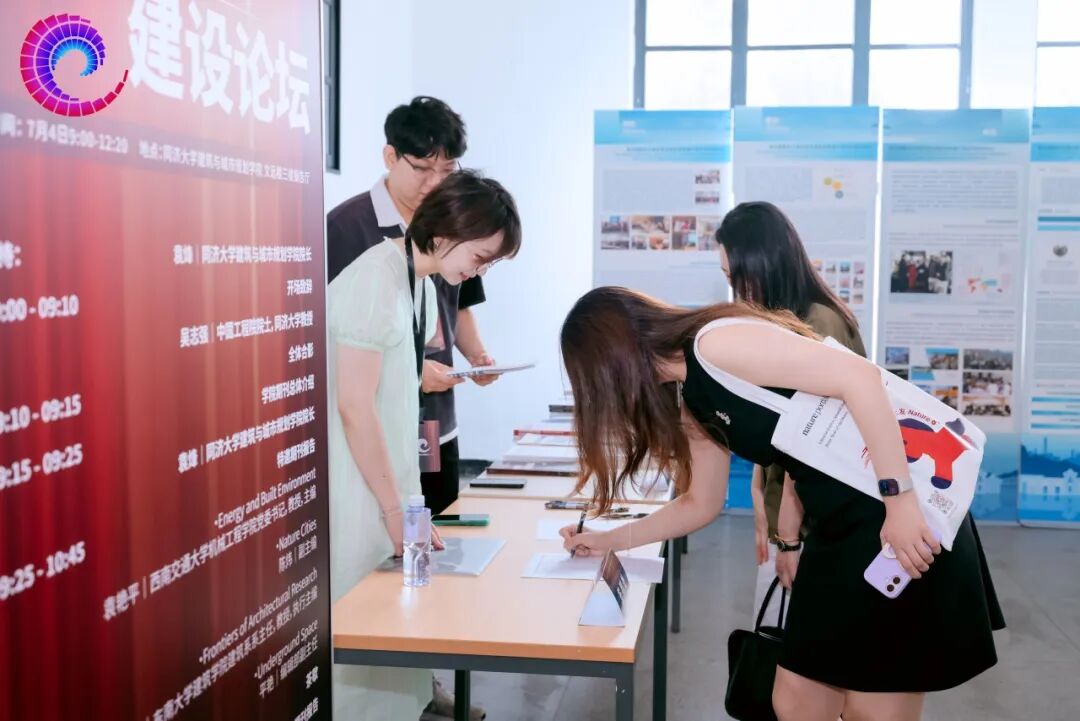
On the morning of July 4, 2026, the Forum on Excellence in Journal Development of Tongji University College of Architecture and Urban Planning was held at the third-floor lecture hall of Wenyuan Building. The forum was chaired by Professor Philip F. Yuan, Dean of CAUP, and opened with online remarks by Professor Wu Zhiqiang, Member of the Chinese Academy of Engineering and professor at Tongji University.
The forum focused on international journal development, academic communication platforms, mechanisms for young scholar participation, and the growth of the college's journal portfolio, bringing together journal leaders, editorial teams, and faculty members involved in CAUP journals.
Opening Remarks and Journal Overview
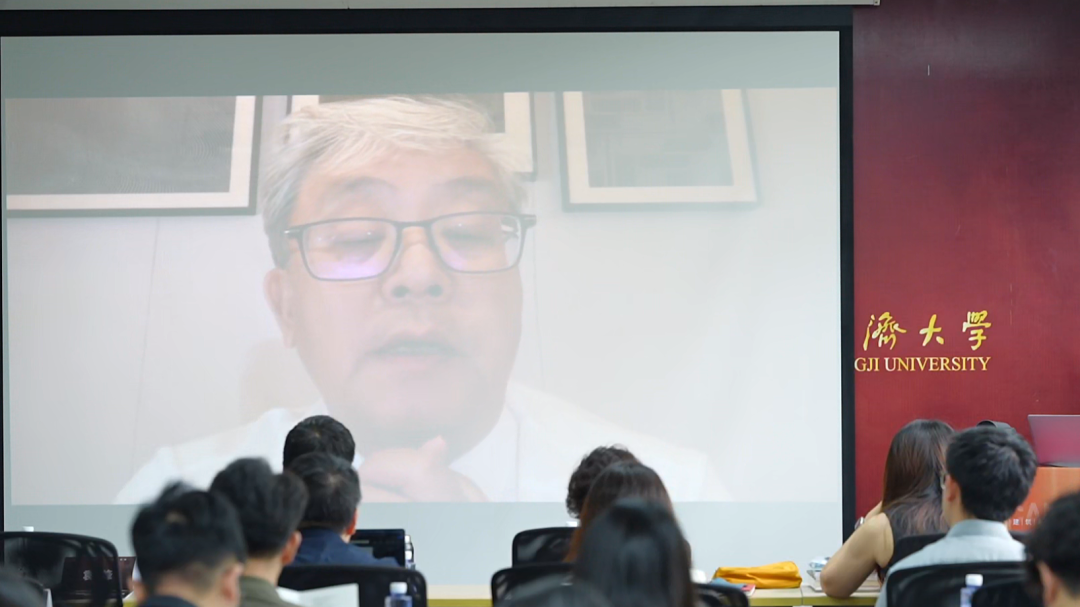
In his opening remarks, Academician Wu Zhiqiang reviewed the college's academic accumulation in architecture, urban planning, landscape architecture, and related fields. He noted that journal development is not only a platform for publishing research outcomes, but also an important arena for communicating disciplinary ideas, advancing international academic dialogue, and constructing knowledge systems. He encouraged the college to build its journal portfolio with a more open global vision, enabling Tongji's academic work and innovative ideas to enter broader international networks.
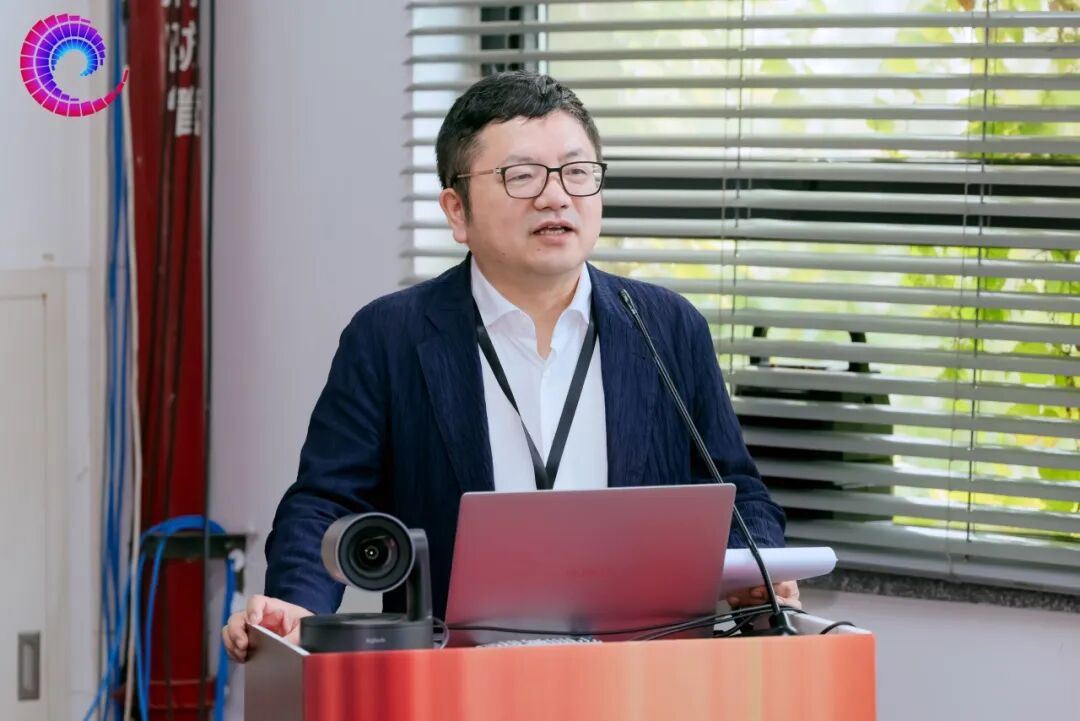
Dean Philip F. Yuan then introduced the college's journal system. He noted that CAUP has developed a diverse journal ecology covering urban and rural planning, built heritage, Asian architecture, Chinese architecture, architectural and urban studies, and architectural intelligence. With distinct academic positions, communication paths, and organizational models, these journals together form an important platform through which the college contributes to international academic discourse.
Invited Reports on Journal Development
Yuan Yanping: Building an International Academic Platform Through a Three-in-One Model
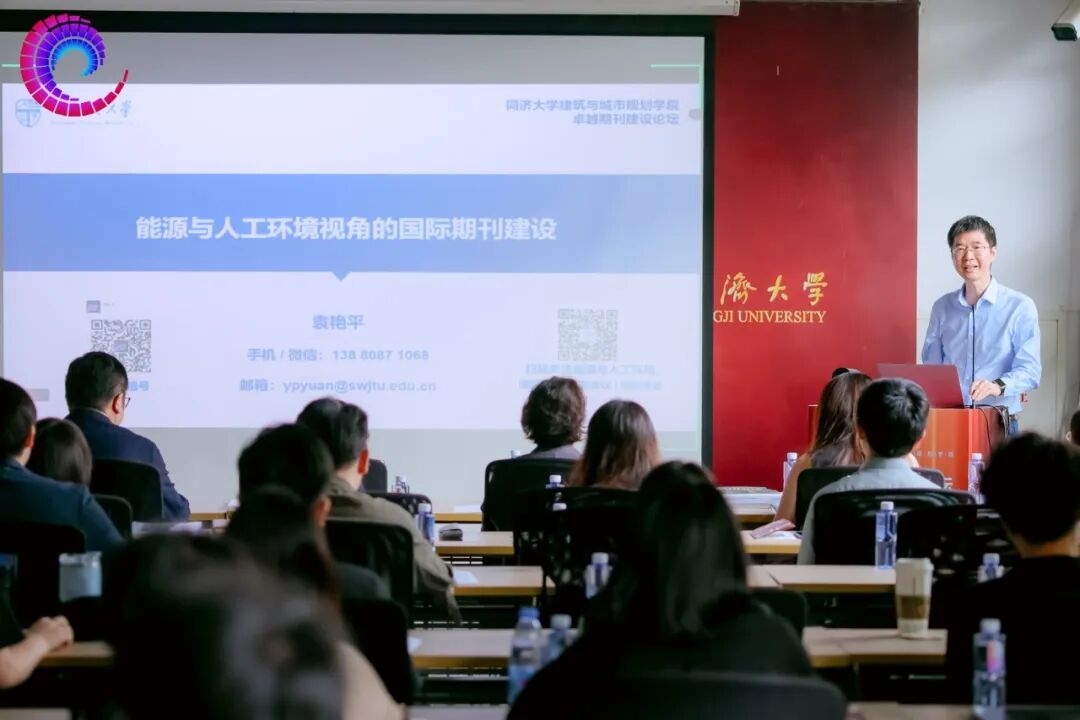
Yuan Yanping, Professor and Party Secretary of the School of Mechanical Engineering at Southwest Jiaotong University, Editor-in-Chief of Energy and Built Environment, shared his reflections on building international academic platforms. In his view, developing international journals at Chinese universities is an essential part of strategic internationalization and an important way to address the disconnect between research topics and the global dissemination of research outcomes. Drawing on the development of Energy and Built Environment, he proposed a three-in-one model linking international societies, conferences, and journals. International conferences bring authors, reviewers, and scholarly communities; international societies build long-term membership and stable networks; journals provide channels for publishing and disseminating high-quality research. When these three components work together, new journals can expand recognition and impact more quickly. He also emphasized that journal development should not be measured only by impact factors or publication volume, but also by manuscript quality, editorial board engagement, and the health of the review system.
Chen Wei: Editorial Logic and Workflow of Nature Cities
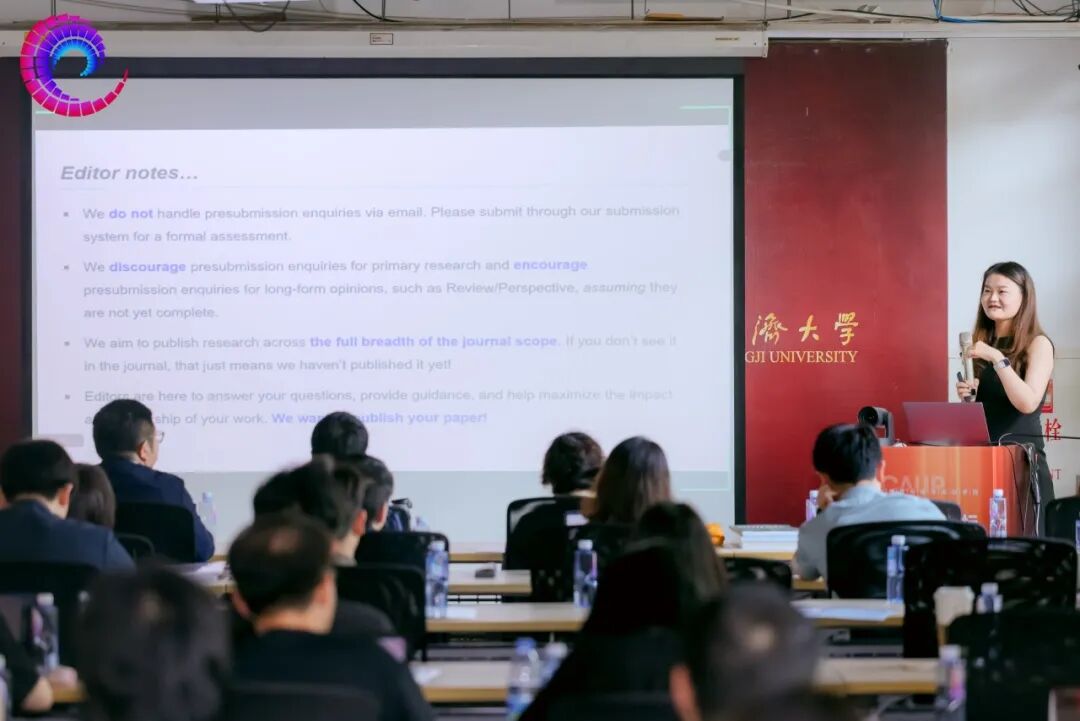
Chen Wei, Deputy Editor of Nature Cities, introduced the journal's positioning, article types, and editorial workflow from the perspective of a full-time editor. She explained that Nature Cities is interested in research that helps readers understand cities in new ways. The key is not whether the scale of a study is sufficiently large, but whether the story truly places the city at the center and can engage readers across disciplines. She noted that urban research does not necessarily have to be global in scale or purely quantitative. A neighborhood, a street, or a qualitative interview can become influential if it raises questions and insights with broader relevance. When submitting a paper, authors should explain why the research matters, why it fits the journal, and what new understanding it offers to the urban research community, rather than simply emphasizing the author's identity or institutional profile. She also explained that Nature Cities assigns manuscripts to full-time editors according to expertise and decides whether to send them for review through editorial discussion, with the aim of maintaining a fair and transparent process.
Tang Peng: Long-Term Operation of Frontiers of Architectural Research
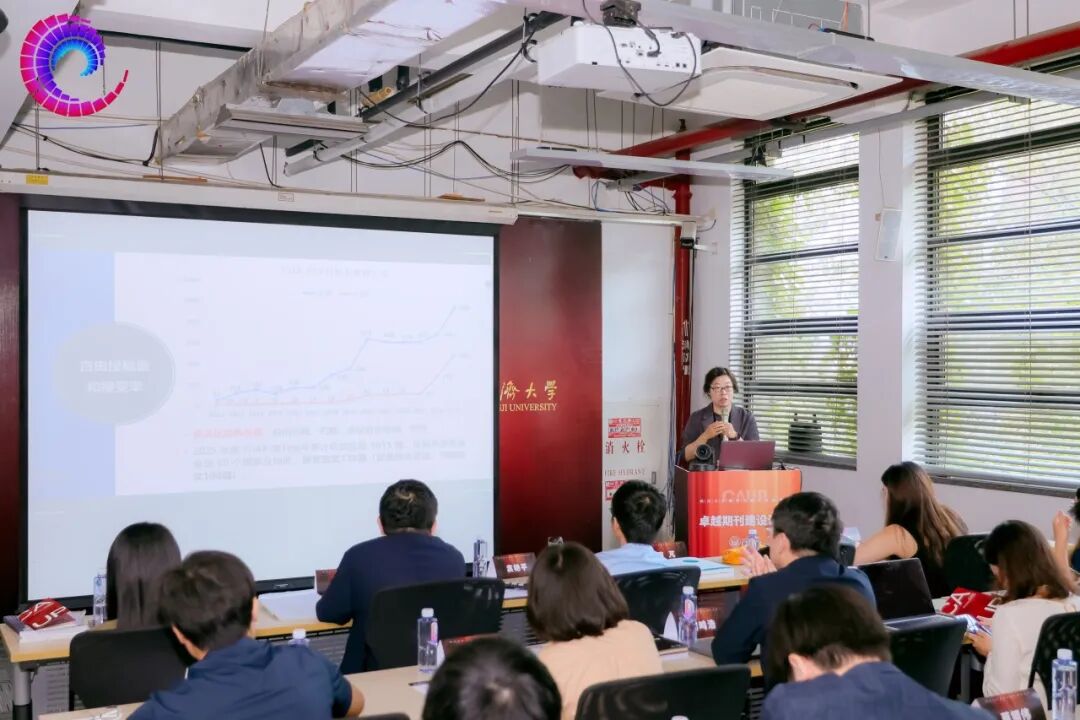
Tang Peng, Professor and Chair of the Department of Architecture at the School of Architecture, Southeast University, and Executive Editor-in-Chief of Frontiers of Architectural Research, reviewed the journal's development since its launch in 2012. She noted that in its early years the journal faced challenges caused by limited experience in English academic writing and submission within the architecture field. With database indexing, wider international dissemination, and improved manuscript quality, the journal has gradually built stable academic influence. She emphasized that an important feature of the journal is its interdisciplinary position between scientific research and the humanities and social sciences, while continuing to support research in architectural design, urban design, heritage conservation, and other design-oriented fields. She also described the journal's practices of regular meetings, data monitoring, strict workflows, and thematic planning, as well as its efforts to build high-quality manuscript sources through young scholar salons, special issue workshops, and international youth scholar exchanges.
Ping Yan: Ecological Journal Operation and Brand Building for Underground Space
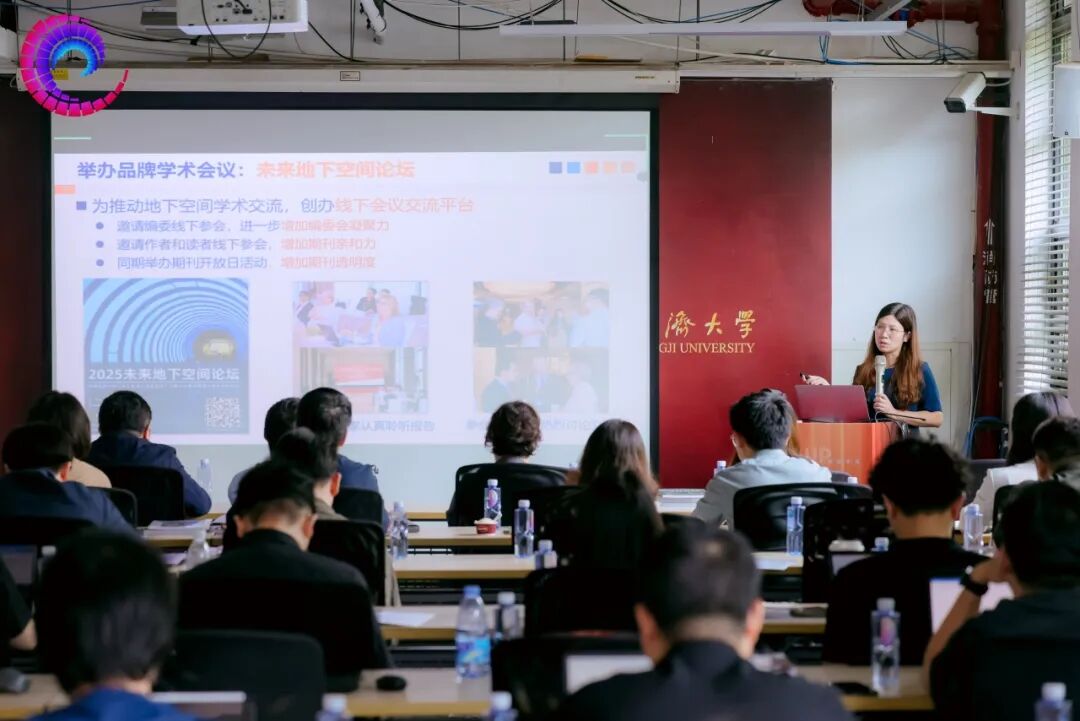
Ping Yan, Deputy Director of the Editorial Office of Underground Space, introduced the journal's experience in daily operation and brand building. She noted that Underground Space was launched in 2016 in response to international publication needs related to underground space development, resilient cities, intelligent construction, green development, and human-centered concerns. She described journal development as an ecological process in which the editor-in-chief team, editorial board, editorial office, authors, reviewers, and young scholars together form a sustainable academic ecosystem. The journal safeguards quality through strict review, double-blind peer review, editorial board training, special issue planning, frontier topic assessment, and best paper selection. It also expands cohesion and visibility through branded lectures, future underground space forums, open days, tenth-anniversary events, student competitions, and university roadshows.
CAUP Journal Development Reports
Frontiers of Urban and Rural Planning
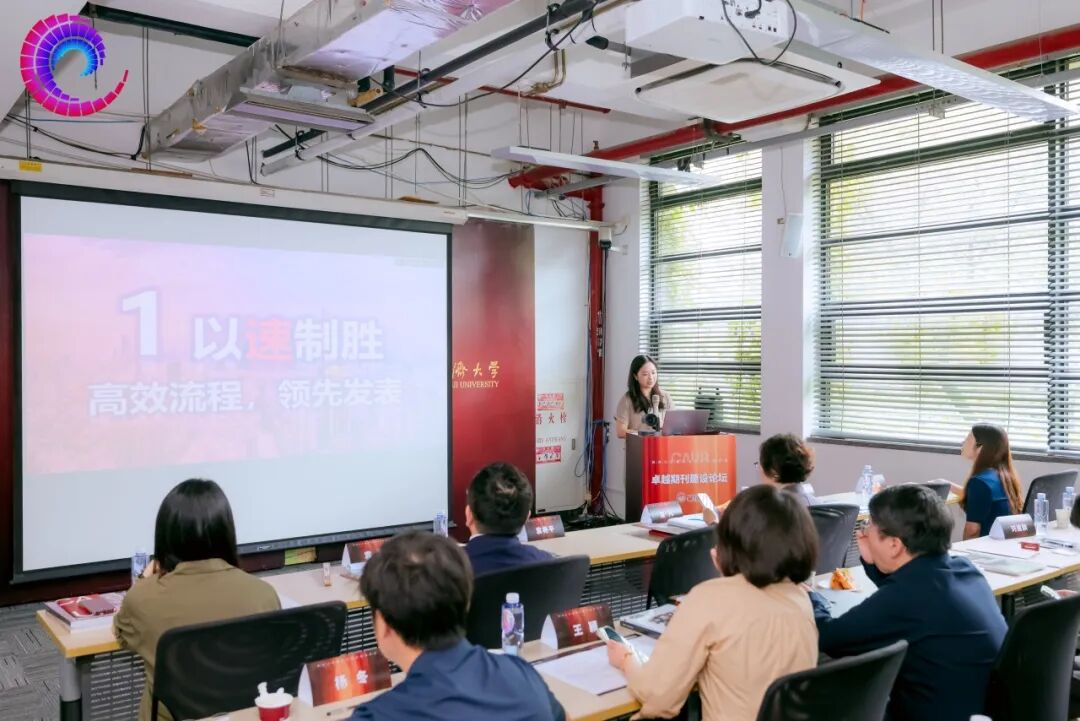
Representative of Academician Wu Zhiqiang's team introduced the development of Frontiers of Urban and Rural Planning. Launched in 2022, the journal publishes open access for a global audience and covers topics including urban planning, urban studies, architecture, geography, heritage, and digital technology. The report emphasized both efficient workflows and academic communication: shortening the cycle of submission, review, revision, decision, and publication, while disseminating new research across multiple platforms to increase the visibility of papers and the journal.
Built Heritage
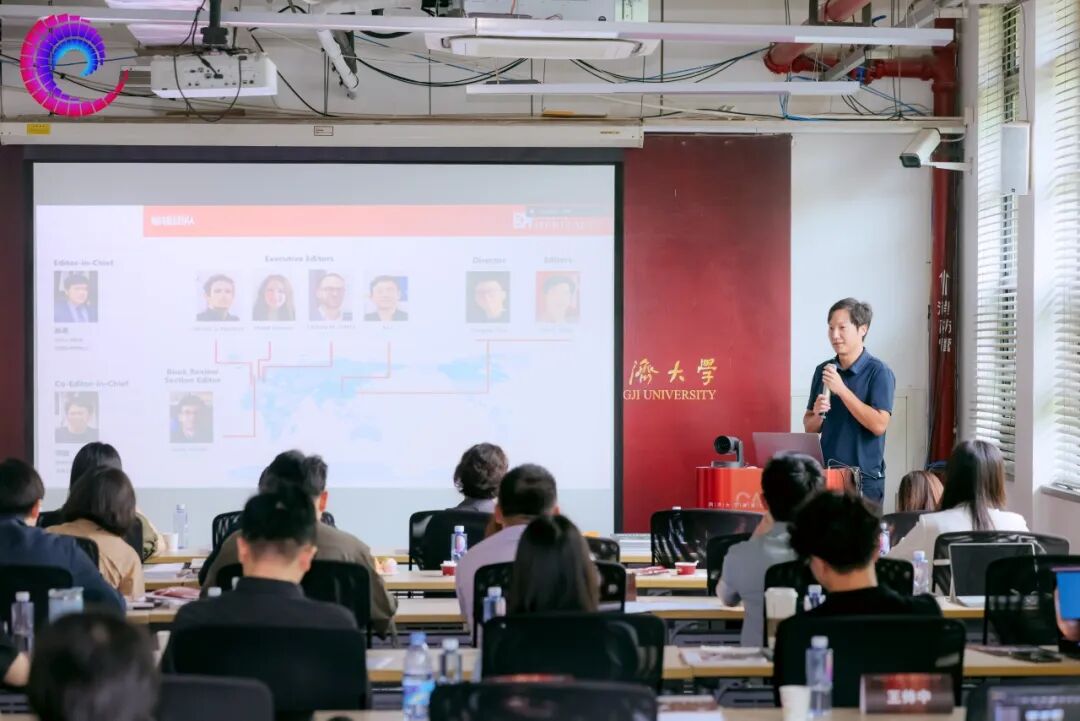
Yang Dong, editor of Built Heritage, introduced the journal as an English-language professional publication focusing on the conservation and regeneration of built heritage, with attention to the research, protection, and revitalization of historic built environments. Officially launched in 2017 and partnered with Springer Nature since 2020, the journal has further strengthened its international communication capacity. It is currently open access, charges no APC, and provides language polishing support when needed. A key task for future development is to gain broader recognition among scholars from countries with strong heritage conservation research traditions.
Architecture Asia
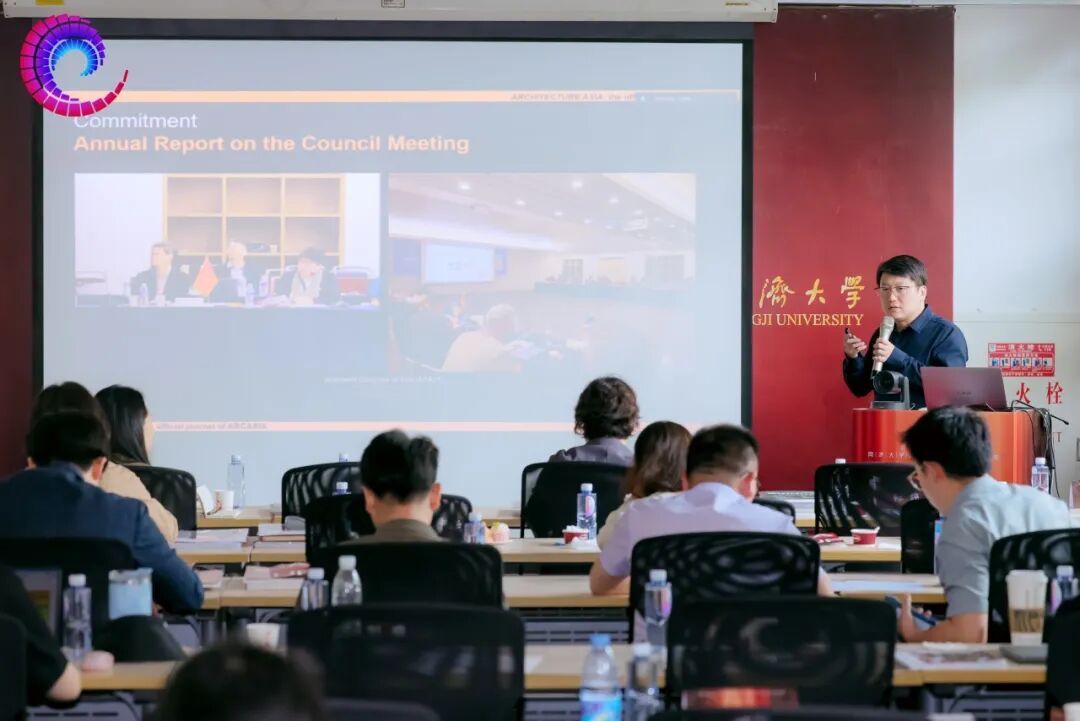
Zhou Minghao, Associate Editor-in-Chief of Architecture Asia, introduced the positioning and operating model of Architecture Asia. As an official publication connected to platforms of the Asian architects' community, the journal has a clear professional association identity. Compared with a standard academic journal, it functions more like a database, showcase, international dialogue platform, and mechanism for discovering young architectural talent across Asia. Relying on networks of architects' associations in multiple Asian countries and regions, the journal connects young architects, critics, and scholars through guest editorship and records the diverse practices of contemporary Asian architecture.
Architecture China
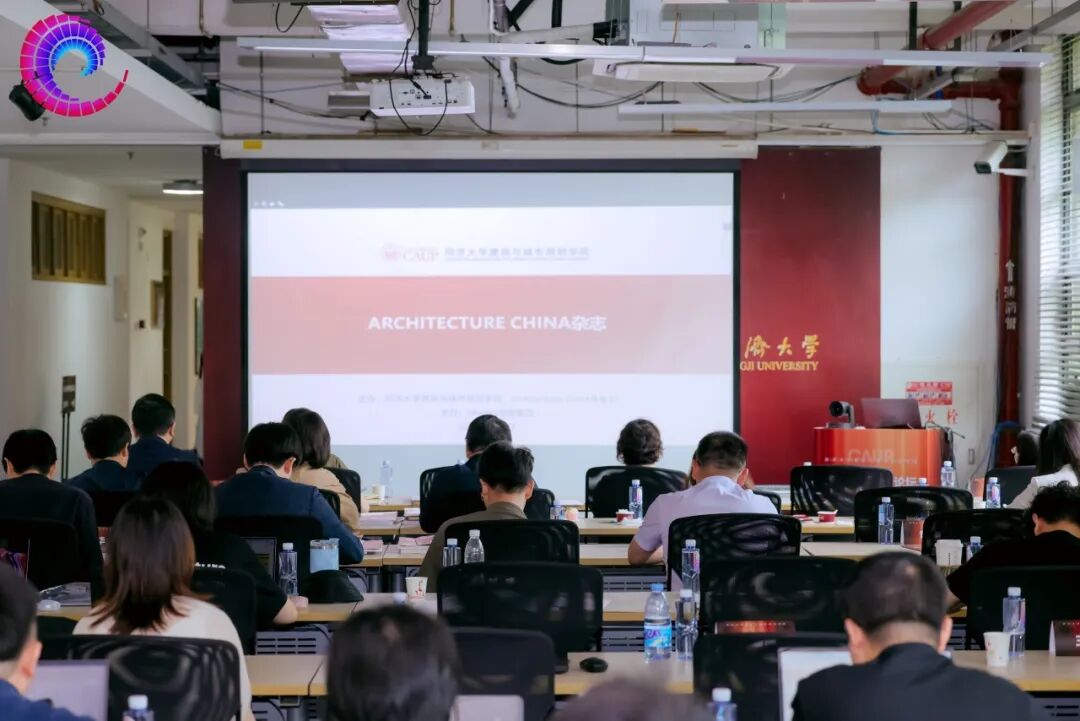
Jiang Jiawei, Executive Editor of Architecture China, introduced Architecture China online. With the mission of communicating contemporary Chinese architecture globally, the journal connects Chinese architectural practice with international architectural discourse through English publication, international distribution, advisory networks, and award-related collaborations. Its content includes recent architectural works, academic criticism, award features, and thematic issues on contemporary Chinese architecture. In the future, Architecture China hopes to draw further on academic resources such as the Shanghai School and Tongji School, improve its international collaboration network, and advance digital transformation.
Perspectives in Architecture and Urbanism
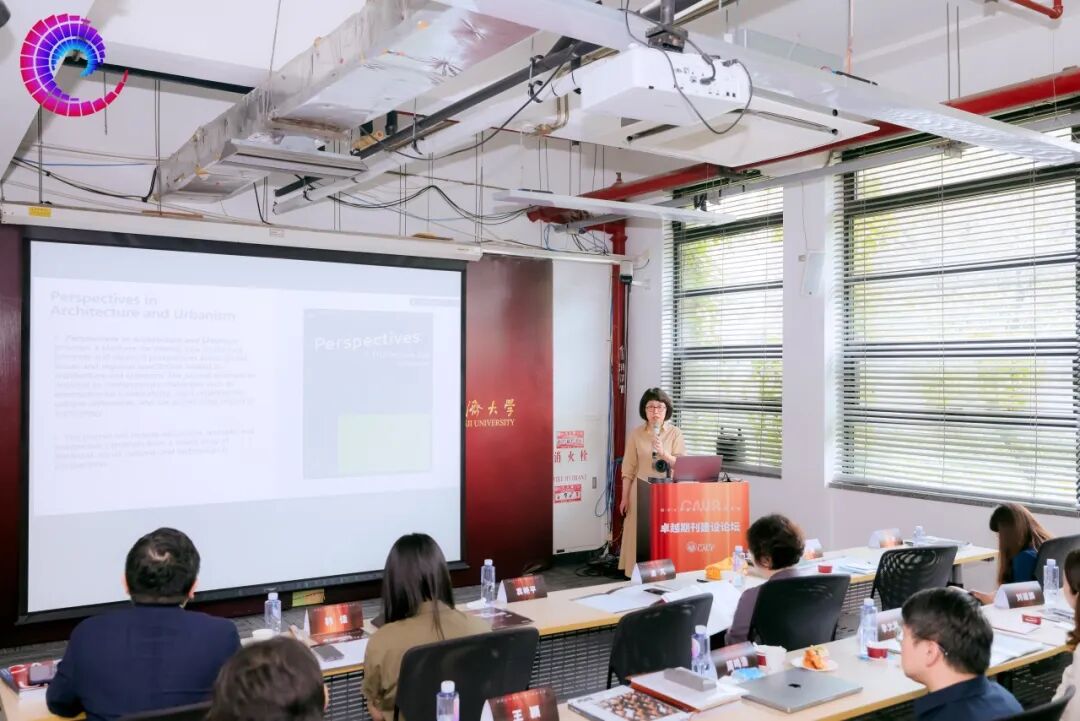
Wang Ying, Executive Editor-in-Chief of Perspectives in Architecture and Urbanism, introduced Perspectives in Architecture and Urbanism, a new journal launched in 2024. Guided by the idea of building global networks from local knowledge, the journal publishes open access in English and offers global readers new perspectives on architectural and urban research in China and other regions. The report particularly emphasized an archival publishing strategy, aiming to build a more systematic knowledge base through project archives, image materials, design processes, conference discussions, and research articles, while connecting first-hand archives, research platforms, and international dialogue.
Architectural Intelligence
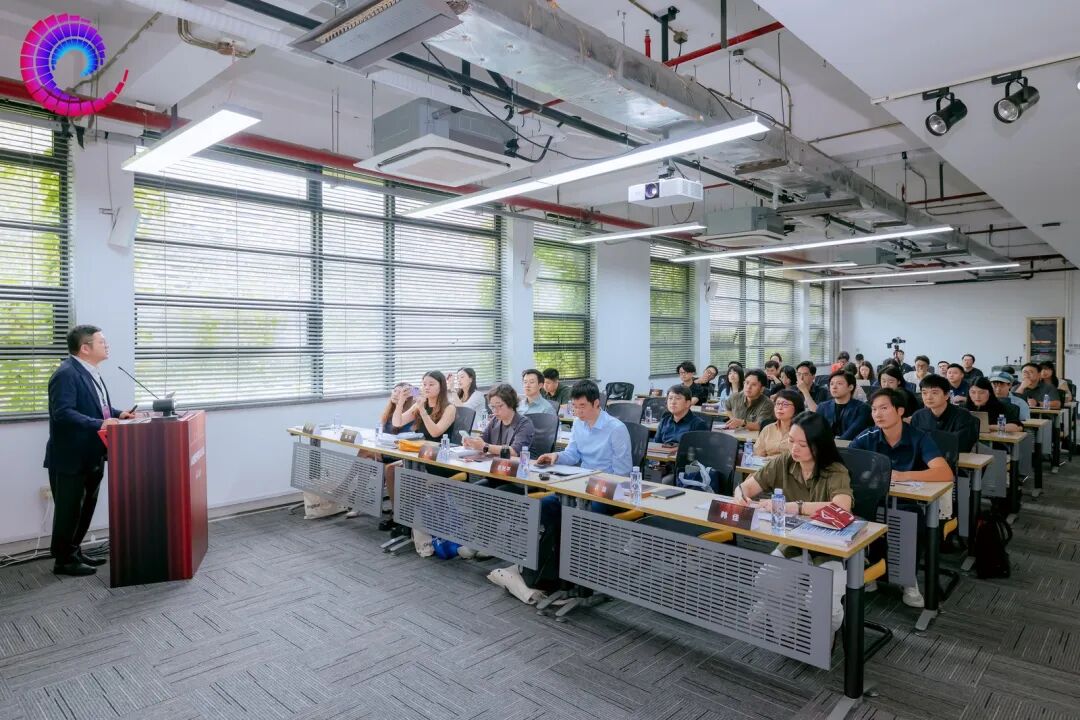
Dean Philip F. Yuan, Editor-in-Chief of Architectural Intelligence, introduced the development of Architectural Intelligence. Founded in 2022, the journal focuses on architectural science, design science, and human settlement research in the age of artificial intelligence. It emphasizes design thinking as a foundation and uses artificial intelligence and scientific evidence to advance the discipline of architecture. Yuan noted that the journal is supported by a platform system linking one workshop, one conference, and one journal: DigitalFUTURES workshops, multi-continental international conferences, and the journal itself. As a young journal, it still needs to improve manuscript processing efficiency, stabilize publication quality, and expand international influence.
Roundtable Discussion
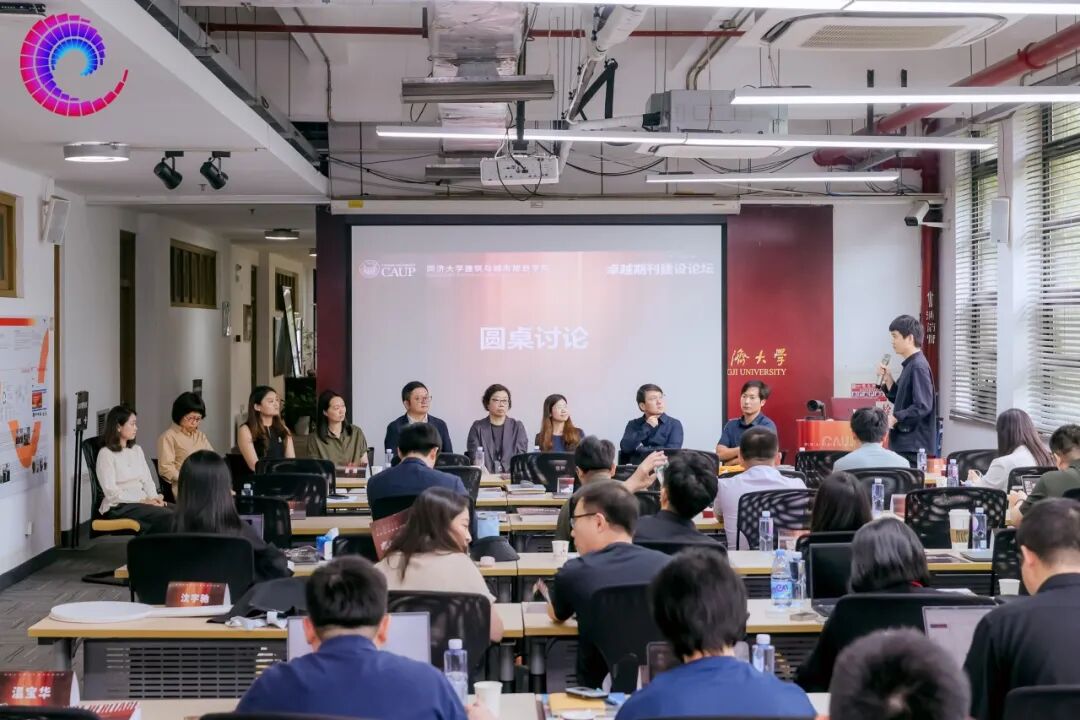
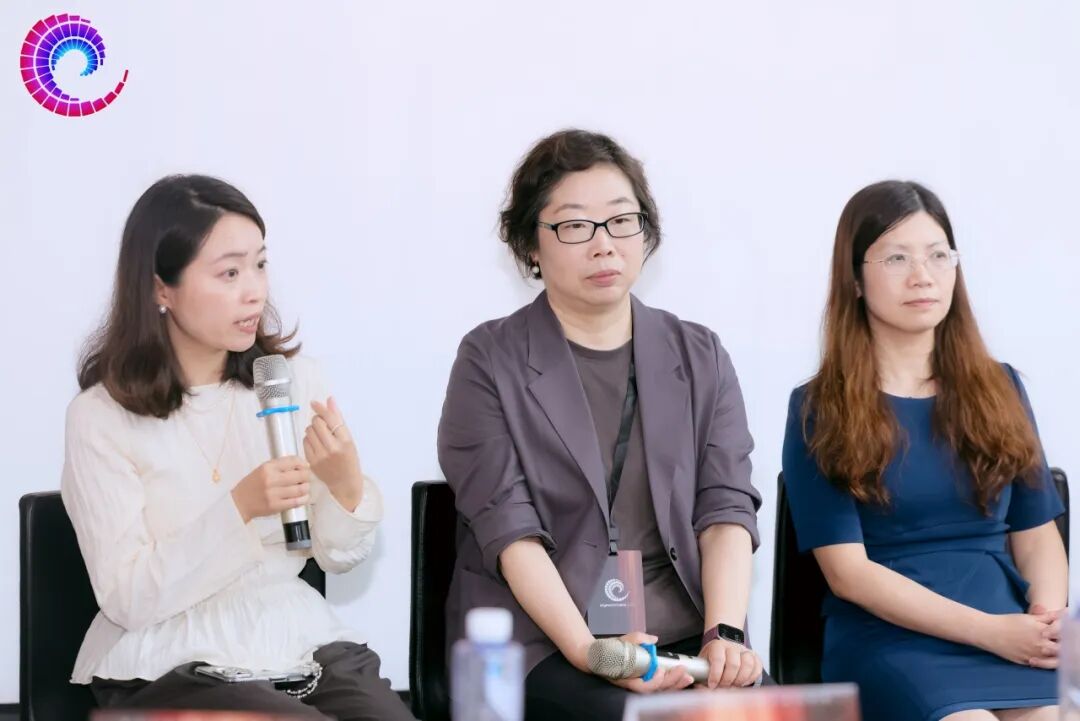
Moderated by Chai Hua, Associate Professor at the College of Architecture and Urban Planning, Tongji University, the roundtable brought together Zhou Minghao, Tang Peng, Chen Wei, Ping Yan, Philip F. Yuan, Wang Ying, Yang Dong, Han Jia (Executive Publisher, Springer Nature), and Ji Wenhui (Associate Professor at Southwest Jiaotong University and Director of the Editorial Office of Energy and Built Environment).
The roundtable discussion centered on how to enhance journal impact and how young scholars can participate in journal development. Participants generally agreed that there is no shortcut to impact. High citation and strong influence are still grounded in article quality, field recognition, and a stable academic community. Young journals should first improve article quality and brand recognition before gradually expanding in scale.
Regarding young scholar participation, Chen Wei introduced mechanisms in the Nature portfolio that encourage young researchers to take part in co-reviewing, and emphasized that editors focus on the persuasiveness of the work itself rather than whether the author comes from a prominent team. Tang Peng noted that Frontiers of Architectural Research helps young authors understand and participate in international journal operations through young scholar meetings, transparent workflow introductions, and reviewer networks. Ping Yan explained that Underground Space provides fairer paths for young scholars through a youth think tank, online forums, student competitions, and double-blind review. Yang Dong also noted that after Built Heritage established a young talent pool, review efficiency and workflow quality improved significantly.
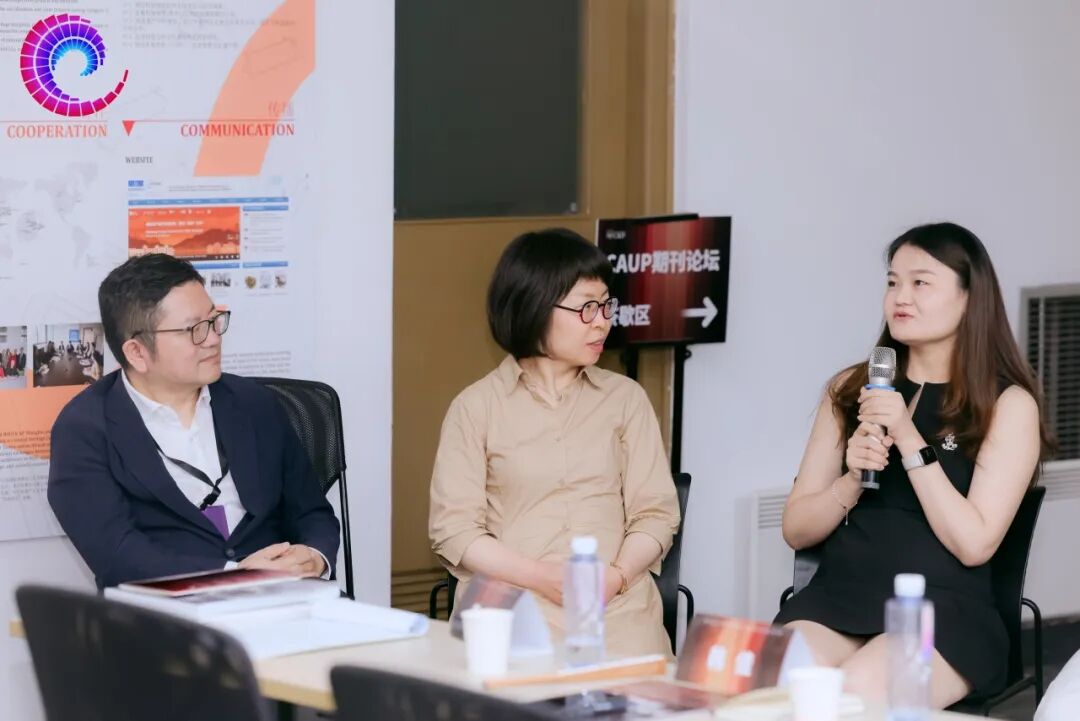
Representatives of the college's journals also shared their reflections. Architecture Asia hopes to use its guest editor network to identify young architects, critics, and scholars from different parts of Asia. Perspectives in Architecture and Urbanism is concerned with how platform-based journals can build academic connections among different types of articles. Architectural Intelligence hopes to explore new knowledge paradigms together with young researchers amid the disciplinary transformation brought by artificial intelligence.
In his concluding remarks, Dean Philip F. Yuan stated that journal development requires long-term investment and community support. The college hopes to use more platforms and mechanisms to make visible the academic work that many people have sustained over time, so that journals can become important vehicles serving scholarship, disciplines, and the development of knowledge.
Forum Summary
Taking journals as its entry point, the forum connected multiple themes including international communication, academic community building, young scholar development, and the future of disciplines. The experiences shared by different journals show that an excellent journal requires clear academic positioning and high-quality manuscripts, as well as stable editorial mechanisms, open international networks, and a continually growing young scholarly community.
Looking ahead, Tongji University College of Architecture and Urban Planning will continue to rely on its diverse journal portfolio to advance international academic communication in architecture, planning, heritage, urban studies, artificial intelligence, and related fields, while building academic platforms with greater openness, influence, and creativity.

NO.1239 Rd. Siping, SHANGHAI


