 ABOUT US

NEWS

Event Information
Date: 23 October 2026
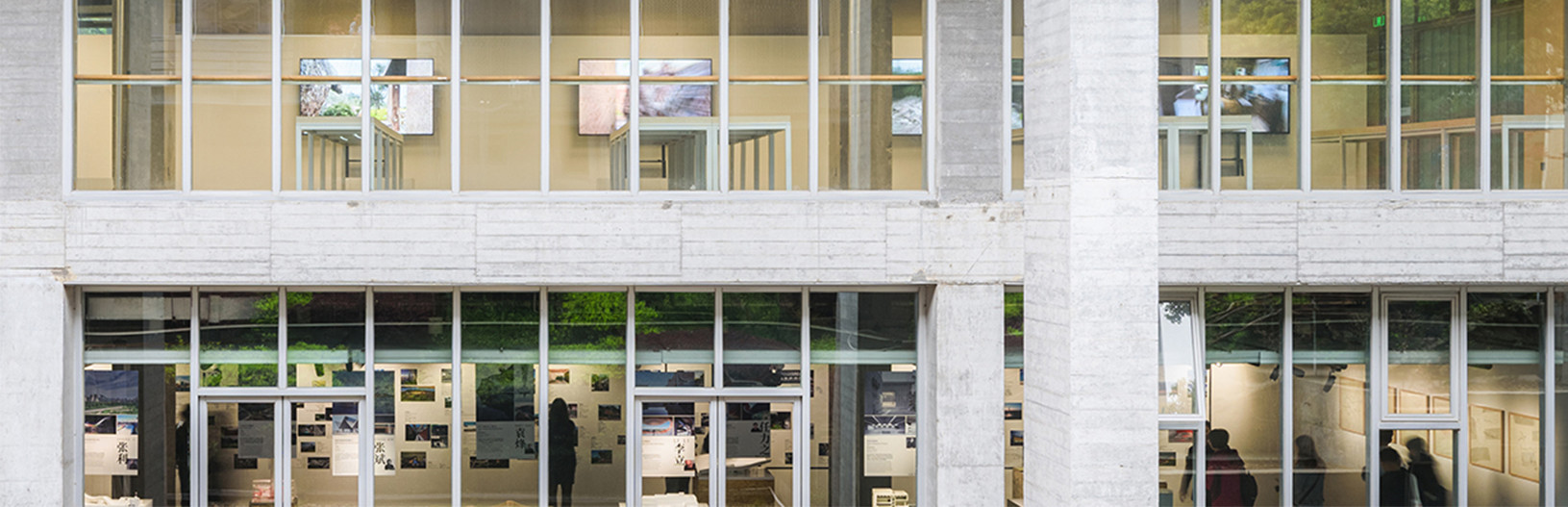
Venue: Multipurpose Hall, Tongji Architectural Design (Group) Co., Ltd.
Organization: Tongji University; Korea Institute of Registered Architects (KIRA); Architecture Asia;
Architects Regional Council Asia (ARCASIA); College of Architecture and Urban Planning, Tongji University; Tongji Architectural Design (Group) Co., Ltd.; Research Institute for Elaborated Urban Governance, Tongji University
Media Support: The Architect; New Architecture; Time + Architecture; World Architecture
Asia is today undergoing rapid and profound urban and social transformation. Rapid urbanization, climate change, resource and environmental pressures, and the preservation of historical and cultural heritage are intertwined, while digital technologies and new modes of construction continue to reshape architectural production and urban life. Facing challenges that are shared yet shaped by distinct local contexts, young architects are emerging as a vital force in charting the future of architecture and cities.
The Innovation, Responsibility and Action: Asian Young Architect Forum brings together young architects and international scholars from across Asia to focus on the professional development of young architects and the common challenges of our time, sharing reflections and practices from diverse social and regional contexts. Rooted in a youth perspective, the Forum builds a cross-border, cross-regional platform for professional dialogue, inspiring new insights through the exchange of ideas—responding to the times through design, connecting society through responsibility, and embracing the future through action.
Opening Session 09:00–09:30
Opening Session Host
Chairman, Department of Architecture, College of Architecture and Urban Planning, Tongji University
09:00–09:05
Introduction of Attending Guests
09:05–09:30
Executive Vice President of Tongji University
Biography not provided.
Dean of the College of Architecture and Urban Planning, Tongji University
Biography not provided.
Vice President of Tongji Architectural Design (Group) Co., Ltd.
Biography not provided.
President of Korea Institute of Registered Architects
Biography not provided.
President of Architects Regional Council Asia
Biography not provided.
AM Session 09:30–12:00
ARCASIA Committee on Young Architects Chair 2026-27
09:30–09:35
Introduction to Korean Young Architect Issue, Architecture Asia
Deputy Editor-in-Chief, Architecture Asia
Honorary Secretary of ARCASIA

Zhou Minghao is Deputy Director of the Division of Humanities and Social Sciences, Deputy Director of the Center for Digital & Intelligent Humanities, and Executive Deputy Director of the Research Institute of Elaborate Urban Governance at Tongji University. He also serves as Honorary Secretary of the Architects Regional Council Asia (ARCASIA).
His research focuses on Urban Spatial Governance in the Post-growth Era. Over the past five years, he has led 10 national and provincial-level research projects, published over 30 academic papers, and received numerous academic, professional, and teaching awards.
09:35–09:50
New Trajectories after Compressed Modernity: A Brief Historical Context for the Works of Young Korean Architects
Professor, Department of Architecture, Seoul National University
BAEK Jin is a professor in the Department of Architecture and Architectural Engineering at Seoul National University. He earned his Bachelor of Science and Master of Science degrees from Seoul National University, his Master of Architecture from Yale University, and his Ph.D. in the history and theory of architecture from the University of Pennsylvania. Before joining Seoul National University, he taught and conducted research at Pennsylvania State University and the University of Tokyo.
His research focuses on environmental ethics, cross-cultural issues in architecture and urbanism, and urbanism as an ethical and cultural condition of collective life. He has organized numerous international symposia and conferences, including The International Architecture and Phenomenology Conference and Asia Cities Culture. He has also delivered keynote addresses and invited lectures at international events, including Topographies of Collective Housing and Its Praxis: Imagining Futures beyond the Apartment.
He is the author of Nothingness: Tadao Ando’s Christian Sacred Space (Routledge, 2009), Architecture as the Ethics of Climate (Routledge, 2016), and Justice and the City (in Korean; Hyohyung, 2025). His articles have appeared in journals including Architectural Research Quarterly, The Journal of Architecture, Journal of Architectural Education, Architectural Theory Review, Center, and Philosophy East and West.
09:50–10:05
Parallel Universes
Research & Reality in Advance Architecture
NAD - Advance Architecture Design and Research Studios
Founder | Chief Architect NAD studios
Islamabad, Pakistan
Mubesher is a computational architect and founder of NAD Studios (Advance Architecture Design and Research Studio), an interdisciplinary architectural practice based in Islamabad, Pakistan, with an international outlook. She holds a Bachelor of Architecture from the National College of Arts (NCA), Lahore, and a Master's degree in Architecture and Automation from The Bartlett School of Architecture, University College London (UCL). Her academic and professional journey spans Pakistan, Türkiye, and the United Kingdom, where she gained professional experience with architectural practices in Ankara and London. NAD Studio operates through two parallel yet interconnected avenues: architectural design and design research, allowing experimental investigations and built practice to inform one another. The studio's research explores the intersection of architecture, computational design, emerging technologies, and material intelligence, with a particular interest in how research-driven methodologies can inform contemporary architectural practice. Its investigations encompass algorithmic design, digital fabrication, machine learning, and the development of innovative architectural systems that respond to spatial, environmental, and contextual challenges. Through NAD Studios, Noor leads a diverse portfolio of architectural projects, bringing together computational thinking, contextual sensitivity, and a strong emphasis on materiality and spatial experience. The studio's design approach explores how contemporary methodologies and experimental thinking can contribute to meaningful, functional, and culturally responsive architecture. Her broader architectural approach seeks to bridge academic research and professional practice, translating experimental design thinking into real-world architectural solutions while continuing to explore new possibilities.
10:05–10:20
Reading Jeju
Principal Architect, a root architecture

LEE Changkyu was born in Jeju and graduated from Jeju National University with a degree in Architecture. KANG Jung Yoon was born in Seoul and graduated from Ewha Womans University with a degree in Architectural Engineering. They gained professional experience at guga Urban Architecture before establishing a root architecture. Like the root note that anchors a chord in music, the studio seeks the fundamentals of architecture. Through careful observation of time, place, and everyday life, they explore how familiar qualities can be translated into contemporary architecture. Their major works include Gosan-jip, Slowboat Atelier, Mokwoljae, Woljeong-ri Doojip, and VEKE. In 2025, the practice received the Korea Young Architect Award.
10:20–10:35
We All Learn Architecture First on the Street
Principal Architect, a.co.lab
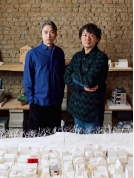
a.co.lab is a Seoul-based architectural practice founded in 2013 and led by principal architects Isak Chung and Hong Jin Pyo. Its name, short for architecture collaboratory, reflects a belief that architecture is not simply the design of buildings, but a way of understanding and engaging with the world. The practice begins with the overlooked landscapes of everyday life and explores, through its ongoing inquiry into 'Rest-ism', the architectural knowledge embedded in ordinary structures, informal techniques, and anonymous decisions that shape our cities. Its work moves between architectural design, urban research, public art, and exhibition-making. a.co.lab received the 2025 Korean Young Architects Award and represented Korea at the 2016 Venice Architecture Biennale.
10:35–10:50
URBAN – RESIDENTIAL INTERFACE
Principal Architect, Architecture Label 1458
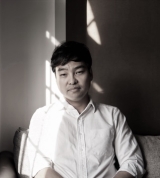
CHOI Saebeol is Principal Architect at Architecture Office 1458 and a Registered Architect of Korea (KIRA). He holds an M.Arch from Bergische Universität Wuppertal, Germany, where he was a DAAD Scholarship Recipient, and a B.Arch from Pukyong National University. He serves as an Adjunct Professor at Dong-A University and a Public Architect for Busan Metropolitan City. His awards and honors include the 2019 Gold Prize at the Busan Architecture Award, the 2021 Grand Prize at the Dongnae Cultural Architecture Award, the 2023 1st Prize in the Architecture Competition for Solbaram Cultural Center, and the 2024 Korea Young Architect Award.
10:50–11:05
A Path Apart: Reclaiming the Publicness of Architecture
Associate Professor at Tongji University
Deputy Head of the Department of Architecture
Principal Architect of c+d Design Studio
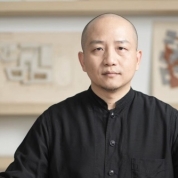
Devoted to both design teaching and practice, his architectural work focuses on the continuation of historical memory, the articulation of spatial justice, the programming of learning and growth spaces, and the contemporary expression of Chinese culture. He has led the completion of a number of major projects, including the Press Center of the SCO Qingdao Summit, the renewal of the Yuyuan Bazaar in Shanghai, the International Zone of the Hangzhou Asian Games, and the East Campus of Shanghai High School. His major works have received more than twenty Architectural Creation Awards from the Architectural Society of China and the Architectural Society of Shanghai, along with over forty other design awards, including the ARCASIA Awards for Architecture, the China Architecture Media Award, the ArchDaily China Building of the Year Award, the THE PLAN Award, and the AZ Awards.
11:05–11:50
Commentary on Morning Presentations
Moderator
ARCASIA Vice President (Zone C) 2026-27, Principal Architect, Studio 5 architects
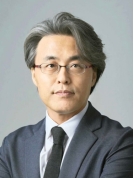
Gibson Rhie is a distinguished architect with over 30 years of experience specializing in masterplanning, project management, and large-scale mixed-use developments. Currently the Vice President of ARCASIA (Zone C) and Principal of Studio 5 Architects, he is a leader in fostering international collaboration and sustainable design. A LEED AP and MIPIM award-winner for Sustainable Urban Development, Gibson has delivered high-profile projects for clients like Samsung and the Kuwait Embassy.
With a proven track record across Asia, Africa, and the Middle East, he excels at navigating complex urban challenges while advancing the UN’s 17 Sustainable Development Goals.
Panelist
ARCASIA Committee on Professional Practice Chair 2026-27
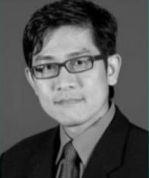
Lim Choon Keang is currently the Managing Principal and Creative Director of CKLI:et Architects. He is passionate about design, arts and architecture as well as believes that SMART architecture can change the world and make the world happy.
He specialises in architectural design, master planning, contract administration, and implementation of residential, commercial, mixed-use development, arts centre, theatres, primary-to-tertiary education buildings, bio-medical research institutes, vivarium, healthcare development and master plan, data centre, business park development, industrial development, sports facilities, retail space for Mass Rapid Transit stations (MRT), development for multi-media and digital design, etc. He is versed in Singapore building regulations/ codes being the Chairman of Compliance and Standards Committee (formerly Regulations, Codes and Standards Committee) in SIA and in Architectural Education being the past Chairman of Board of Architectural Education in SIA.
Tushar Sogani
ARCASIA President-Elect 2026-27, Vice President-American Institute of Architects-South Asia Section, Principal Architect & Managing Director, TSDPL, Jaipur
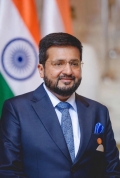
Ar. Tushar Sogani is the Principal Architect & Managing Director of TSDPL, Jaipur, and currently serves as the President-Elect of ARCASIA. He is also the Vice President of the American Institute of Architects (AIA) South Asia Section and an Associate Member of the AIA.
A pioneer in modern high-rise development, he is known for designing innovative commercial and residential spaces. With over 75 million sq. ft. of area currently under progress across India, he provides design consultancy to major developers, hoteliers, and real estate players. Committed to sustainability, he has several green buildings to his credit.
Sogani is highly active in architectural leadership. He is the Immediate Past Chairman of the Indian Institute of Architects (IIA) Rajasthan Chapter and Immediate Past Jr. Vice President of the IIA National Committee. He has previously served as the Chairman of the ARCASIA Committee on Green & Sustainable Architecture.
His professional excellence has earned him numerous awards, including the Architect of the Year Award presented by former President of India, Shri Ram Nath Kovind. He is also a dedicated Rotarian and a Convenor for major architectural forums.
Fawad Suhail Abbasi
FIAP. AIA . PCATP. PGBC
ARCASIA Vice President (Zone A) 2026-27,
President, IAP
Institute of Architects Pakistan
Partner & Design Lead
Suhail & Fawad Architects
AIA International Country Representative
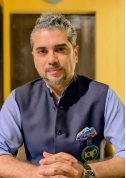
Fawad Suhail Abbasi is a Fellow and the current President of the Institute of Architects Pakistan (IAP, 2024/2027), Vice President of ARCASIA Zone A (2026/2027), and the first AIA International Country Representative for Pakistan. An award-winning architect and interior designer with 25 years of experience, he is also the co-founder of Suhail & Fawad Architects, which he established in 2001 with his father, the eminent architect Suhail A. Abbasi.
Known for a bold and contextual design approach, their work has been widely published and exhibited internationally, including in the UK, South Korea, and India. Fawad has received numerous accolades, including the National Design Excellence Award (2009) and multiple Honorable Mentions from the IAP. He was conferred the IAP Fellowship in 2024.
Beyond his current leadership roles, he has previously served as the founding Chairman of ACYA, a UIA Regional Representative, and Vice President of IAP (2016-2019). Fawad is a Founding Member of EAROPH Pakistan and holds memberships in PIID and the American Institute of Architects.
Rita Soh Siow Lan
ARCASIA Advisor 2026-27, Managing Director, RDC Architects Pte Ltd

Ar. Rita Soh graduated with honours from the National University of Singapore in 1987 further to her Bachelor of Arts (Architectural Studies) and obtained her professional practice licence in 1989. In 2011, she obtained her Master of Science (Sustainable Building Design) from University of Nottingham (UK).
Beyond breaking the gender leadership stereotype, she has advanced the causes of professional ethics and collaborative partnership in Singapore as well as on the Asian fronts.
The first woman President of the Singapore Institute of Architects (2004-2007), Rita standardized Singapore’s architectural nomenclature by creating Singapore’s own Code of Practice, and pushed the architectural body towards digitalization of its professional services. Subsequently, as President of Singapore’s Board of Architects (2010-2015), she championed ethical architectural practice both regionally and globally. In her current position as President, Architects Regional Council, Asia’s (ARCASIA) (2019-2021), Rita strives to foster closer collaborations amongst architects across Asia and leading the drive to collectively define global benchmarks from an Asian perspective.
While a Nominated Member (2014-2015) of Singapore’s largely-male Parliament, Rita advocated reducing Singapore’s carbon footprint by embracing environmentally-friendly buildings, and urged for an expansion of healthcare infrastructure to cater for an aging population.
She won the ARCASIA Gold Medal (2018), Urban Redevelopment Authority Architectural Heritage Award (2016) and Singapore Institute of Architects Architectural Design Award (2016) for the Restorations to 150-year-old national monument, The Church of Saints Peter & Paul.
Her other recently completed projects include the remodeling of two state-owned hospitals; The Integrated Building & Medical Centre @Changi General Hospital; Yishun Polyclinic and Kallang Collocated Care-Facility.
She was also in numerous International Design Competition Jury panels; notably the Integrated Resorts in Marina Bay & in Sentosa, Gardens By The Bay, Singapore Sports Hub and National Gallery Singapore.
11:50–12:00
Issued by Wu Jiang
President of Architects Regional Council Asia
PM Session 13:30–16:50
Host
ARCASIA Committee on Architecture Education Chair 2026-27
13:30–13:35
The Living Past - Korean World Heritage Sites: Connecting Cultural Heritage, Sustainability, and Responsible Action
Programme Specialist, UNESCO World Heritage Centre
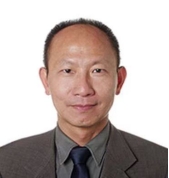
Prof. Roland Chih-Hung LIN is a city planner and art historian based in Paris. He holds a PhD in Art History and Archaeology from Paris-Sorbonne University, along with degrees in Urban Planning and Landscape Studies.
From 1997 to 2026, Prof. Lin served at the UNESCO World Heritage Centre and the Division of Cultural Heritage in Paris, spending his last two decades as Programme Specialist for the Asia-Pacific Unit of the World Heritage Centre, UNESCO. He coordinated major heritage safeguarding projects across Central and South Asia, including the Silk Roads Transnational Nominations, and preservation efforts in the Bamyan Valley (Afghanistan), Lumbini (Nepal), and five Central Asian countries.
Academically, he is a Research Fellow at CREOPS (Paris-Sorbonne University) and IPRAUS (École Nationale Supérieure d’Architecture de Paris Belleville). Since 2020, he has held the Chair of Asian Cultural Landscape and Heritage Preservation Study at EPHE, Paris, and serves as a Visiting Professor at Tianjin University.
A prolific author, Prof. Lin has published four academic books and over 70 papers on World Heritage and cultural landscapes. He is also co-director of IMPRESSIONS AsieS EuropeS (ISASES) Consultants and has organized over 300 cultural exhibitions and lectures in Paris over the past 30 years.
13:35–13:50
Architecture That Connects Landscapes
Principal Architect, ZITTA Architects
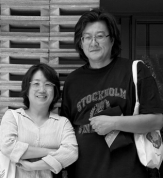
ZITTA ARCHITECTS was founded in 2013 and has focused on designing hospitality architecture, facilities for children. The word ZITTA is a polysemous Korean term with a wide range of meanings. While it commonly refers to building in a physical sense, it also reflects deeper, more diverse aspects of life. We embrace the richness of this word and strive to create spaces that are full of life and meaning. Kim Dong-hyun and Cho Youn-kyoung co-lead the studio. Having studied and worked in Busan, we bring both academic and practical experience from the city. We continue to engage in creative collaborations with fellow architects in Busan.
13:50–14:05
Innovation Responsibility and Action
Managing Director & Principal Architect
ARQUITECTURA Pvt. Ltd.
Dhaka, Bangladesh
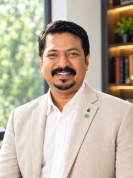
For Ar. Md. Shafiul Azam Shamim, architecture extends far beyond the drawing board—its true measure lies in what eventually stands, how it is crafted, and whom it serves. Since founding ARQUITECTURA (Pvt.) Ltd. in 2013 following the start of professional practice in 2010, his career has been defined by a commitment to bringing architectural vision to life through rigorous technical coordination, material discipline, and engineering integration. His expansive portfolio spans high-rise developments, healthcare facilities, institutional complexes, industrial infrastructure, military installations, religious architecture, and master planning.
Alongside his commercial practice, Ar. Shamim is deeply invested in socially responsive architecture. As a founding member and Director of Finance & Grant at the Foundation for Architecture & Community Equity (FACE), he advocates for a people-centered approach that addresses local circumstances, resources, and community aspirations. FACE’s collaborative contributions were recognized as part of the work honored by the 2025 Aga Khan Award for Architecture, underlining his belief that architectural responsibility extends well beyond traditional professional boundaries.
By bridging technical execution with community-driven action, Ar. Shamim continues to explore how practice, research, and international dialogue can shape an architecture that is contextually relevant, socially responsible, and enduring.
14:05–14:20
seeing as dwelling: Gotjawal House
Principal Architect, Kim-O Architects Co., Ltd.

KIM Jihee is Principal Architect at Kim-O Architects Co., Ltd. and a Licensed Architect of the Republic of Korea based in Jeju. She received her Master of Architecture from Hongik University in 2023. She previously served as Co-principal at O Architects and Project Manager at POSCO A&C Co., Ltd. Her awards include the 2026 Main Award at the Jeju Architecture Culture Awards for Our Nextdoor, the 2025 AIA South Korea Design Award for Dwelling in Gotjawal, and selection for the Young Korean Architects special issue of Architecture Asia. She currently serves as a Public Architect for Jeju Special Self-Governing Province, and her research interests include the phenomenology of place and the regional conditions of Jeju as a basis for design.
14:20–14:35
From Questions to Space
Co-Founder, ODETO.A
Assistant Professor, University of Seoul
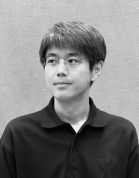
LEE Heewon is an architect and co-founder of ODETO.A, established with Eunju Jeong in 2016. His work spans architecture, interior design, and public art. He holds a Bachelor of Architecture from the University of Seoul and a Master of Architecture from the University of California, Berkeley. He served as an Associate Curator for the 2019 Seoul Biennale of Architecture and Urbanism. He is currently an Assistant Professor at the University of Seoul and a Public Architect for the cities of Seoul and Daejeon. His selected competition awards include the 2025 Winner for Boryeong Cultural Theme Park, 2024 Second Prize for Seoul Art Center Renovation, and 2024 Third Prize for Busan YS Democracy History Memorial Hall.
14:35–14:50
Practicing Freedom: The Architecture of Decentralized Sustainability
Principal Architect & Managing Director, RAD architecture

Antonius Richard, principal architect of RAD+ar believes that in order to shape a better and more sustainable version of today’s challenges, architecture can profitably be one of the most worth-exploring field. By utilizing spaces to reach its maximum profit and potential while creating a provocative and most emotion-envoking spaces, RAD+ar’s main priority is to decentralized sustainable architecture in Indonesia.
14:50–15:05
No Is More - Beyond the Given
Principal Architect, Shin Design Lab

SHIN Jeong Yeap is regarded as one of Korea's prominent emerging architects, exploring architecture beyond form through context, relationships, and the way spaces operate. Born in 1985 in Chuncheon, he holds an M.Arch from Yale University and a B.Arch from Korea University, and founded Shin Design Lab in Seoul in 2013. His design approach is context-driven, connecting people and place while fostering community, preserving a sense of place over time, and building a meaningful relationship with nature. His major works include the Shin Design Lab Campus in Chuncheon, Yeongmok Port Observatory and Kkotji Sea Beach Park in Taean, Wooridle Church in Seoul, QTM Building in Seongnam, and Dongchon Amusement Park and Daejin Port Observatory and Park. He has received the Taean Architecture & Culture Award, the Korea Land & Urban Design Award, and the Korea Urban Innovation Award, and was invited to contribute his work to a special issue of Architecture Asia featuring emerging Korean architects. He is currently an Adjunct Professor at Korea University and established a travel scholarship program with Gangwon State supporting approximately 20 students each year.
15:05–16:35
Discussion on the day’s presentations
Moderator
Programme Specialist, UNESCO World Heritage Centre
Panelist
Vice Chancellor, Technical University of Mombasa
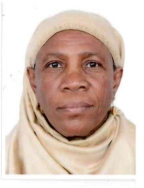
Prof. Laila Abubakar is the Vice Chancellor of the Technical University of Mombasa, Kenya, and a distinguished Professor of Biochemistry. She holds an MSc and PhD in Biochemistry from the University of Nairobi, supported by prestigious DAAD and EU fellowships.
An accomplished researcher, she began her career at the Kenya Marine and Fisheries Research Institute before rising through academic leadership ranks at the University of Nairobi. She has secured numerous grants and published extensively in international journals. Her excellence has been recognized with the University of Nairobi Deans’ Award and the ATUPA Award of Excellence for Development in Africa (2024), among others. She has successfully supervised over 40 postgraduate students.
Beyond academia, Prof. Abubakar is a vocal advocate for gender inclusion and skills development for green industries. As the immediate past Chairperson of the Association of Technical Universities and Polytechnics in Africa (2020–2024), she has championed increasing female enrollment in technical courses. Her leadership extends to serving on Kenya's Presidential Working Party on Education Reforms and as a Trustee of the Kenya Education Network Board.
Lecturer, Department of Architecture, University of Nairobi
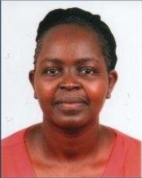
Dr. Margaret Macharia Kedogo is a lecturer at the University of Nairobi’s Department of Architecture in the Faculty of Built Environment and Design. She obtained her PhD in Engineering Science (Architecture) and Master of Human Settlements from KU Leuven, Belgium and obtained her Bachelor’s degree in Architecture from University of Nairobi, Kenya. Her research and teaching experience focuses on sustainability in urban design and the role of community-based organisations in countering social and spatial uneven development.
Kalandar Shedor Kamalkhan
Professor, Technical University of Mombasa
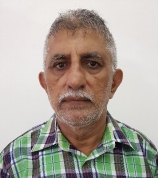
Kalandar Kamalkhan is a Senior Lecturer at the Technical University of Mombasa and the immediate former Chairman of the Department of Architecture and Built Environment. He teaches in the Department of Architecture and Built Environment. He did his undergraduate degree in Architecture at the University of Nairobi. He undertook a Masters’ Degree in Infrastructure Planning at the University of Stuttgart. Later, he did his Ph.D. degree at McGill University, where he specialized in History and Theory of Architecture. He worked as an Assistant Architect with the Ministry of Public Works. After one year, he joined the National Museums of Kenya where he worked for over three decades. He was in charge of the Conservation of Lamu and Mombasa old towns and other coastal sites and monuments. He has published a book on Swahili architecture, oral tradition and space. He is a member of the International Council on Monuments and Sites (ICOMOS). Outside work, Kalandar enjoys reading and, sometimes, writing Swahili poetry. He is an ardent soccer supporter. He spends most of his free time working on community projects.
Associate Professor, Sapienza University of Rome

Nilda Maria Valentin is an Associate Professor of Architectural and Urban Design at the Faculty of Architecture, Sapienza University of Rome, Italy. She is Director of ArchisLab International Research Laboratory, a member of the Department of Architecture and Design (DiAP), and a member of the Academic Board of the PhD Programme in Architecture: Theories and Design.
She holds a PhD and a postdoctoral qualification in Architecture and Urban Design from Sapienza University of Rome, as well as a Master of Architecture and a Master of City and Regional Planning from the Georgia Institute of Technology, USA. She also completed a special study programme at the Unité Pédagogique d’Architecture No. 7 in Paris. She is a registered architect in both Italy and the United States.
Her academic and research activities focus on the relationship between contemporary architectural design, the built environment, and historical contexts, with particular emphasis on urban regeneration, architectural heritage, industrial archaeology, and the transformation of cities. Her research explores the interaction between tradition and innovation. She has also coordinated international academic partnerships and student exchange programmes with universities in Europe, Asia, and Latin America.
Valentin has participated in numerous national and international architectural competitions, receiving several first prizes and distinctions. Among her recognised projects are the restoration and extension of the historic Bank of Albania and the former Hotel Dajti in Tirana, both awarded first prize and realised, as well as the Europan I housing project, also awarded first prize and built. The Bank of Albania project received a nomination for the European Union Prize for Contemporary Architecture – Mies van der Rohe Award in 2015.
Her publications include Contemporary China: Architectural and Urban Insights (2023), Industrial Archaeology: Heritage and Project (2022), and The Influence of Western Architecture in China (2017).
Jacopo Benedetti
Assistant Professor, College of Architecture and Urban Planning, Tongji University
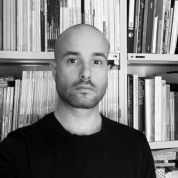
Jacopo Benedetti is an architect and assistant professor at the College of Architecture and Urban Planning (CAUP), Tongji University. He has previously held adjunct and visiting positions at Roma Tre University (Italy) and the Technical University of Munich (Germany). He is founding partner of the research-based architectural practice Spazi Consonanti (Rome, Italy), with projects in Italy, Switzerland, Saudi Arabia, and China. The office's work has been exhibited twice at the Venice Architecture Biennale and selected for numerous awards, including the Italian Heritage Award and the Domus International Prize for Restoration and Conservation. He studied architecture at RWTH Aachen University and at the University of Rome La Sapienza, and earned his PhD in Architecture: Innovation and Heritage from Roma Tre University. He serves on the scientific committee of the book series Al passato, al presente (Quasar) and is associate editor of the journal Perspectives in Architecture and Urbanism (Elsevier). He has also served on the scientific committee of the Master's program in Architectural Restoration and Heritage Culture at Roma Tre. His research focuses on heritage theory, contemporary architectural practice in historical settings, and interdisciplinary readings of the built environment.
16:35–16:45
Issued by Wu Jiang
President of Architects Regional Council Asia
16:45–16:50
President of Architects Regional Council Asia

NO.1239 Rd. Siping, SHANGHAI


