学院介绍
学院介绍
新闻中心



课程精览丨《人本导向的绿色基础设施分析》人因实验测度和学生作业
《人本导向的绿色基础设施分析》是一门面向建筑与城市规划学院本科生开设的专业选修课,全英文授课,由陈筝副教授主讲。课程围绕情感、注意力、认知等模块,系统性介绍环境人因测度,及其相关神经生物原理和研究案例,尝试探索面向绿地和建成环境的感知评价方法。
课程致力于将国内外最先进的人因实验理念和技术引入课堂教学,让同学们接触到最前沿的设备,一线的商业实践案例,以及定制化的专业实验指导。课程先后开展了一系列的产业合作,与赢富仪器共建产教融合创新实践基地,与Tobii(中国)和荷兰Noldus公司的教学创新合作等等。
在刚结束的2025-26秋季学期,有8名中国学生与15名留学生选修了此课程,课程得到了荷兰工程院院士Lucas Noldus大力支持和指导。同学们先参观了赢富仪器的模拟驾驶、认知神经、生物力学等多个实验室,接受了近红外、脑电、心电、皮电等多模态生理设备的实验培训。在前期了解熟悉实验设备的基础上,同学们利用了荷兰Noldus公司的facereader模块中的表情识别和眼动追踪功能,设计了自己的小实验。终期评审邀请了Noldus公司陆志强工程师、同济大学建筑与城市规划学院孙澄宇副教授和翟宇佳副教授予以指导。
Course Overview丨Human-Centered Green Infrastructure Analysis: Human Factors Measures & Student Projects
Human-Centered Green Infrastructure Analysis is an elective course in English offered to undergraduate students by Associate Professor CHEN Zheng from College of Architecture and Urban Planning (CAUP), Tongji University. Addressing themes of emotion, attention, and cognition, the course systematically introduces environmental human factors measures and the neurological knowledge behind them, supported with research examples. It aims to advance perceptual evaluation methods for green spaces and the built environment from a human-centered perspective. Committed to integrating cutting-edge human factors theories and technologies into teaching, the course provides students with hands-on access to advanced experimental equipment, real-world industry applications, and tailored professional guidance. It has established strategic collaborations with leading industry partners, including a joint industry–education innovation base with INFO Instruments, as well as teaching innovation partnerships with Tobii (China) and Noldus Information Technology, fostering deep integration between academia and industry.
In the recently concluded Fall 2025–2026 semester, the course enrolled 23 students (8 Chinese and 15 international), with generous support from Prof. Lucas Noldus, a Fellow of the Netherlands Academy of Engineering. The cohort’s diverse international composition fostered a dynamic academic environment and cross-cultural exchange. Students began the semester with visits to INFO Instruments’ laboratories in driving simulation, cognitive neuroscience, and biomechanics, where they received hands-on training in multi-modal physiological measurement technologies, including fNIRS, EEG, ECG, and EDA systems. Building on this foundation, students designed and conducted pilot studies utilizing the facial expression recognition and eye-tracking functions of the Noldus FaceReader Online platform. Senior Engineer LU Zhiqiang (Noldus), Associate Professors SUN Chengyu (CAUP) and Associate Professors ZHAI Yujia (CAUP) joined the final critique.
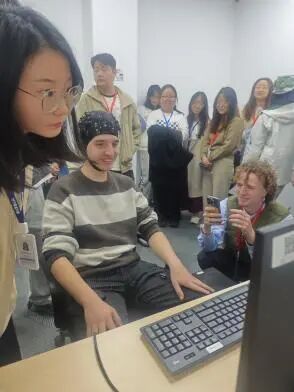
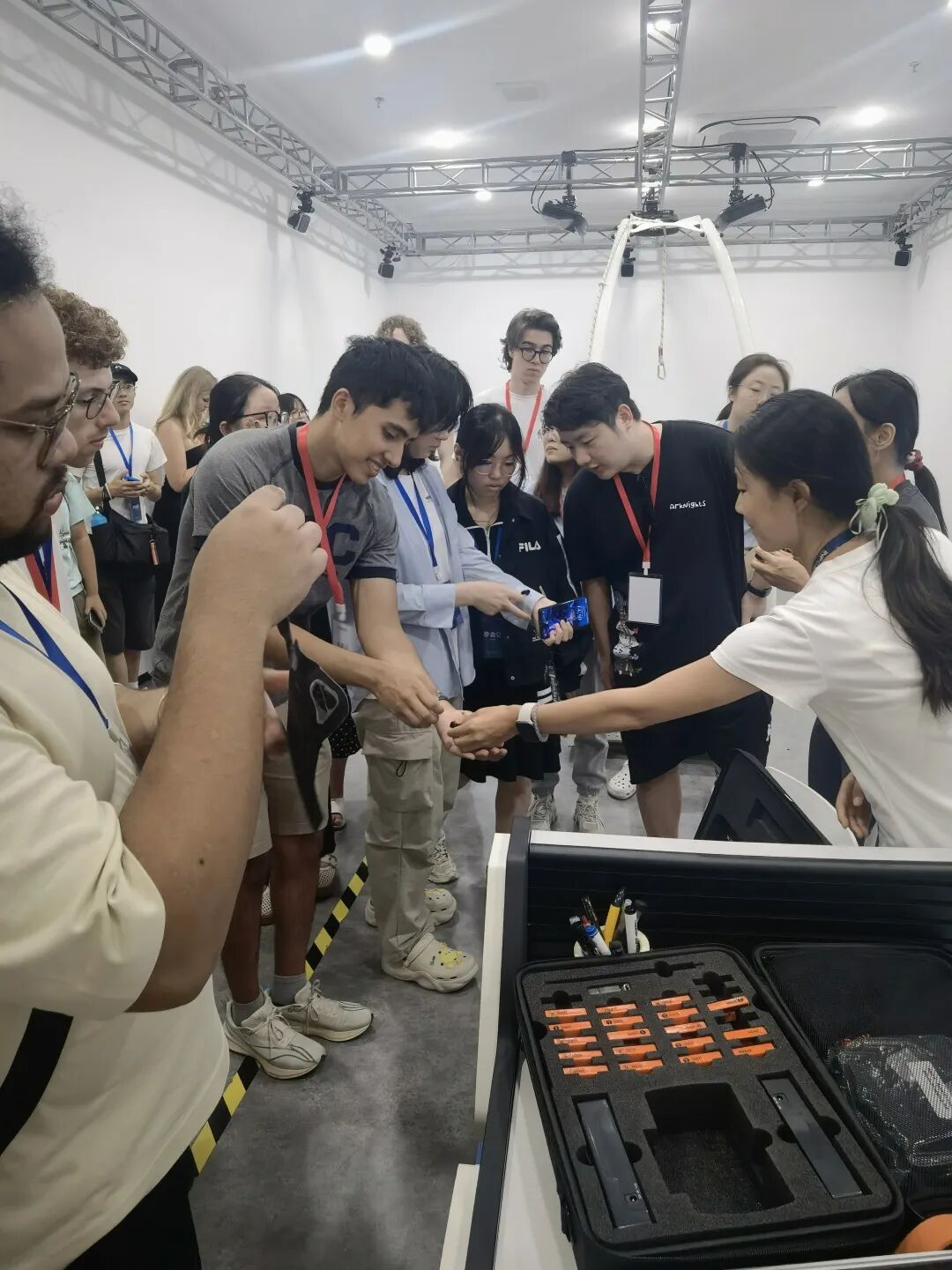
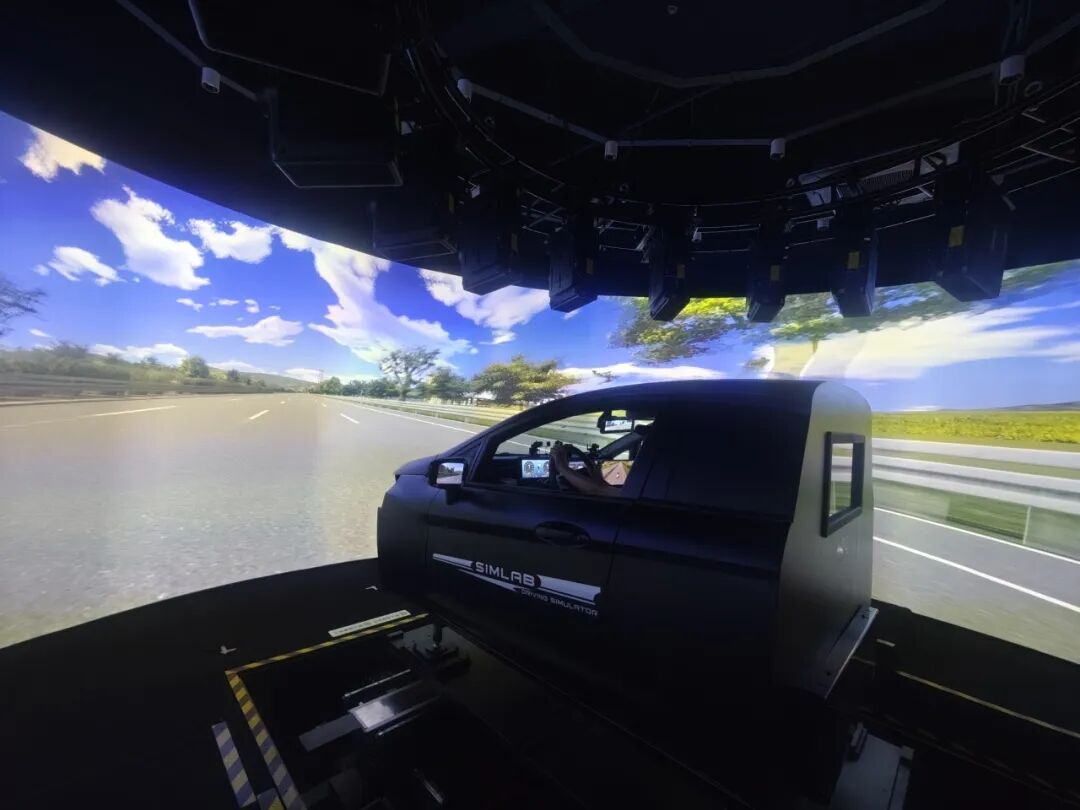
学生参观赢富人因实验室
Students visited INFO(R) Labs
Student Project 1:
Project Title:Inside the Consumer's Gaze: Analysis of Consumer Behavior in Supermarket Shelves Using Eye-Tracking and Emotional Analysis
Overview: This study investigates consumer behavior at supermarket shelves using eye-tracking and FaceReader technology. By analyzing visual variables like color, layout, and organization, the research explores how consumers visually explore shelves and perceive products. Key findings highlight the dominant role of color in facilitating rapid comprehension and the importance of clear structural organization for positive user experience. The study confirms that purchasing decisions are significantly driven by unconscious perceptual and emotional mechanisms, emphasizing the need for strategic visual merchandising. The findings emphasize that lighting quality is as critical as brightness in human-centered design.
Members: Cassy-Ann Chapuis (France), Naëlle Attigui (Switzerland), Merlin Rossignol (France)
Student Project 2:
Project Title: Relaxation VS Vigilance in Shanghai Parks
Overview: Using Shanghai's urban parks as a backdrop, this pilot study investigates how light density influences human perception, specifically the balance between relaxation and vigilance. By combining eye-tracking and FaceReader technology, the research analyzes gaze distribution and emotional valence under varying lighting conditions. Results indicate that low light density triggers concentrated visual attention and heightened vigilance, whereas high, well-distributed light density fosters broader gaze behavior and relaxation. The findings emphasize that lighting quality is as critical as brightness in human-centered design.
Members: Dato Lara Nicole (Philippines), Yaseen Alshamsi (UAE), Yanis Lalaina (Madagascar)
Student Project 3:
Project Title: Understanding House Entrances: Perception, Memory, and Spatial Cues
Overview: This project investigates how people perceive house entrances by combining subjective memory drawings with biometric data, including eye-tracking and facial recognition. The study explores spatial elements that contribute to safety, orientation, and invitation. Key findings reveal that step-free access, greenery, and clear visual markers like house numbers significantly enhance positive perception. Furthermore, adequate lighting proved crucial for night-time safety. The research demonstrates that entrances are emotionally charged spaces shaped by accessibility and atmosphere, rather than merely functional thresholds.
Members: Peer Otto Friedrich (Germany), Xiang Li, Clemens Laurin Fruth (Germany)
Student Project 4:
Project Title: Gender Differences in Nighttime Road Safety Perception
Overview: This pilot experiment utilizes biometric data to quantify the gender gap in environmental safety perception. By monitoring physiological responses to variables such as spatial enclosure and lighting, the study uncovered a stark divergence in how safety is processed: while male participants maintained an optimistic baseline, female participants exhibited heightened vigilance and risk sensitivity. Specifically, low-safety scenarios triggered distinct negative emotional markers—such as anger and surprise—in female subjects, highlighting the urgent need for gender-inclusive strategies in night-time environmental design.
Members: Chengxue Zhang, Xuan Tian, Yunu Tano, Rufeng Pan
Student Project 5:
Project Title: Comfort and Safety Perception in Urban Space: The Role of Built Density and Human Crowding
Overview: Challenging the monolithic view of density, this research dissects the complex relationship between physical built environments and human crowds. By employing a two-dimensional framework, the team utilized eye-tracking and facial expression analysis to determine how these factors interact to shape pedestrian experience. The findings reveal a critical nuance: while social presence often signals safety in open plazas, it triggers stress and avoidance behaviors when confined within high-density built structures. The study argues for a balanced density approach to urban planning that accounts for these psychological thresholds.
Members: Clara Ann Valentine (Germany), Melvin Spoden (Germany), Ngoc Kim Dang (Germany)
Student Project 6:
Project Title: The Impact of Landscape Elements on Street Safety Perception
Overview: What specific visual cues determine whether a street feels safe at night? Through an analysis of 24 representative nocturnal scenes, this project correlates gaze fixation data with subjective safety ratings to identify the primary drivers of environmental perception. The results isolate visual permeability and lighting quality as the most significant factors; well-lit, open sightlines consistently foster a sense of security, whereas dense vegetation and obstructed views lower perceived safety. Notably, participants ranked visual transparency as the highest priority for design intervention in night-time streetscapes.
Members: Wenjun Shen, Xinyun Li, Jiale Qi
Student Project 7:
Project Title: Architecture as a Main Character: How Spatial Interventions Can Influence Human Emotions
Overview: Moving beyond dialogue and plot, this experiment explores how architectural space itself acts as a narrative driver of human emotion. Using Stanley Kubrick’s The Shining as a case study, the team employed facial expression analysis and eye-tracking to measure physiological reactions to specific spatial interventions—such as symmetry, scale, and long, narrow corridors. The data revealed a tangible correlation between these oppressive architectural forms and peaks in negative emotional valence (fear/anger), suggesting that the very spatial tools used to induce tension in cinema can serve as cautionary guidelines for designing livable, comfortable environments.
Members: Loreto Blazquez (Spain), Jésus Palomino (Mexico), Thomas Maertens (Belgium)