学院介绍
学院介绍
新闻中心



陶艺中的空间思维之道:
傅国华建筑与城市国际教育中心
本科一年级《设计概论》课程评审
The Art of Spatial Thinking Through Clay: A Review of the Freshman Design Introductory Course at the Peter Guohua FU International Education Center of Architecture and Urbanism
01
泥土中的空间密码
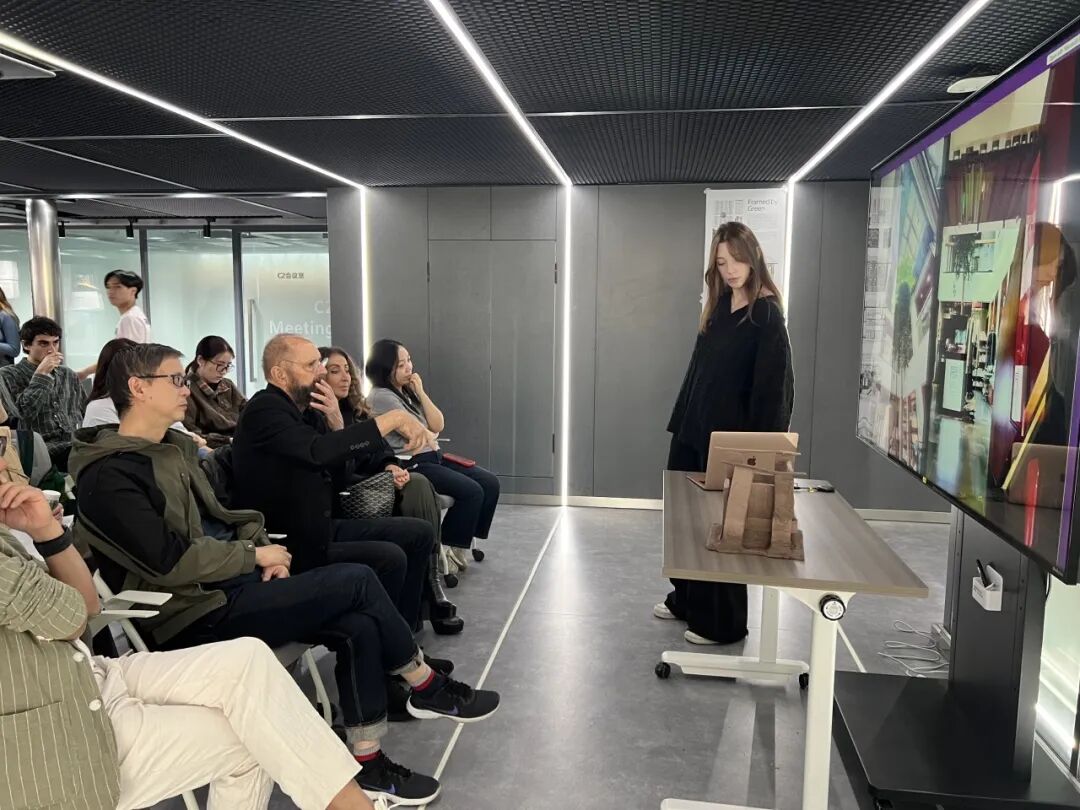
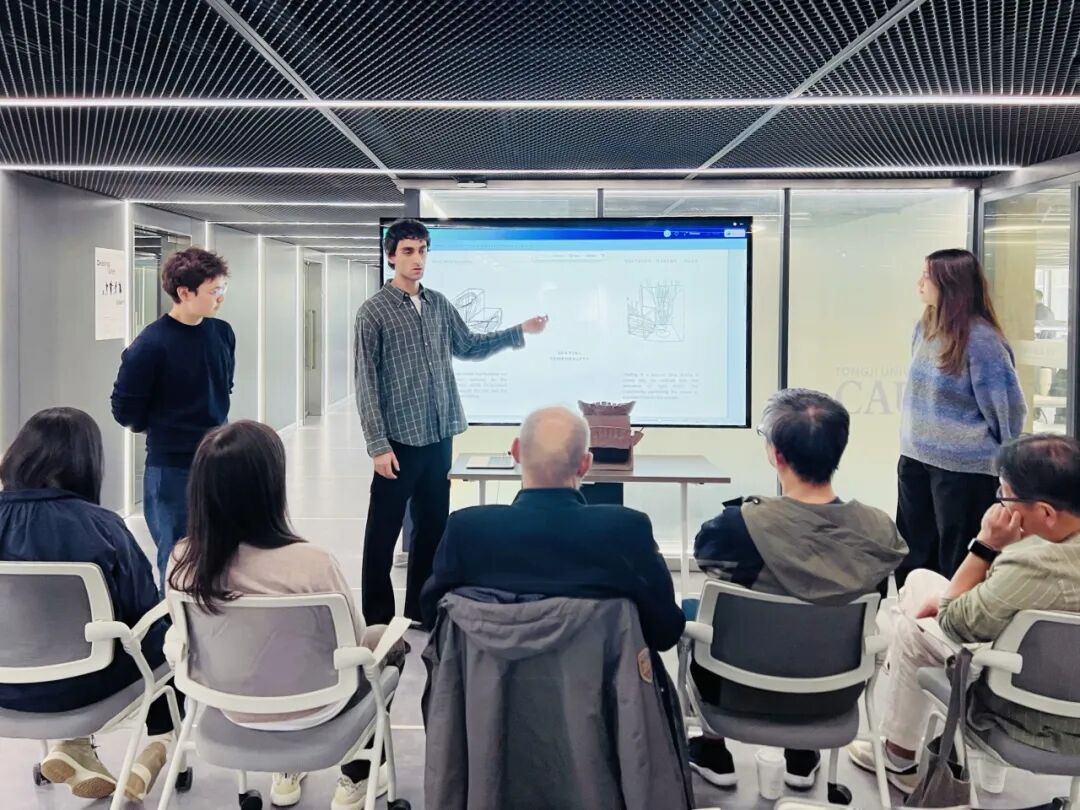
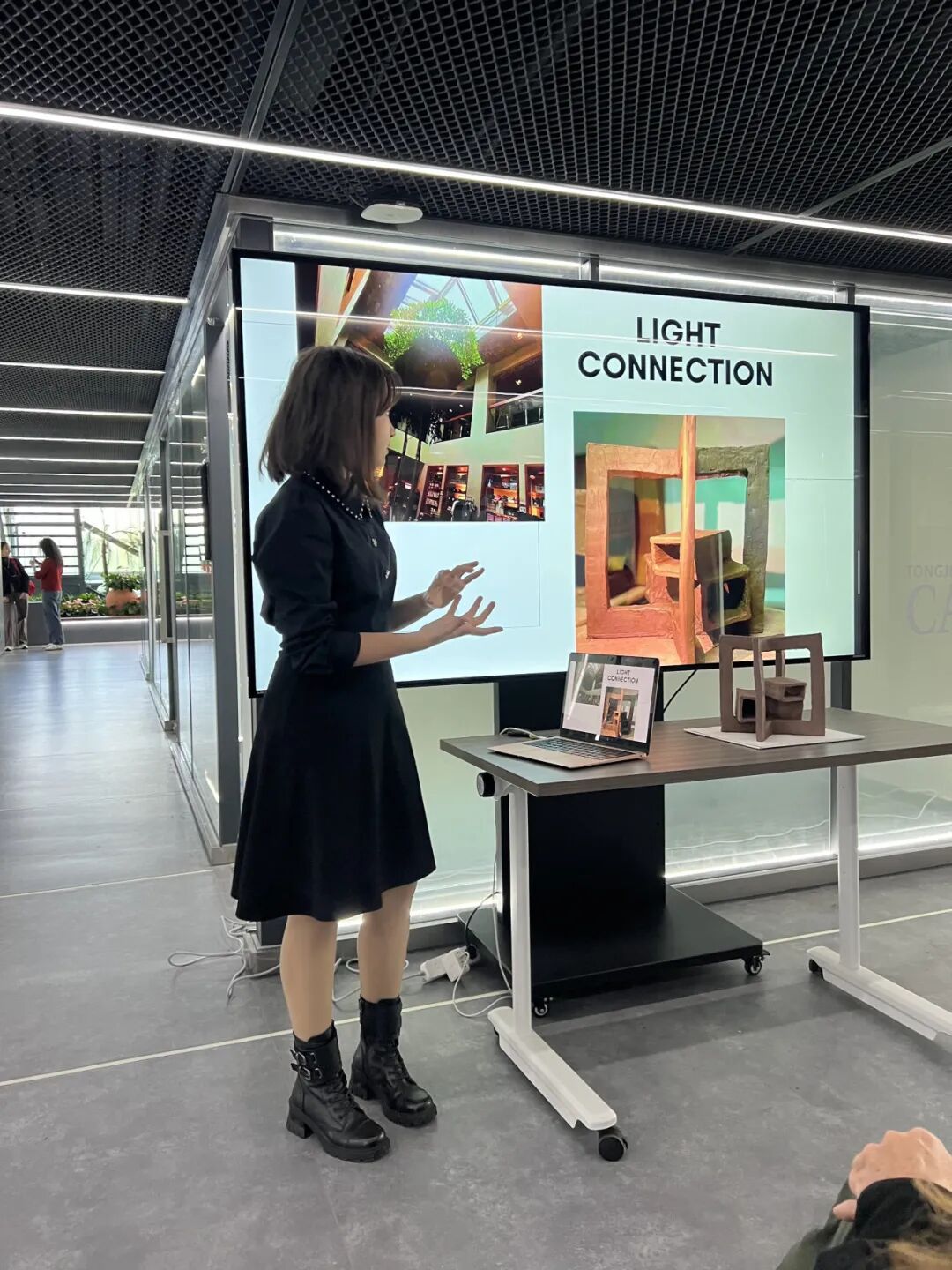
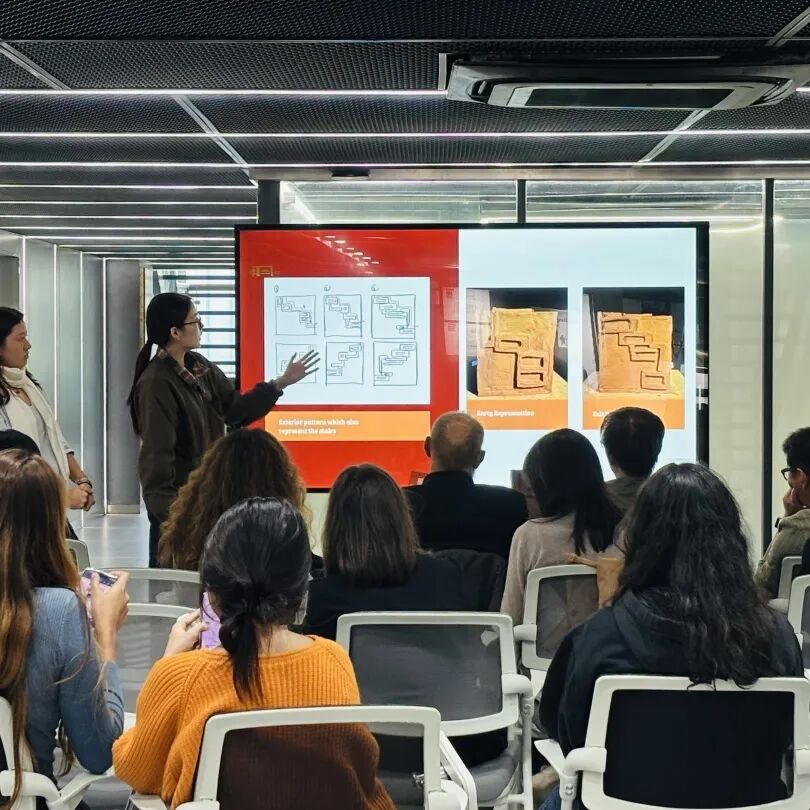
11月10日下午,傅国华建筑与城市国际教育中心明亮的大厅内,本科一年级建筑学国际班的《设计概论》课程迎来关键教学节点——作业二:陶艺-空间采集与转译单元评审。41位国际班新生围绕亲手制作的陶艺模型进行英文汇报,用最原始的材料探索建筑空间的本质逻辑。
On the afternoon of November 10, the main hall of The Peter Guohua FU International Education Center of Architecture and Urbanism hosted a critical unit review for Project 2: Representation of Space by Working with Clay in the first-year Introduction to Design course. Forty-one international students presented their self-made clay models in English, using this primal material to explore the essential principles of architectural space.
02
规范下的空间转译
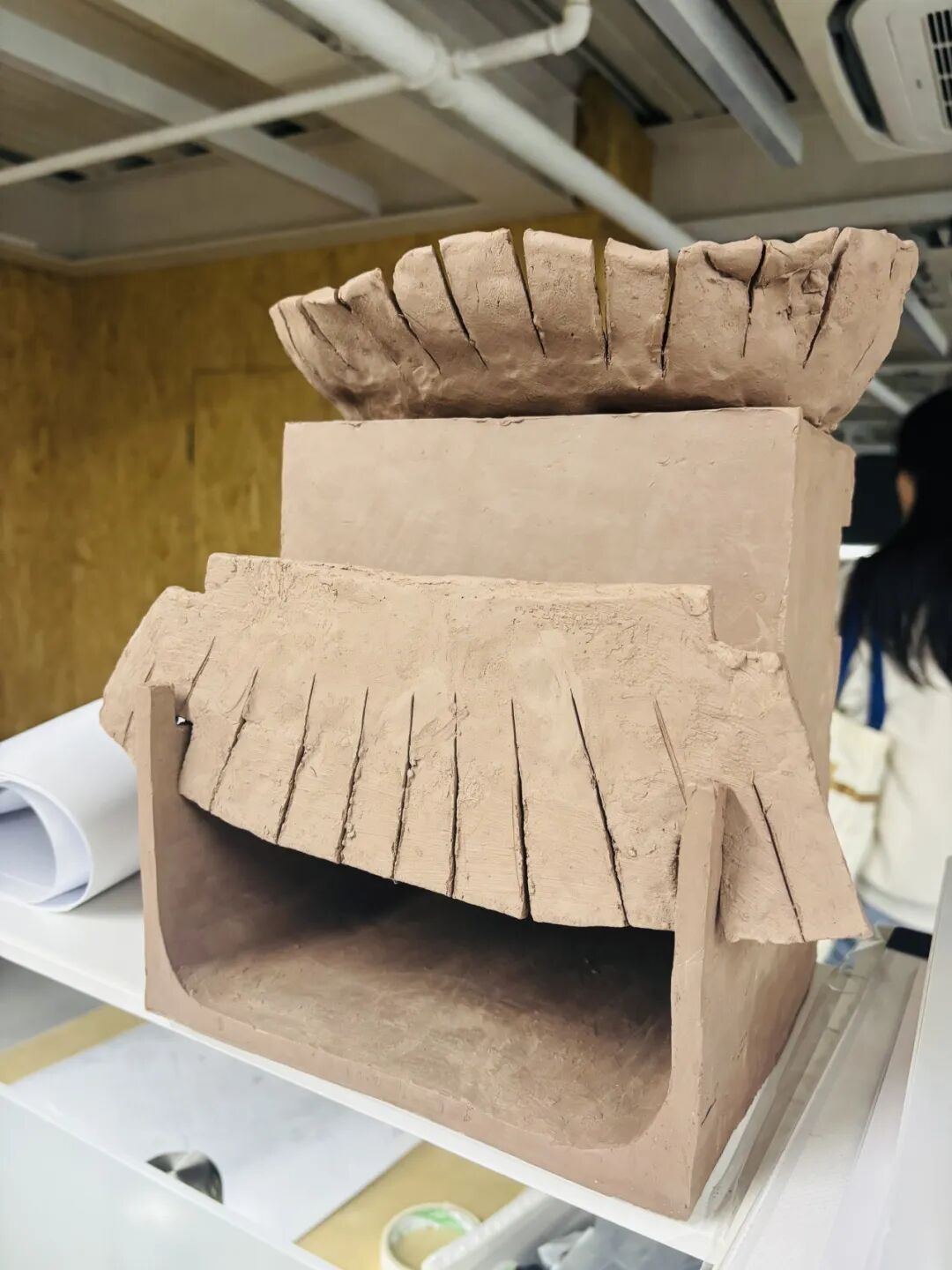
本次单元任务引导学生深度解析四平路校区的旭日楼内部空间:选取三组连通空间体,剥离装饰后仅通过直线与平面几何语言进行抽象表达。作品需在300×300×300mm的框架内,用10mm厚手工陶板实现自支撑结构(Self Supporting),底座材料自由选择。
Students analyzed interior spaces in the Xuri Building (Siping Campus), selecting three connected areas. They removed all decorations and recreated these spaces using only straight lines and flat planes. Each clay model fit within a 300×300×300mm frame, built with 10mm-thick handmade clay panels that stand on their own. Base materials could be any type.
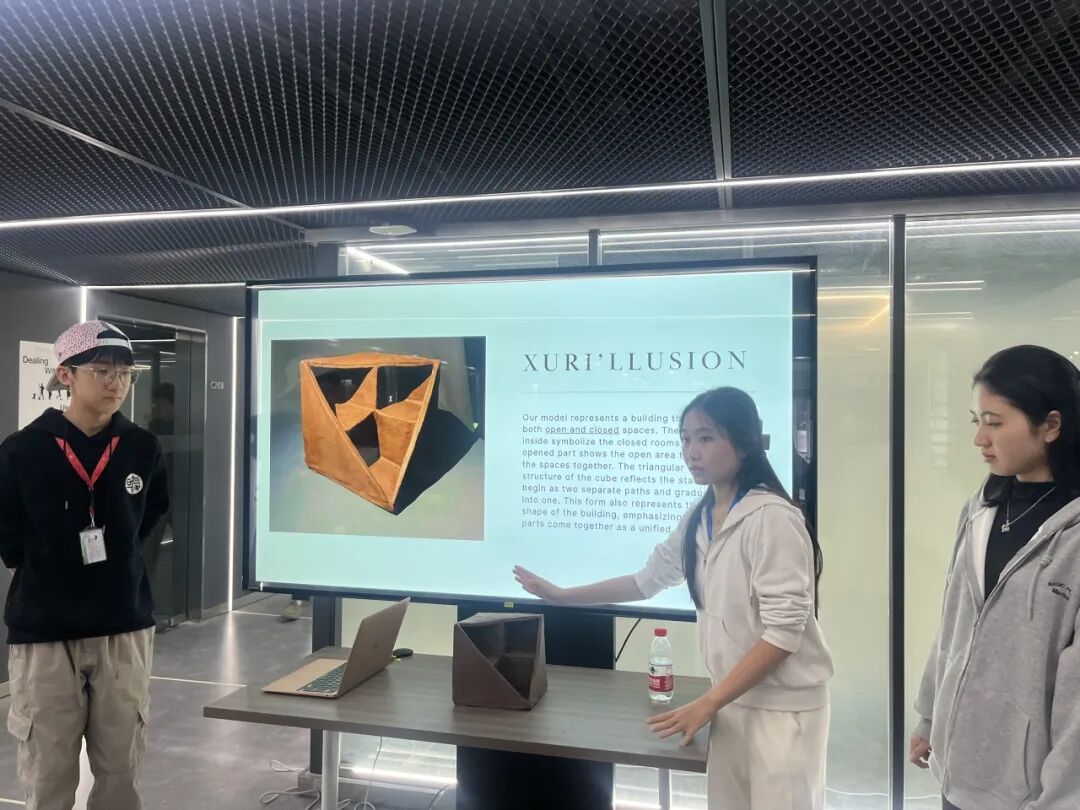
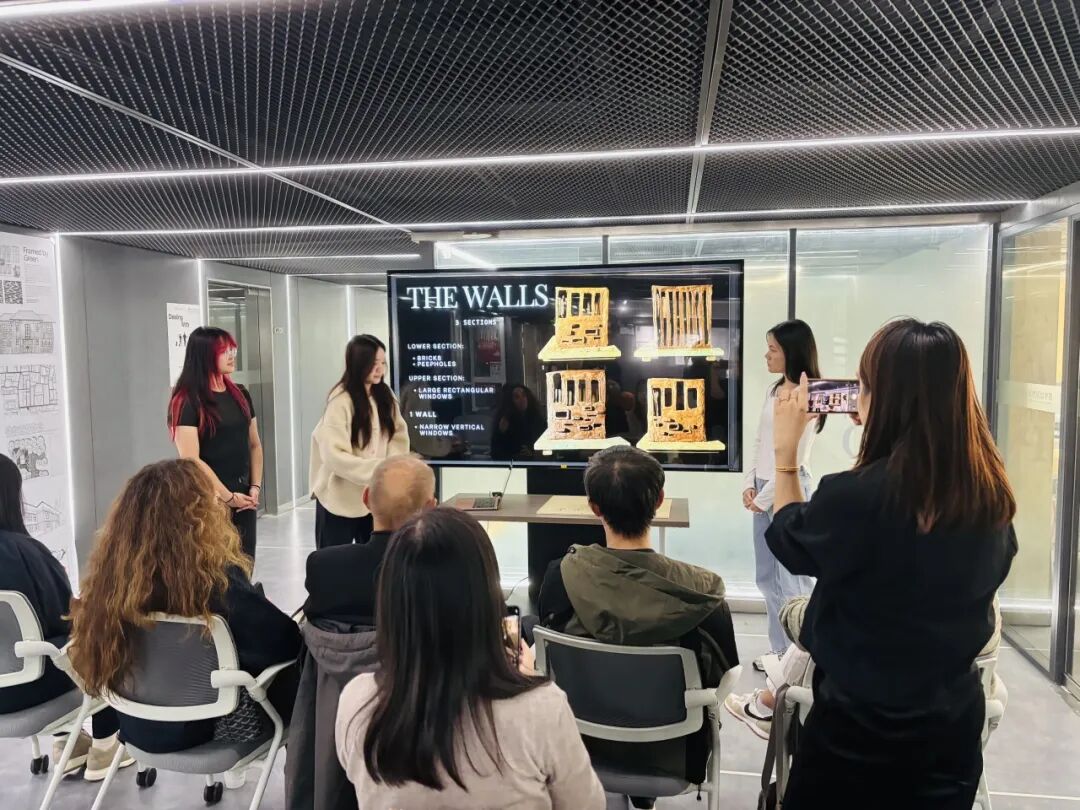

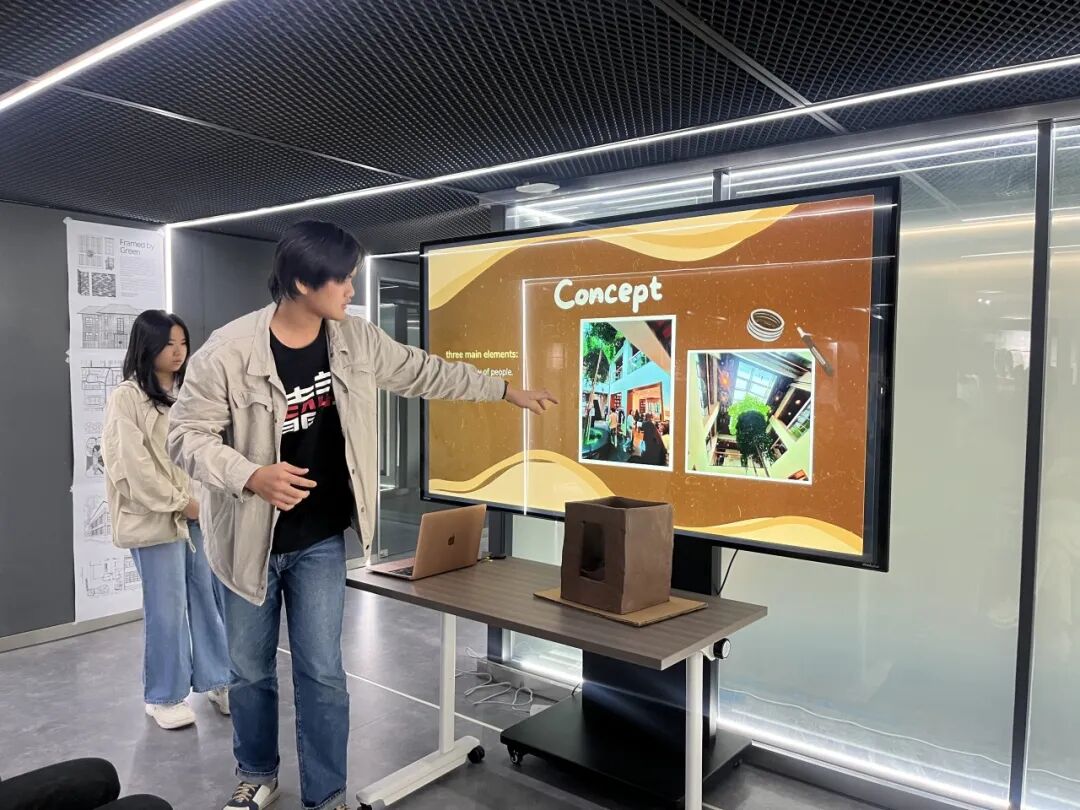
空间原型是设计的起点,教学目标阐释道,设计者通过对原型的复制、变形、组合,可构建空间框架,同时其蕴含的普遍认知能让使用者轻松理解空间逻辑,减少认知成本。
As the course guide explains: “Spatial prototypes are design starting points. By copying, reshaping, and combining them, we build spatial frameworks. Meanwhile, the universal cognition embodied in spatial prototypes enables users to easily understand the spatial logic, thereby reducing cognitive costs.”

03
东西方学术视野交汇
点评嘉宾特邀普利兹克建筑奖执行主席曼努埃拉·卢卡-达齐奥教授(Prof. Manuela Lucá-Dazio)、德国斯图加特大学沃尔夫·劳埃特教授(Prof. Wolf Reuter)、同济大学建筑与城市规划学院张建龙教授、张晓春教授、屈张副教授、莫万莉助理教授,对学生作品进行点评,同时参加讨论的还有课程指导教师岑伟、陈洁、田唯佳。
Guest reviewers included Prof. Manuela Lucá-Dazio, Executive Director of the Pritzker Architecture Prize; Prof. Wolf Reuter from Stuttgart University, Germany; and Tongji University CAUP professors ZHANG Jianlong, ZHANG Xiaochun, Associate Prof. QU Zhang, and Assistant Prof. MO Wanli. They provided detailed feedback on student projects alongside course instructors CEN Wei, CHEN Jie, and TIAN Weijia.
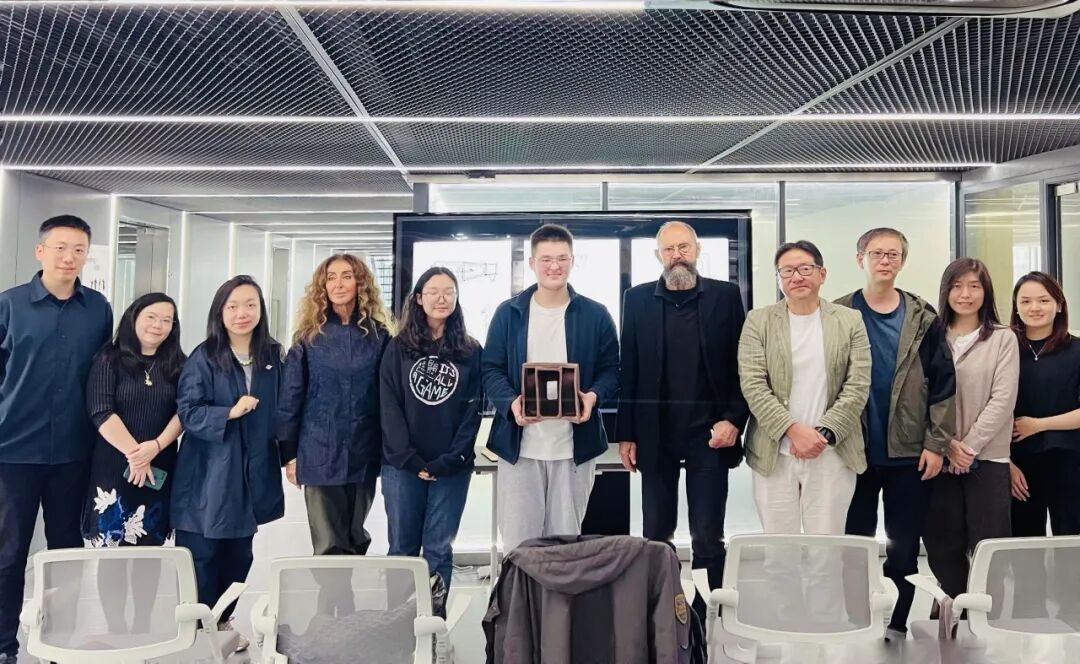
劳埃特教授在点评中精准阐释课程价值:
Prof. Reuter precisely articulated the educational significance:

黏土作为一种材料,用于包裹内部空间体量。不同的形态取决于内在力量分布的不同概念。这些实践证明:通过黏土塑造空间体量的过程,能够有效训练学生驾驭建筑空间的能力——而建筑空间正是建筑设计中至关重要的核心变量。
Clay was used as a material to envelop inner volumes. Different forms depend on different concepts of distribution of inner forces. They provide evidence that the creation of volumes by clay may train the ability to work with architectural space as one of the most important variables of architectural design.



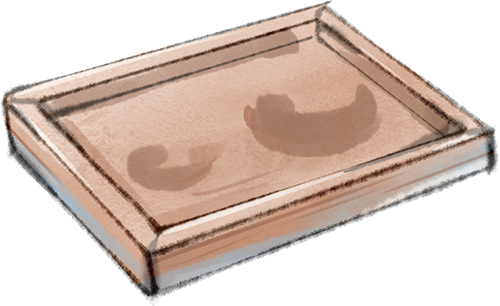
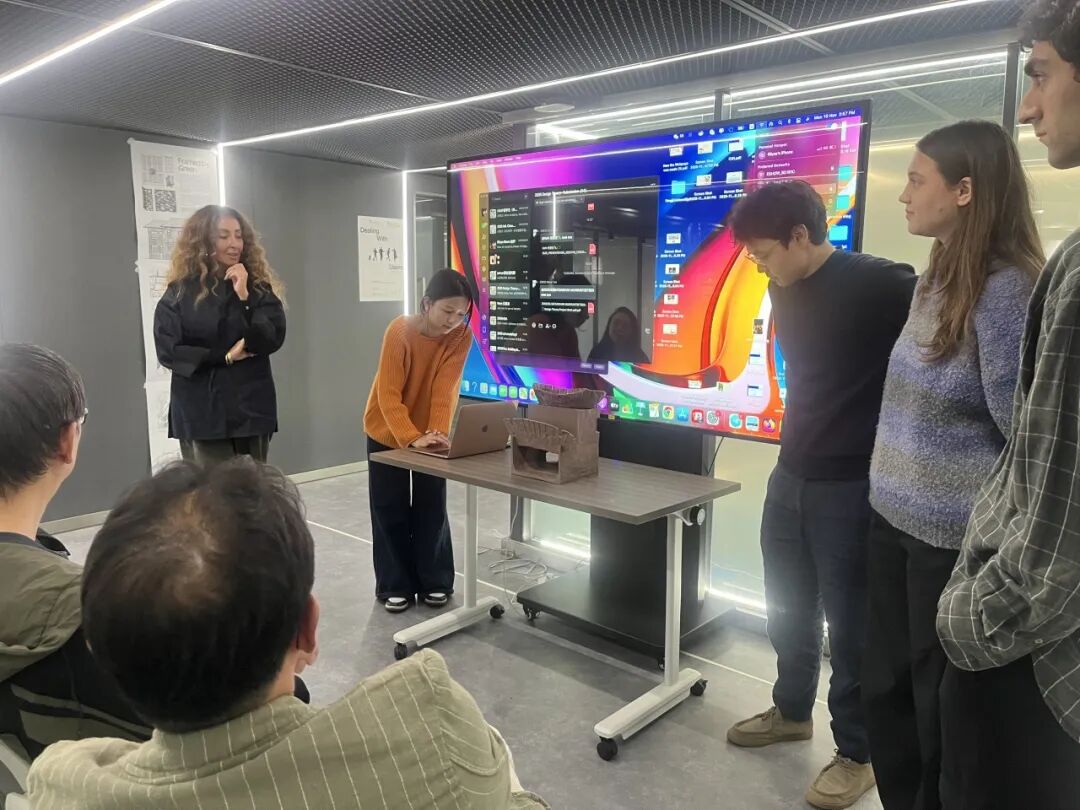
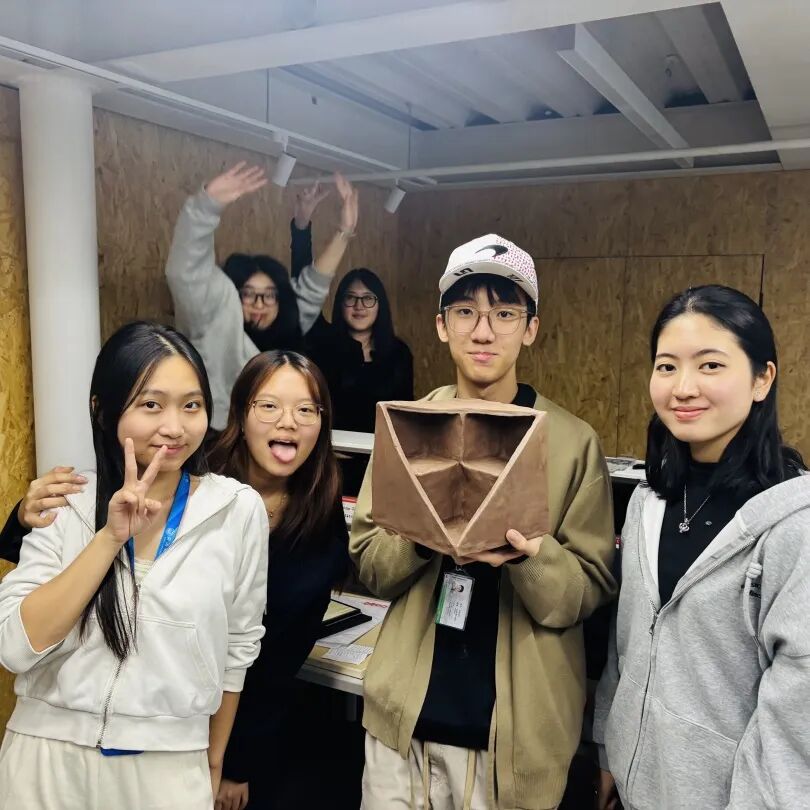
在傅国华建筑与城市国际教育中心这个国际化平台上,国际学生们通过泥土触摸建筑学的本源。单元评审不是终点,而是空间思维启蒙的起点。阳光透过玻璃幕墙勾勒出陶土肌理——这里没有虚拟参数,只有双手与材料的真实对话,为未来建筑师埋下专业自觉的种子。
At The Peter Guohua FU International Education Center of Architecture and Urbanism, International students explore architecture's essence through clay. This unit review is not an endpoint but the start of spatial thinking – where hands meet material without digital mediation, shaping tomorrow's architects.


傅国华建筑与城市国际教育中心
The Peter Guohua Fu International Education Center of Architecture and Urbanism
中心依托同济大学建筑与城市规划学院(CAUP)的全球声誉与学术实力,致力于为国际学生提供高质量的建筑学、城市规划与景观设计领域的本科及研究生教育。中心面向全球招生,开设全英文授课课程,推动跨文化学术交流与国际合作,培养具有全球视野的未来城市与建筑领军人才。
Leveraging the global reputation and academic strength of CAUP, the Peter Guohua Fu International Education Center of Architecture and Urbanism is dedicated to providing high-quality undergraduate and postgraduate education in Architecture, Urban Planning, and Landscape Design for international students. The center recruits students globally and offers English-taught programs. It aims to promote cross-cultural academic exchanges and international cooperation, and cultivate future leaders in urban development and architecture with a global perspective.