学院介绍
学院介绍
新闻中心



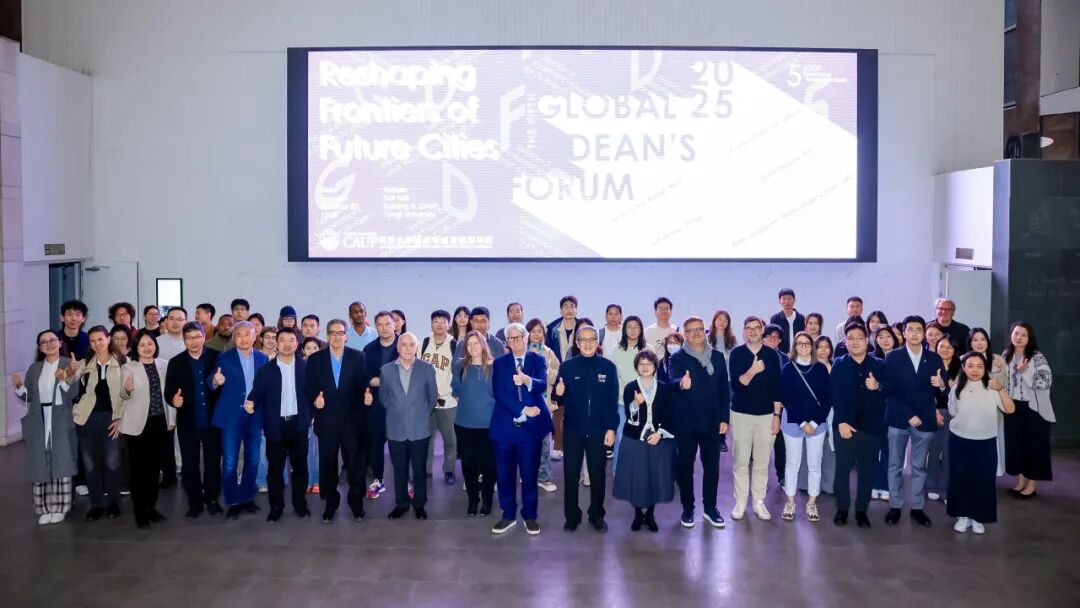
第五届全球院长论坛:
重构未来城市前沿
5th Global Dean’s Forum:
Reshaping Frontier of Future Cities
在全球城市系统不断重构的当下,气候变化、社会分化与技术变革交织,使未来城市的发展面临前所未有的复杂性。随着人口结构变化与城市收缩趋势的加剧,城市如何在经济、生态与社会层面实现再生?在智能技术不断渗透的时代,城市设计如何兼顾科学理性与人文关怀?面对气候危机,城市又该如何在追求韧性的同时保持长期的经济可持续性?当空间不平等与社会极化成为城市生活的底色,建筑与规划学科如何以新的方法论与跨界合作回应?为了探索这些关乎人类未来生存与发展的核心议题,同济大学建筑与城市规划学院开展主题为“重构未来城市前沿”的第五届全球院长论坛,邀请来自宾夕法尼亚大学、新加坡国立大学、同济大学、加泰罗尼亚理工大学及伦斯勒理工学院的五位世界顶尖学府院长与专家,共同展开深入探讨。论坛聚焦两大主题——“科学基础与未来生态”与“跨学科前沿与建筑文化”,从生态规划、智能设计、健康城市科学到建筑文化传播与空间创新,多维度展现城市未来的可能路径。嘉宾们的洞见为全球城市的转型与重塑提供了新的理论视角与前沿思考。
As global urban systems undergo profound restructuring, the interplay of climate change, social polarization, and technological transformation presents unprecedented challenges to the future of cities. With changes in population structure and the intensifying trend of urban shrinkage, how can cities regenerate economically, ecologically, and socially? In an era shaped by artificial intelligence and digital design, how can we reconcile technological rationality with humanistic care? As the urgency of climate resilience collides with long-term economic sustainability, how can cities achieve equilibrium between immediate adaptation and enduring growth? When spatial inequality and socio-economic fragmentation define the urban condition, how might architecture and urban planning disciplines cultivate new methodologies and interdisciplinary collaborations to respond? In response to these critical questions, the Forum topic on “Reshaping Frontier of Future Cities”, hosted by the College of Architecture and Urban Planning, Tongji University, convenes deans and scholars from five leading global institutions—University of Pennsylvania, National University of Singapore, Tongji University, Polytechnic University of Catalonia, and Rensselaer Polytechnic Institute. The forum explores two interrelated themes: Scientific Foundations for Future Ecologies; Interdisciplinary Frontiers and Architectural Culture. Through discussions ranging from ecological planning and intelligent design to healthy city science, architectural culture, and spatial innovation, the participants collectively reimagine the pathways of urban transformation, offering theoretical insight and forward-looking perspectives for the sustainable and inclusive cities of tomorrow.”
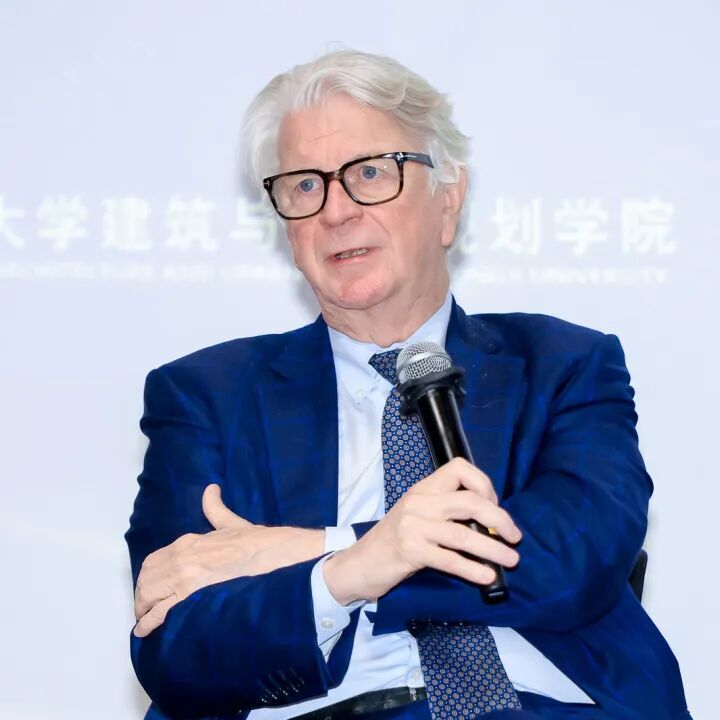
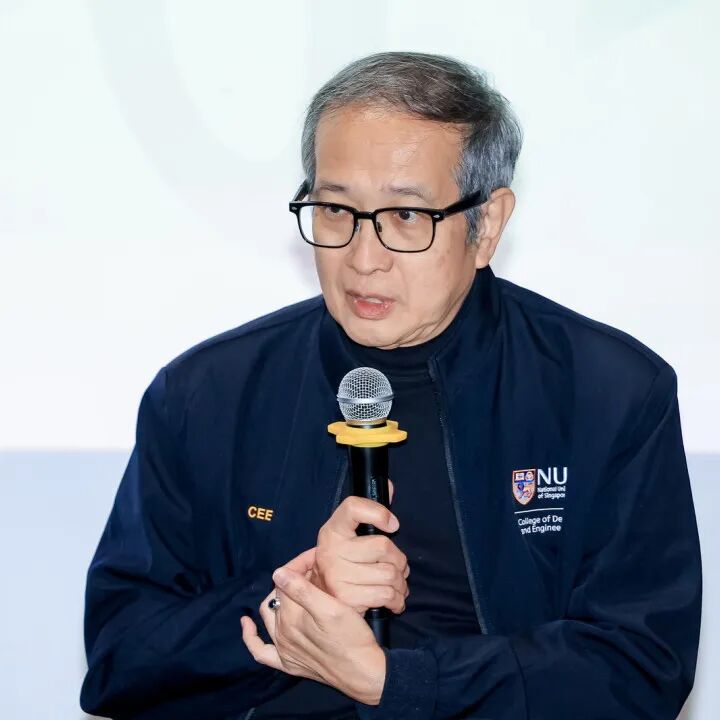
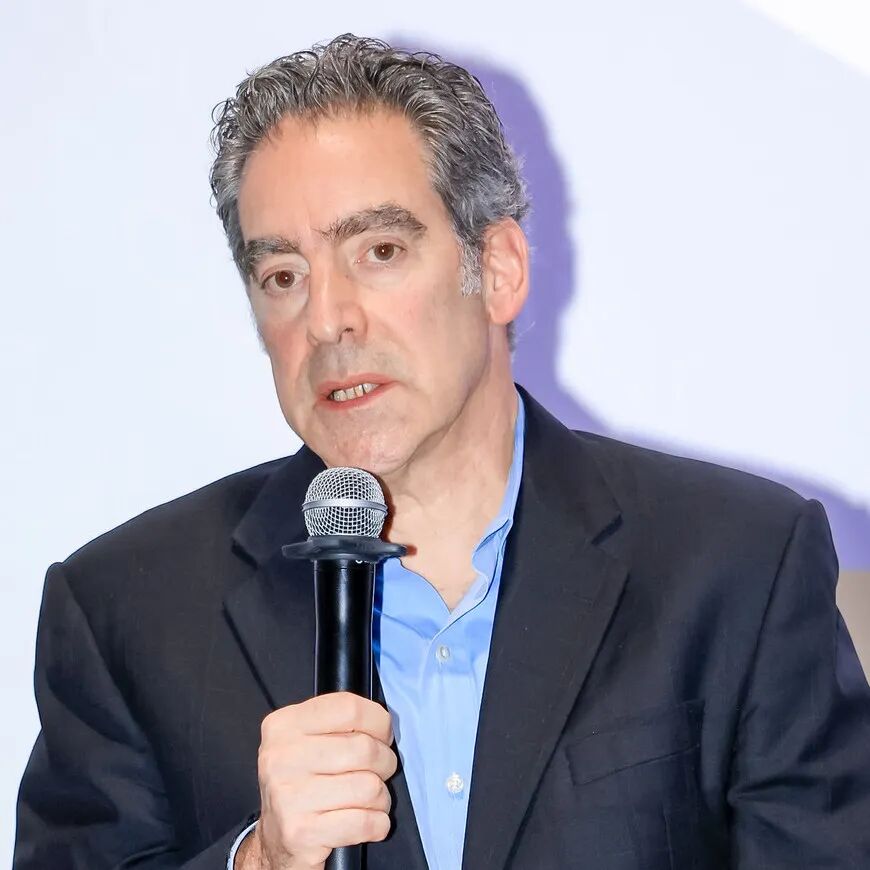
2025年10月20日,第五届全球院长论坛“Reshaping Frontier of Future Cities”于建筑与城市规划学院钟庭报告厅隆重开幕。本次院长论坛邀请了美国宾夕法尼亚大学设计学院院长Frederick Steiner教授,新加坡国立大学设计与工程学院副院长Heng Chye Kiang教授,美国伦斯勒理工建筑学院院长Evan Douglis教授,西班牙加泰罗尼亚理工大学建筑学院院长Felix Solaguren Beascoa de Corral教授,同济大学建筑与城市规划学院院长王兰教授为主旨发言嘉宾。同济大学副校长李翔宁教授,建筑与城市规划学院党委书记王桢栋教授,党委副书记王敏,风景园林学系主任章明教授,及学院师生近300人出席了论坛。
On October 20, 2025, the Fifth Global Dean's Forum, Reshaping Frontier of Future Cities, was grandly opened at the Bell Hall of the College of Architecture and Urban Planning. The forum featured keynote speeches from Professor Frederick Steiner, Dean of the Stuart Weitzman School of Design at the University of Pennsylvania (Upenn); Professor Heng Chye Kiang, Deputy Dean of the College of Design and Engineering at the National University of Singapore (NUS); Professor Evan Douglis, Dean of the School of Architecture at Rensselaer Polytechnic Institute (RPI); Professor Felix Solaguren Beascoa de Corral, Director of the Barcelona School of Architecture (ETSAB) at the Universidad Politécnica de Cataluña (UPC); and Professor Lan Wang, Dean of the College of Architecture and Urban Planning (CAUP) at Tongji University.
The event was attended by Professor Xiangning Li, Vice President of Tongji University; Professor Zhendong Wang, Chair of CAUP; Min Wang, Vice Chair of CAUP; Professor Ming Zhang, Head of the Department of Landscape Architecture; as well as nearly 300 faculty members and students from the college.
01
开幕致辞
Opening Session
同济大学副校长李翔宁在开幕致辞中表示,建筑与城市规划学院在国际建筑与城市规划领域占据着举足轻重的地位,一直以来都坚定不移地秉持开放包容、创新进取的精神理念,积极且高效地搭建起国际交流与合作的高端优质平台。此次第五届全球院长论坛的举办,正是学院践行自身使命、发挥引领作用的关键且重要举措。
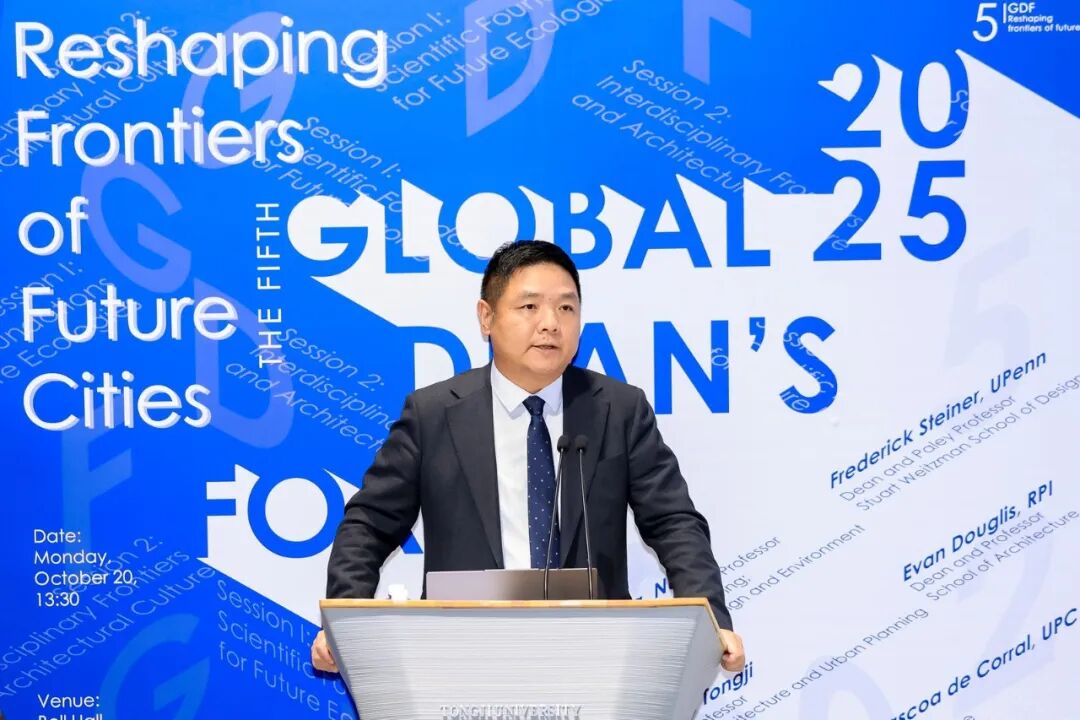
建筑与城市规划学院党委书记王桢栋也表达了自己的殷切期望,他希望以此次论坛为重要契机,冲破国界与学科的藩篱,与来自各地的各位院长、知名学者以及广大师生齐聚一堂,共同深入探讨行业前沿话题,激发思维碰撞,启迪深刻思考,携手共话未来城市与建筑发展的美好愿景。
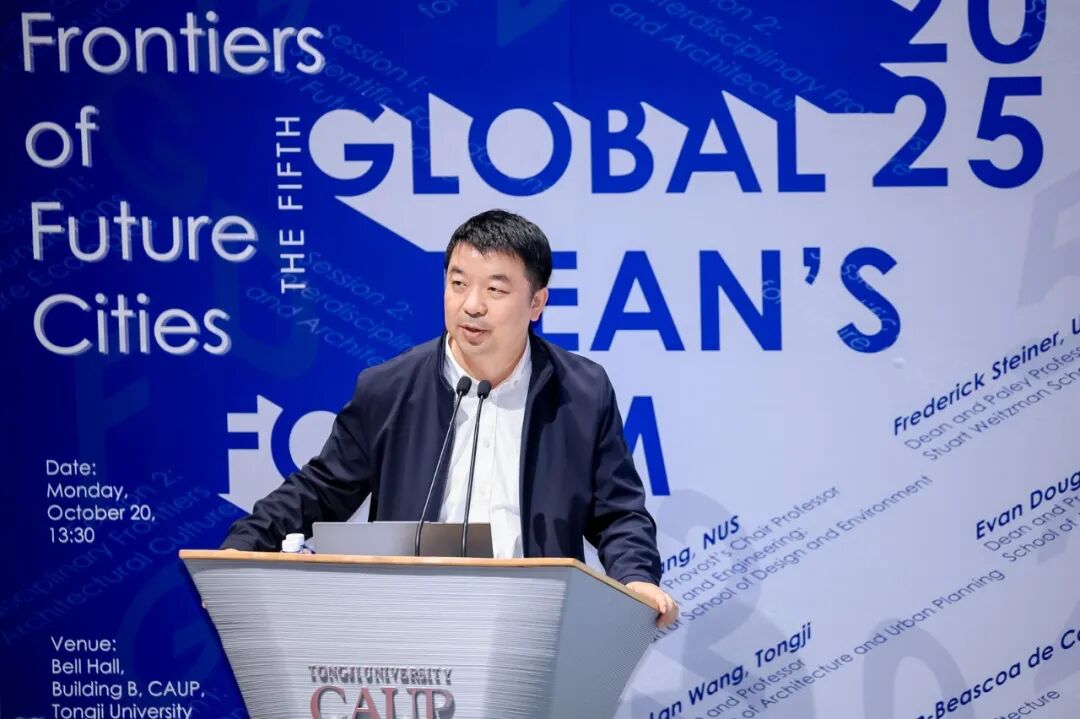
In his opening speech, Vice President Xiangning Li of Tongji University stated that the College of Architecture and Urban Planning at Tongji University holds a significant position in the international field of architecture and urban planning. It has always been committed to upholding the spirits of openness, inclusiveness, innovation, and progressiveness, and has actively built a high-end platform for international exchanges and cooperation. The hosting of the 5th Global Dean's Forum is precisely a crucial move by the college to fulfill its mission and take a leading role.
Zhendong Wang, Chair of the College of Architecture and Urban Planning at Tongji University, also expressed his earnest expectations. He hoped that this forum would serve as a great opportunity to break through the barriers of national borders and academic disciplines. He looked forward to gathering with deans, renowned scholars, and teachers and students from various places to jointly delve into cutting-edge topics, inspire in-depth thinking, and engage in discussions about the bright future of urban and architectural development.
02
上半场:主旨演讲
Keynote speech
Session 1 | Scientific Foundations for Future Ecologies
科学基础与未来生态

主持人:沈尧,建筑与城市规划学院 国际合作部部长
Moderator: Yao Shen | Assistant Dean, CAUP
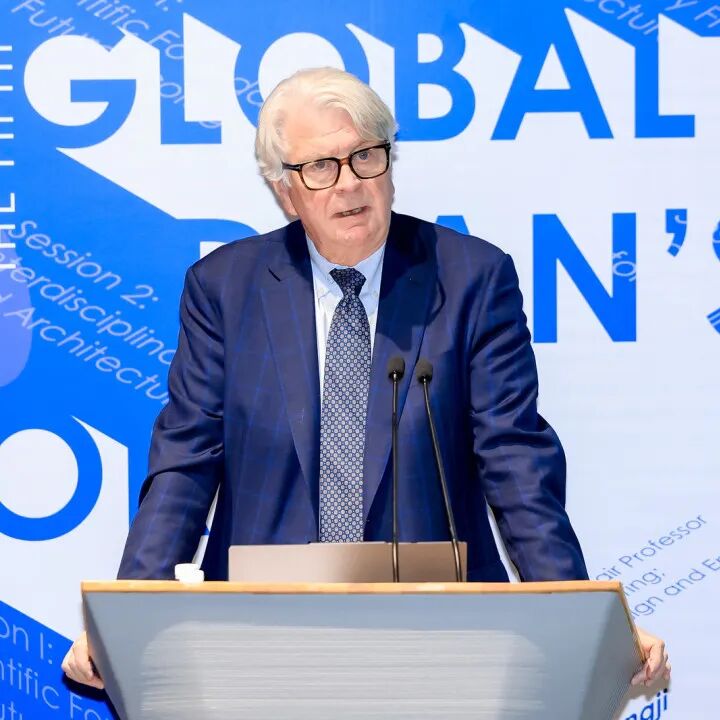
Frederick Steiner
Dean and Paley Professor, Stuart Weitzman School of Design, University of Pennsylvania
From Principles to Practice
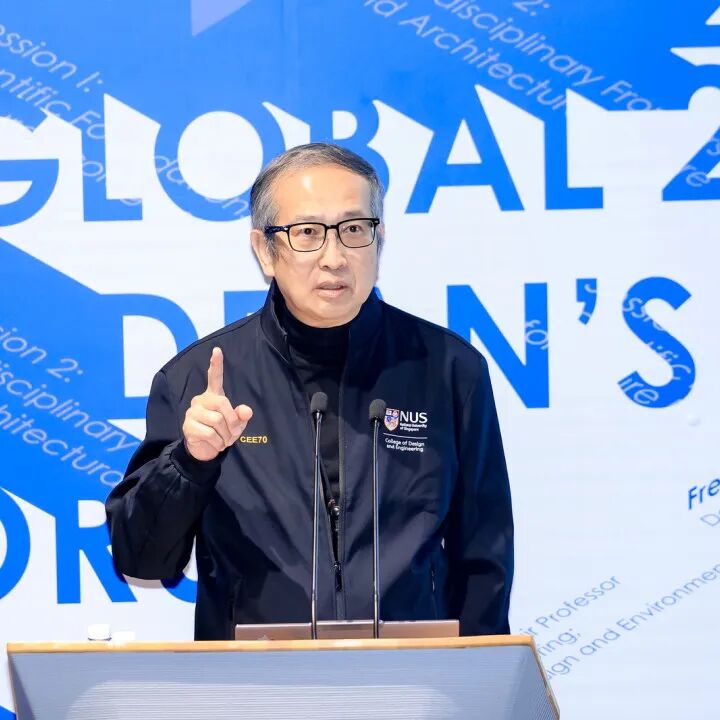
Heng Chye Kiang
Deputy Dean and Provost’s Chair Professor, College of Design and Engineering, National University of Singapore
Integrating Science and Design: Foundations for Future Habitats

Lan Wang
Dean and Professor, College of Architecture and Urban Planning, Tongji University
AI for Healthy Cities Science
Session 2丨Interdisciplinary Frontiers and Architectural Culture
跨学科前沿与建筑文化
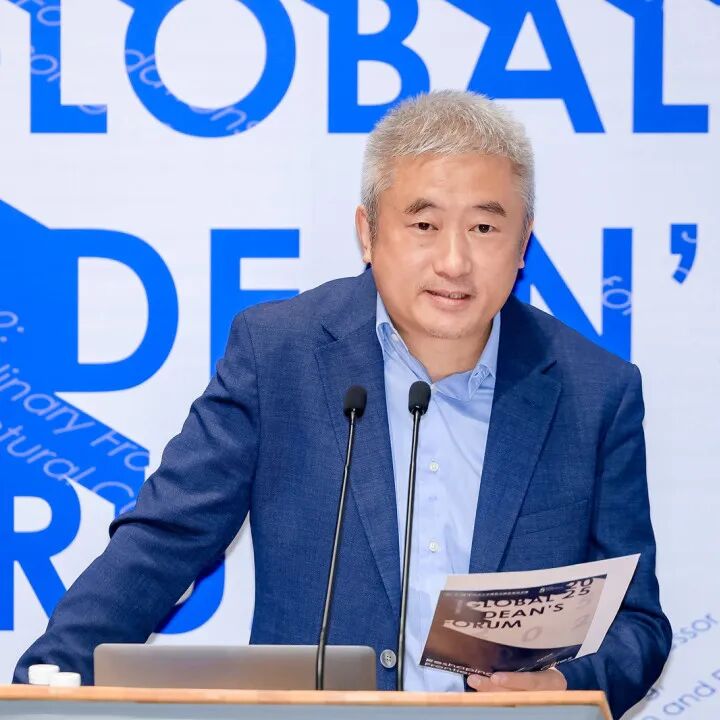
主持人: 卓健,城市规划系主任,建筑与城市规划学院
Moderator | Jian Zhuo, Head of Urban Planing Department, CAUP
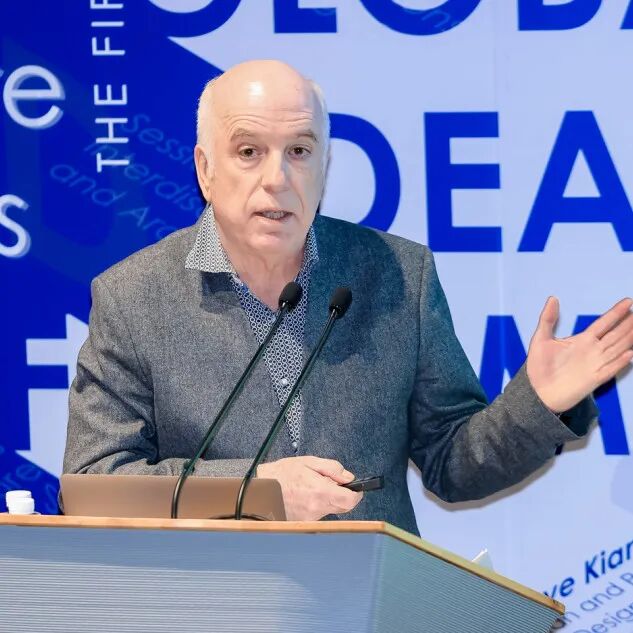
Félix Solaguren-Beascoa de Corral
Director and Professor, Barcelona School of Architecture, Universidad Politécnica de Cataluña
Ways of seeing
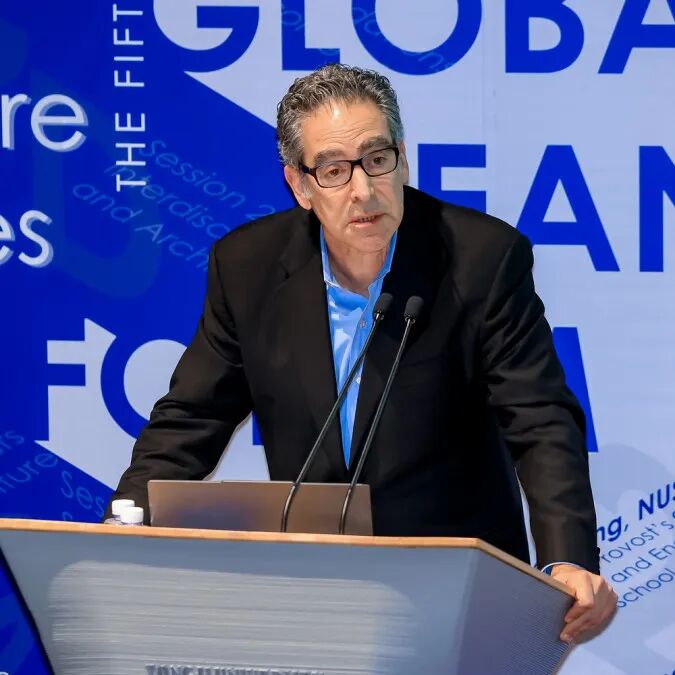
Evan Douglis
Dean and Professor, School of Architecture, Rensselaer Polytechnic Institute
Accelerating Towards Abundance: Planetary Strategies in the Era of the Anthropocene
03
圆桌论坛:跨学科协作与未来人居
的讨论
Round-table: Dialogues on Interdisciplinary
Collaboration and Future Habitation
主持人:沈尧,建筑与城市规划学院国际合作部部长
Moderator: Yao Shen | Assistant Dean, CAUP
Cross-disciplinary Future or a New Discipline
Sustaining Innovation
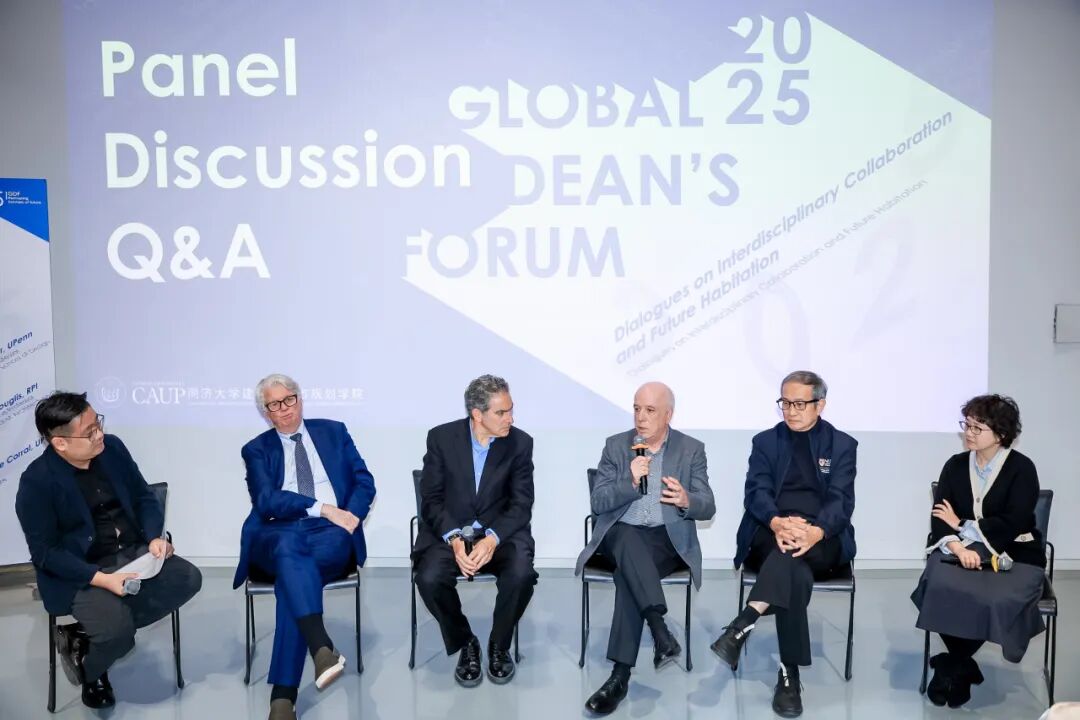
在圆桌论坛上,一系列关于城市设计与发展未来的关键问题得到了深入探讨。论坛首先聚焦于建筑教育在21世纪面临的挑战与跨学科合作,强调了建筑不仅是实用基础设施,更是记忆、仪式和意义的载体,需要打破学科壁垒,与工程、景观设计和规划等领域紧密协作,以应对气候变化和新技术(如人工智能、响应性材料)带来的复杂问题,并探讨了是否需要创建全新学科或改革现有体系以保持紧密关联;接着探讨了技术与建筑教育的融合,包括人工智能、响应性材料等新兴技术的应用如何重塑建筑设计,同时警告避免过度依赖技术而忽视建筑的情感、精神和文化层面,随后分享了建筑教育的创新与实践案例,如工程与建筑设计结合、社区参与和全球合作,以及通过跨学科研究中心和课程调整推动教育创新,并强调了建筑教育的伦理与社会责任,特别是在应对气候变化和社会不平等中的作用,致力于培养学生的伦理意识和社会责任感,最后讨论了从STEM到STEAM的教育转变,突出了艺术和设计在建筑教育中的重要性,以培养学生的创造力、设计思维和平衡技术与人文精神的能力。


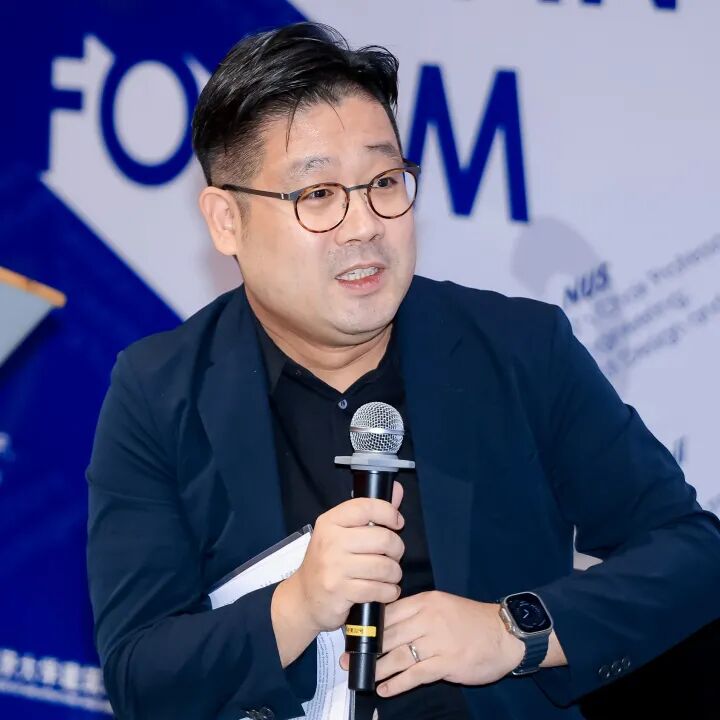
At the round-table forum, a series of key issues regarding the future of urban design and development were deeply discussed. The forum first focused on the challenges and interdisciplinary collaboration in architectural education in the 21st century, emphasizing that architecture is not only practical infrastructure but also a carrier of memory, ritual, and meaning, and the need to break down disciplinary barriers and collaborate closely with fields such as engineering, landscape design, and planning to address complex issues like climate change and new technologies (e.g., artificial intelligence, responsive materials), while exploring whether to create a new academic discipline or reform existing systems to maintain relevance; then explored the integration of technology and architectural education, including how emerging technologies like AI, responsive materials, and planetary computing are reshaping architectural design, while cautioning against over-reliance on technology and neglecting the emotional, spiritual, and cultural dimensions of architecture, followed by sharing innovative practices and cases in architectural education, such as the integration of engineering and architectural design, community engagement, and global collaboration, as well as promoting educational innovation through interdisciplinary research centers and curriculum adjustments, and emphasized the ethical and social responsibilities of architectural education, particularly in addressing climate change and social inequality, aiming to cultivate students' ethical awareness and sense of social responsibility, and finally discussed the educational shift from STEM to STEAM, highlighting the importance of art and design in architectural education to foster students' creativity, design thinking, and the ability to balance technology and humanistic spirit.
04
谅解备忘录签署仪式
MOU signing ceremony
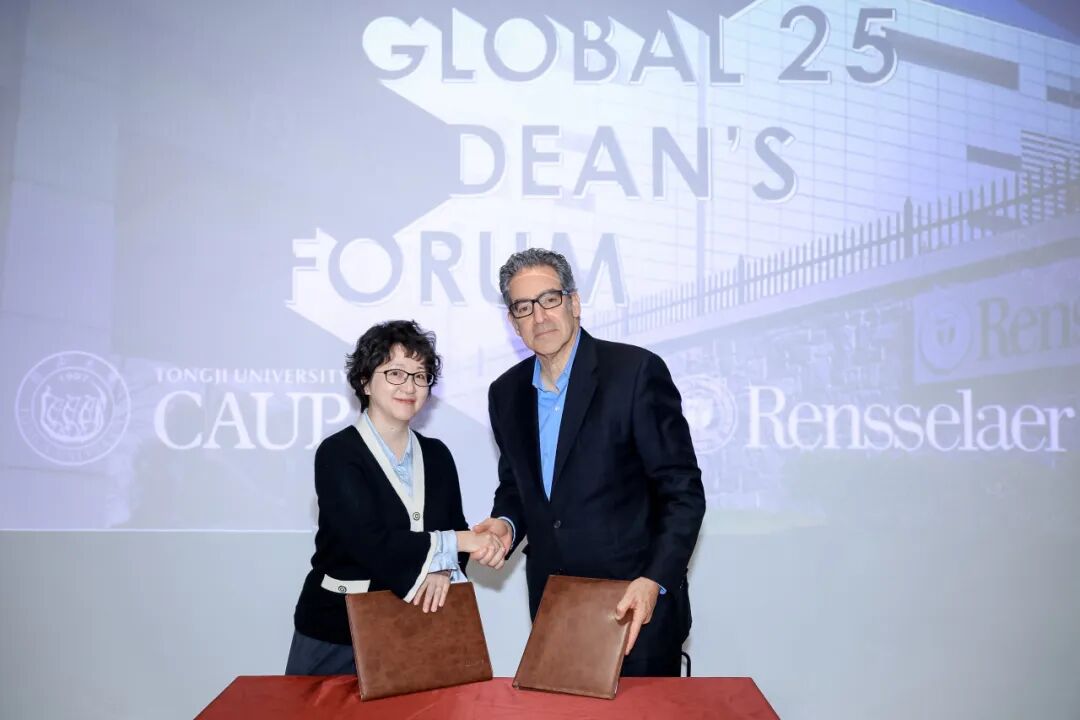
同济大学建筑与城市规划学院与三所知名院校——意大利威尼斯建筑大学(IUAV)、美国伦斯勒理工学院(RPI)以及法国巴黎美丽城国立高等建筑学院(ENSA-PB)共同见证了谅解备忘录(MOU)签署仪式,学院与伦斯勒理工学院于现场签署谅解备忘录。此次合作标志着学院与三所院校在学术与科研领域的深度合作迈入新阶段。
根据协议,各院校将积极推动学生与教师的学术交流,营造多元文化教育环境;携手开展联合研究项目与创新实践,聚焦建筑、城市规划及风景园林领域的前沿课题;探索联合培养项目及学术工作坊的举办,促进学术成果的共享与应用。
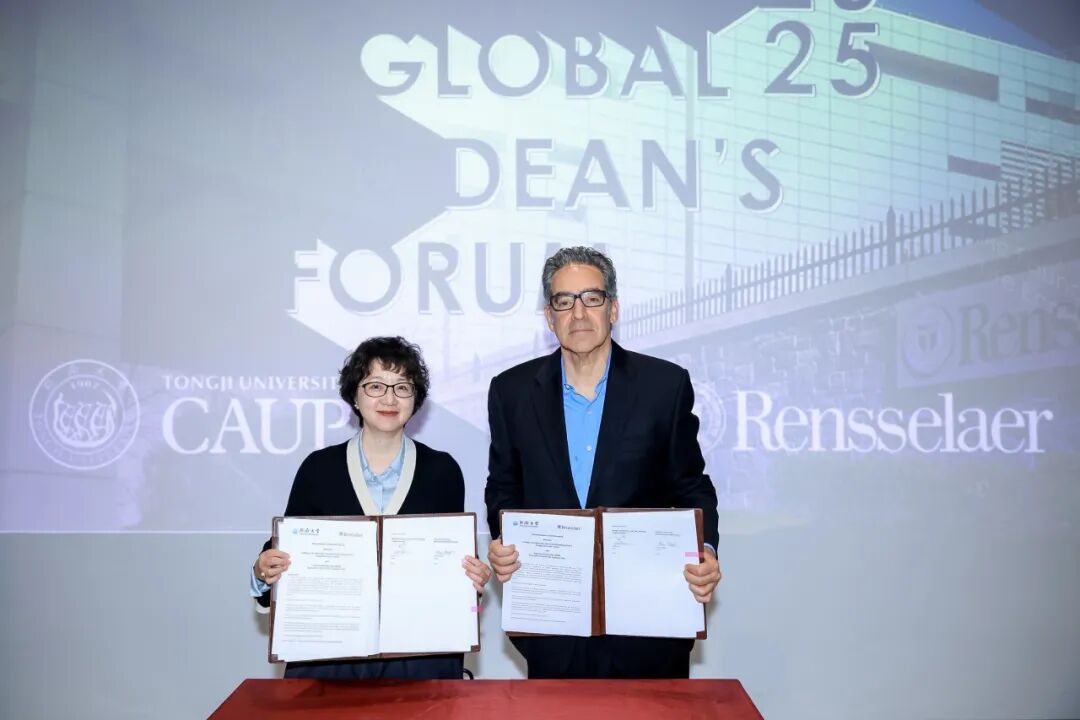
The College of Architecture and Urban Planning (CAUP) at Tongji University joined hands with three renowned institutions to hold a Memorandum of Understanding (MOU) signing ceremony. This event marks a significant leap forward in deepening academic and research collaborations among the institutions:
Università Iuav di Venezia (IUAV)
Rensselaer Polytechnic Institute (RPI)
L’Ecole Nationale Supérieure d’Architecture de Paris-Belleville (ENSA-PB)
During the ceremony, CAUP and RPI signed their memorandum on site. Under the agreements, the participating universities will actively promote cross-border exchanges of students and faculty, fostering a multicultural educational environment. They will also engage in joint research projects and innovative practices, focusing on cutting-edge topics in architecture, urban planning, and landscape architecture. Furthermore, they aim to explore the establishment of joint degree programs and academic workshops, facilitating the sharing and application of academic achievements.
05
结语
Peer into the future
我们共同探寻:在这个全球城市系统深刻重构的时代,如何精准捕捉生态、技术与社会的交织脉搏,构建起面向未来的理想城市范式?又该如何借助跨学科协作的强大合力,在人工智能、生物材料等科技突破与人类情感、文化记忆之间找到完美平衡,让创新真正服务于包容、健康且富有韧性的城市生态?“科学基础—跨学科实践”,作为本次论坛的核心驱动力,犹如强劲双轮,推动着建筑、规划、景观与工程领域的知识不断流动、深度融合,激发出应对气候危机、社会公平与空间创新的无限可能。来自全球顶尖学府的智慧在此汇聚、碰撞,闪耀出跨越边界的思维火花。我们坚信,通过这一场场深入的对话与思想交锋,能够凝聚起国际社会的智慧力量,为未来城市的转型绘制出一幅幅具有实操性的行动蓝图。这幅蓝图不仅勾勒出智慧、健康与生态共生的城市形态,更承载着对人类美好生活的深刻洞察与不懈追求,引领我们向着更加可持续、公平、韧性的未来城市稳步迈进,共同书写属于全人类的城市发展新篇章。
In this era of profound restructuring of global urban systems, we're on a shared quest: how can we accurately capture the intertwined pulses of ecology, technology, and society to construct an ideal urban paradigm for the future? How can we leverage the powerful synergy of interdisciplinary collaboration to strike a perfect balance between technological breakthroughs—such as AI and bio-materials—and human emotions and cultural memory, ensuring that innovation truly serves inclusive, healthy, and resilient urban ecosystems? Scientific Foundations—Interdisciplinary Practice, as the core driving force of this forum, functions as a robust dual engine, propelling the continuous flow and deep integration of knowledge across architecture, planning, landscape, and engineering fields, igniting infinite possibilities for addressing climate crises, social equity, and spatial innovation. Wisdom from the world’s leading institutions converges and collides here, sparking boundary-transcending insights. We firmly believe that through these in-depth dialogues and intellectual exchanges, we can unite the wisdom of the global community to draw actionable blueprints for urban transformation. This blueprint not only outlines the form of intelligent, healthy, and ecologically symbiotic cities but also embodies a profound insight and relentless pursuit of a better human life, guiding us steadily toward a more sustainable, equitable, and resilient urban future, and jointly writing a new chapter in urban development for all humanity.
06
现场花絮
pictures from the forum
滑动查看更多
滑动查看更多
滑动查看更多
院长论坛背景介绍
About the Global Dean’s Forum
同济大学建筑与城市规划学院于2021年发起了全球院长论坛(Global Dean’s Forum),旨在搭建一个全球对话平台,汇聚世界知名院校院长及学科带头人,共同擘画建筑、规划、景观领域的变革蓝图。直至2025年,院长论坛已成功吸引近30所国际顶尖学府的参与,成为分享前沿思想、促进学术交流的国际平台。
In 2021, the College of Architecture and Urban Planning, Tongji University initiated the Global Dean’s Forum, aiming to establish a global dialogue platform that brings together deans and researchers from renowned institutions worldwide to jointly outline a blueprint for change in architecture, urban planning, and landscape architecture fields. By 2025, the Dean’s Forum has successfully attracted the participation of nearly 30 top international universities, becoming an international platform for sharing cutting-edge ideas and promoting academic exchanges.
鸣 谢
在此特别鸣谢所有参与院长论坛的师生。
感谢行政团队搭建沟通桥梁,摄影团队定格精彩瞬间,学生志愿者传递热情,新媒体团队配合宣传,后勤团队保障每个细节——是所有人的默契配合,让这场论坛从构想成为现实。
As ideas sparked here, thank you to the photography team for capturing moments, the international and admin teams for building connections, the student volunteers for spreading enthusiasm, the media team for amplifying impact, and the logistics crew for perfecting details—your seamless collaboration turned this vision into reality.