学院介绍
学院介绍
新闻中心



The History of Architecture in Sections:
Selected Works of History of Architecture,
Year 1, BArch, Spring 2024
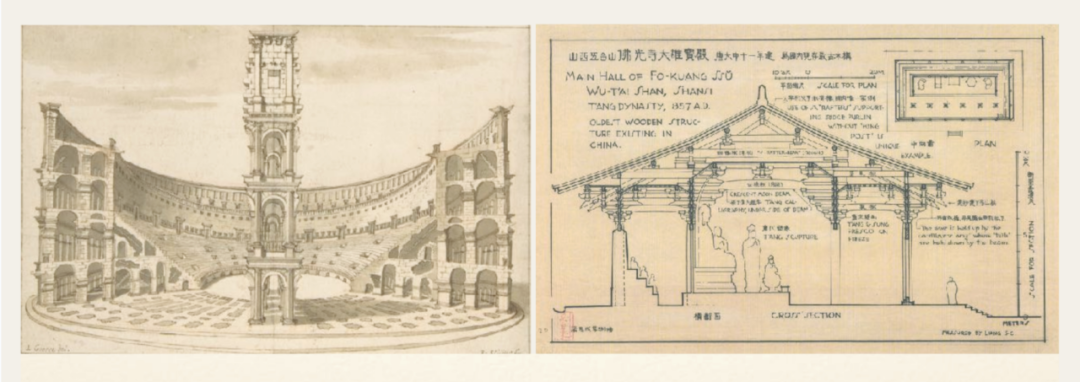
Teachers: Zhou Minghao, Li Yingchun
Teaching Assistants: Shan Yu, Liu Tianxin
任课教师:周鸣浩、李颖春
课程助教:单禹、刘添欣
01
Course Assignment 课程作业
2024年春季学期的国际班本科一年级建筑史课程,共有来自不同国家和地区的14位同学。课程作业要求他们采用自己擅长的绘图工具,在A3图幅的卡纸上徒手抄绘一座历史建筑的剖面,并根据文献资料和影像资源,为剖面图填色。
作品中应采用不同的线宽、明暗和色相,反映历史建筑的六个方面的特征要素:
- 尺度和比例
- 空间的形态和深度
- 建筑材料的质感
- 建筑结构
- 室内光影
- 空间的使用者
以下是部分同学的作品,按照建筑的建成年代排序,呈现出全球视野下从古典到现代不同人类文明阶段的建筑文化、建造技术与生活情境。
02
Selected Works 作业展示
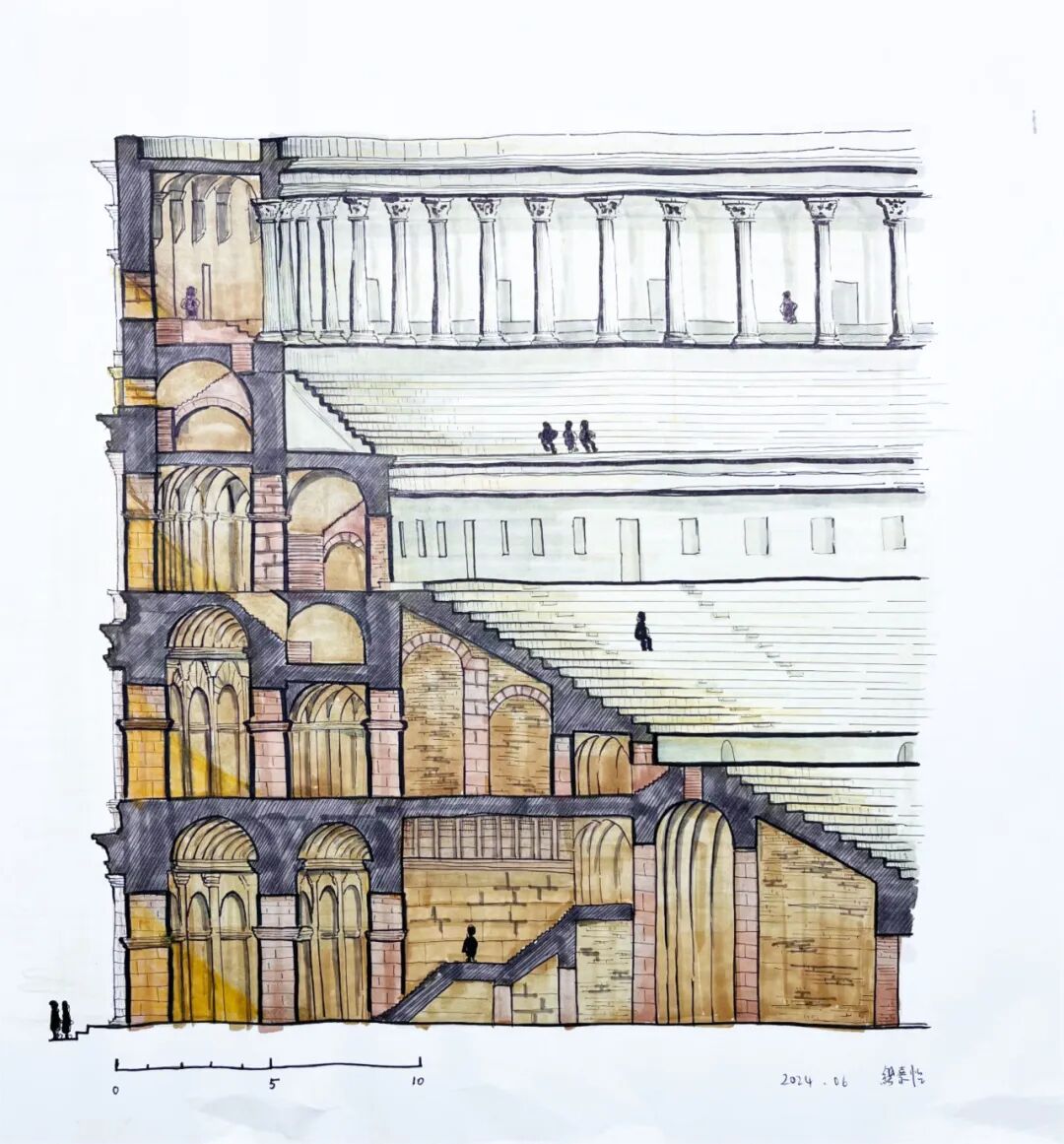
Profile perspective of the Colosseum, Rome, Italy, 70–80 CE
斗兽场剖面透视图,罗马,意大利,公元 70-80 年
BY
MIAO JIAYI
缪嘉怡
Ann Miao is an architectural student from Hong Kong SAR, China, who enjoys exploring cultures in different places and understands the relationship between humans and architecture.
缪嘉怡是来自中国香港的建筑系学生,她喜欢探索不同地方的文化,了解人与建筑之间的关系。
Object Description
作品描述
The Colosseum, an iconic ancient Roman architectural marvel, was built in the 1st century CE in the center of Rome, Italy. The massive amphitheater was used for grand public spectacles, including gladiatorial contests, animal hunts, executions, re-enactments of famous battles, and dramas based on Classical mythology. My work aims to illustrate the use of the materiality of the Colosseum, which encompasses marble, concrete, brickwork, and travertines. Brown-yellow colors of varying brightness were employed to depict the lighting conditions, displaying the depth of the space.
罗马斗兽场建于公元一世纪,是一座标志性的古罗马时期建筑。这座巨大的圆形剧场被用来举办盛大的公共活动,如角斗、狩猎、处决、重演著名战役以及基于古典神话的戏剧。我的作品旨在展示斗兽场所使用的不同建筑材料,包括大理石、混凝土、砖块和石灰华。我采用不同亮度的棕黄色来表示光线强度,以展现空间的深度。
滑动查看更多
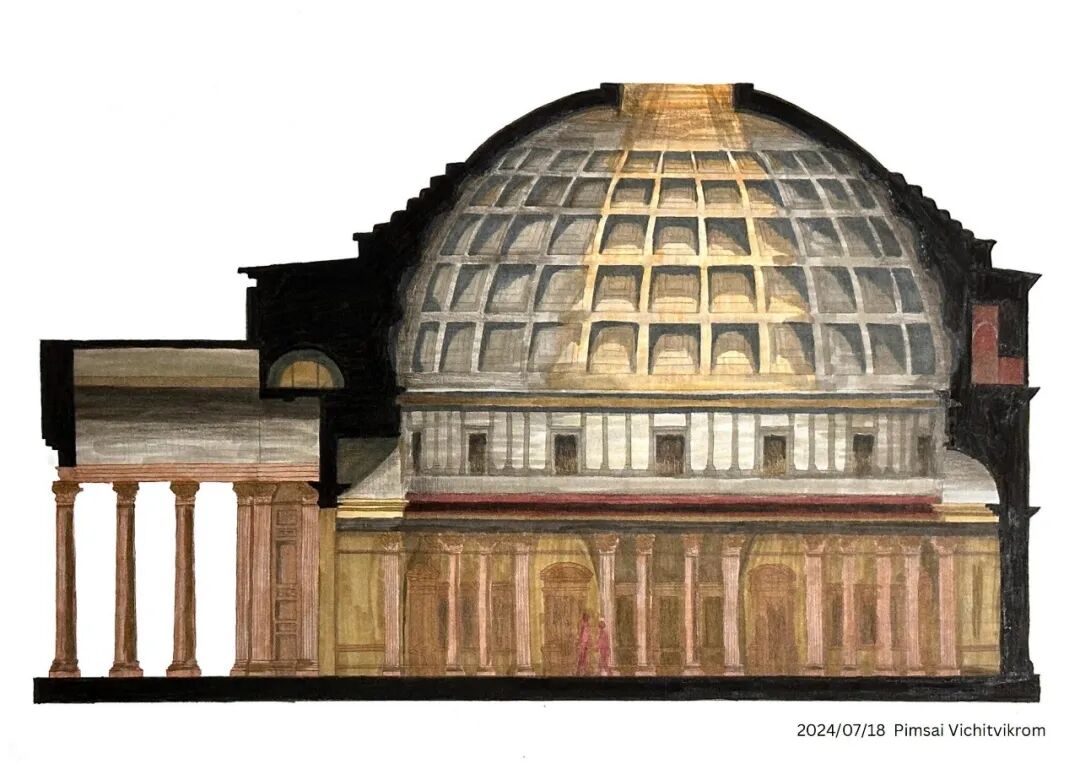
Longitudinal Section of the Pantheon at Rome, Italy, 113–125 CE
罗马万神殿纵剖面,意大利,公元 113-125 年
BY
VICHITVIKROM PIMSAI
徐位萍
Her name is Pimsai, and you can call her Pingping. She is a student of architecture from Bangkok, Thailand, and she has a strong interest in design and creativity. She has always been fascinated by many kinds of artwork and fashion. In her spare time, she enjoys going out to locate lovely common places and admiring the general art and architecture surrounding her. She is someone who values freedom and enjoys showing kindness and sincerity to others.
她的名字是徐位萍,你也可以叫她萍萍。她来自泰国曼谷,热爱创意和设计,目前正在学习建筑学。她对各种艺术作品和时尚感到着迷。在空闲时间,她喜欢出去寻找美丽的地方,享受周围的艺术和建筑。她是一个热爱自由、乐于向他人传递善意和诚意的人。
Object Description
作品描述
My work provides a comprehensive view of the cross-section of the Pantheon. In the center of the structure is a large dome that rises from darkness to light as it approaches the summit. A hole known as an “oculus” illuminates when the sun beams through. The walls that support this structure are very thick, which were represented in shades of brown and grey to emphasize that they were constructed from strong materials such as concrete. On the portico are columns of Corinthian order made from red-brown Egyptian granites. A triangular-shaped pediment is supported above them. Yellow was employed on the dome to show the passage of light through the oculus. Warm colors in the interior of the hallways indicate the presence of heat due to excessive sunlight during the day.
这幅作品完整展现了万神庙的纵剖面。建筑中心是一个大穹顶,顶部有一个圆形天窗(oculus),当阳光射入时,建筑内呈现出从底部到顶部由暗色到亮色的渐变。支撑这个穹顶的墙体非常厚重,我用棕色和灰色来表达墙体是用砖块和混凝土这类强大的材料砌筑而成的。门廊部分,由红褐色埃及花岗岩制成的科林斯柱支撑着上方的三角形山墙。穹顶上的黄色表现了光线如何通过天窗进入室内。回廊内部使用了暖色调,以表现白天阳光产生的热量。
滑动查看更多
Longitudinal section of the Great Chaitya-hall at Karli, India, 120 CE
卡尔利支提石窟纵剖面,印度,公元120年
BY
AYE NYEIN THU
安叶英
Aye Nyein Thu is a 20-year-old architecture student from Mandalay, Myanmar. She came to China and study at Tongji University to explore unique and magnificent Chinese ancient and modern architecture. Besides architecture, she is also interested in cognitive psychology and spirituality.
安叶英是一名来自缅甸曼德勒的建筑系学生,现年 20 岁。她致力于探索独特而宏伟的中国古代和现代建筑。除了建筑,她还对认知心理学和灵性感兴趣。
Object Description
作品描述
My drawing concept is to depict the main architectural feature of the Great Chaitya Hall at Karli, India, by using various colors to express the materiality and atmosphere inside the hall. Thick black lines were used to distinguish the section of the rock cut, the stupa, and the interior space, while other elements were depicted with thinner lines. I used brown and dark brown for the wooden ribs on the roof, as well as the lion pillars, horseshoe-shaped arch, interior pillars, and cravings on the wall. Dark blue was used between the pillars to express the cool atmosphere within the cave. As the stupa is the most sacred element within the hall, I colored it in a light grey hue to ensure that it is the most prominent feature in my drawing.
Regarding other elements, yellow was employed to represent the sunlight that penetrated the horseshoe-shaped arch, pale blue to represent the sky, and black to represent the rock cut and the cutting sections. I also incorporated human figures in ancient Indian attire with vibrant colors (green, yellow, red) and an orange-brown hue to represent the monks praying nearby, indicating the initial religious scene of this place.
我的绘画思路是描绘印度卡尔利支提石窟的主要建筑特征,并用色彩表现材料的原色和洞窟内的氛围。我用黑色粗线来绘制岩石、佛塔和内部空间的轮廓,而其他元素则用较细的线条绘制。在色彩方面,我使用了棕色和深棕色来表现石窟顶部的木肋、狮子柱、马蹄形拱门、内部支柱和墙壁上的雕像。为了表现洞内的凉爽,柱子之间使用了深蓝色。佛塔是支提窟内最神圣的元素,我使用浅灰色使它成为画中最引人注目的部分。
至于其他元素,我用黄色表现穿过马蹄形拱门的阳光,用浅蓝色表现天空,用黑色表现岩石和剖断线。我还用鲜艳的色彩(绿、黄、红)描绘了身着古印度服饰的人物,并用橙棕色描绘了在佛塔附近祈祷的僧侣,试图再现这座早期佛教建筑的使用场景。
滑动查看更多
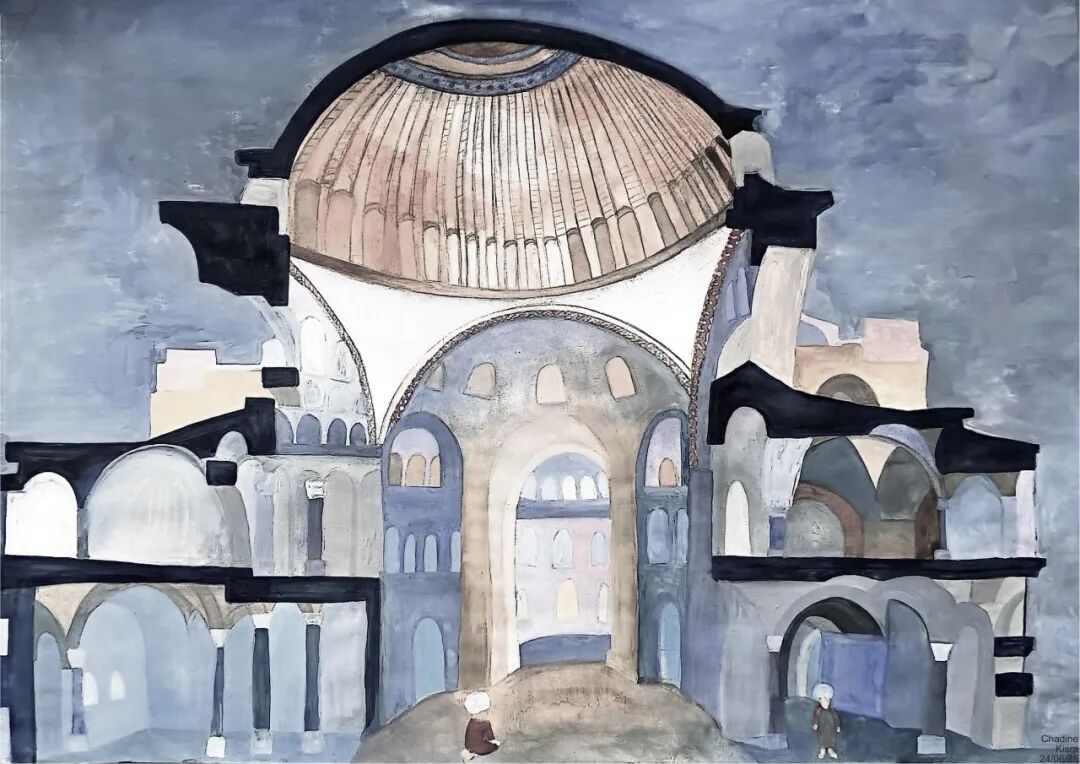
Longitudinal Section of Hagia Sophia (Church of Holy Wisdom), Istanbul, Turkey, 532–537 CE
圣索菲亚大教堂纵剖面,伊斯坦布尔,土耳其,公元532-537年
BY
KISRA CHADINE
沙妮
Chadine Kisra is from Rabat, Morocco, and her last name refers to her Persian origins. Her passions include ballet and composing Arabian poetry. She supports China’s desire to revitalize the ancient silk roads that connect Africa and Asia, and she is willing to use her design skills to help alleviate the high rates of poverty and illiteracy in Africa.
沙妮来自摩洛哥的拉巴特,她的姓氏源于她的波斯血统,她喜欢芭蕾舞和写作阿拉伯诗;她支持中国的一带一路倡议。同时,她也希望通过设计来改善非洲普遍存在的贫困及教育水平落后问题。
Object Description
作品描述
I implemented the traditional Chinese painting technique of meticulous brushwork gongbi to emphasize the subtle contrast between light and shadow within Hagia Sophia. This technique enhances the depth of each compound of the building. By darkening the point of each pendentive and arch, I achieved my ultimate objective of deepening the perspective to the maximum extent possible. Upon my visit to Istanbul, I observed that the sky was predominantly overcast for the day. Consequently, I have elected to depict the sky in a realistic manner in the backdrop. I tended to represent the scene when the building was used as a mosque. Thus, two individuals have been introduced: a father praying towards the Mihrab alcove and his son, eager to learn how to perform Islamic rituals.
我的作品采用了中国传统的工笔画法来表现圣索菲亚大教堂光影之间的微妙对比。这种表现手法增强了建筑每个部分的深度,通过将建筑内部每个垂饰和拱门的顶端变暗,我尝试尽可能增强透视效果。在我亲自游览伊斯坦布尔之后,我发现全天的天空都是阴沉沉的,这也是我选择真实描绘背景天空的原因。我试图再现的是建筑被用作清真寺的场景:图画中有两人,一个是正在向米哈拉布圣龛祈祷的父亲,另一个是想要学习如何进行伊斯兰祈祷的儿子。
滑动查看更多
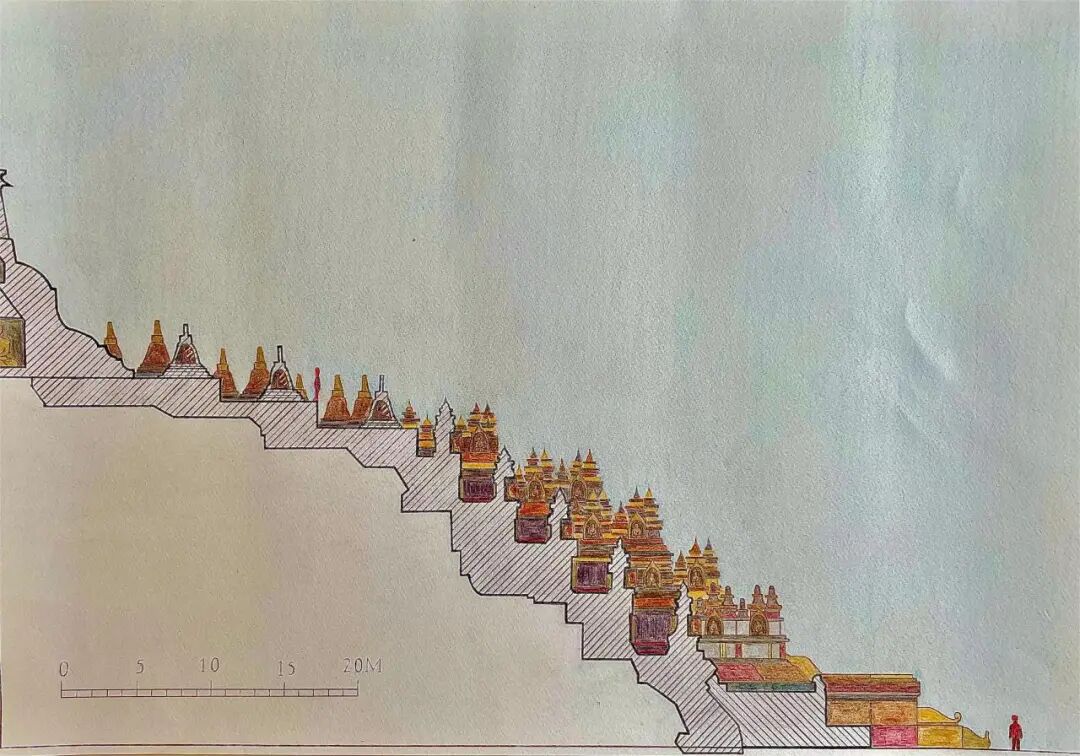
Cross Section of Borobudur, Jogyakarta, Java, Indonesia, 842 CE
婆罗浮屠剖面,日惹,爪哇,印度尼西亚,公元842年
BY
ZOLE ANJA
安佳
As the child of a sculptor and an engineer, architecture perfectly combines both of her parents' passions. My creative journey began with dental prostheses and braces, black-and-white movies, ceramic mugs, and old book restoration. As an architect, I aspire to grow, evolve, and mature, and I believe that Tongji University is the ideal “parent” for this journey.
作为雕塑家和工程师的子女,建筑将她父母的激情完美地融合在一起。安佳的创意之旅始于义齿和牙套、黑白电影、陶瓷杯和修补旧书。作为一名建筑师,她渴望成长、进化和成熟,而她相信同济大学是这段旅程的完美 父母。
Object Description
作品描述
Lighting plays a huge part in the color of Borobudur. When illuminated by direct sunlight, the structure appears to have just brown and yellowish shades; however, when there is a lack of sunshine, the structure ranges from dark to light grey.
I used color pencils because this drawing is highly detailed and miniature, so they seemed appropriate for the occasion. Also, using different pencil hues and values helped me stay organized in my drawings. The placement of stupas, balustrades, and niches is critical for this portion. I used the line function to split the front and back, with the frontal part highlighted with a ticker and a darker line than the back.
光线对颜色有很大影响。在阳光直射下,婆罗浮屠只有棕色和淡黄色的色调,而在缺乏阳光的情况下,它的颜色则为深浅不一的灰色。我使用彩色铅笔进行上色,因为我的作品需要表现许多细节,因此我认为彩铅最为合适。此外,多种颜色的铅笔使我能有条理地作画。佛塔、栏杆和壁龛的位置对剖面图来说非常重要。我用轮廓线区分前景和背景,前景部分用粗轮廓线突出。
滑动查看更多
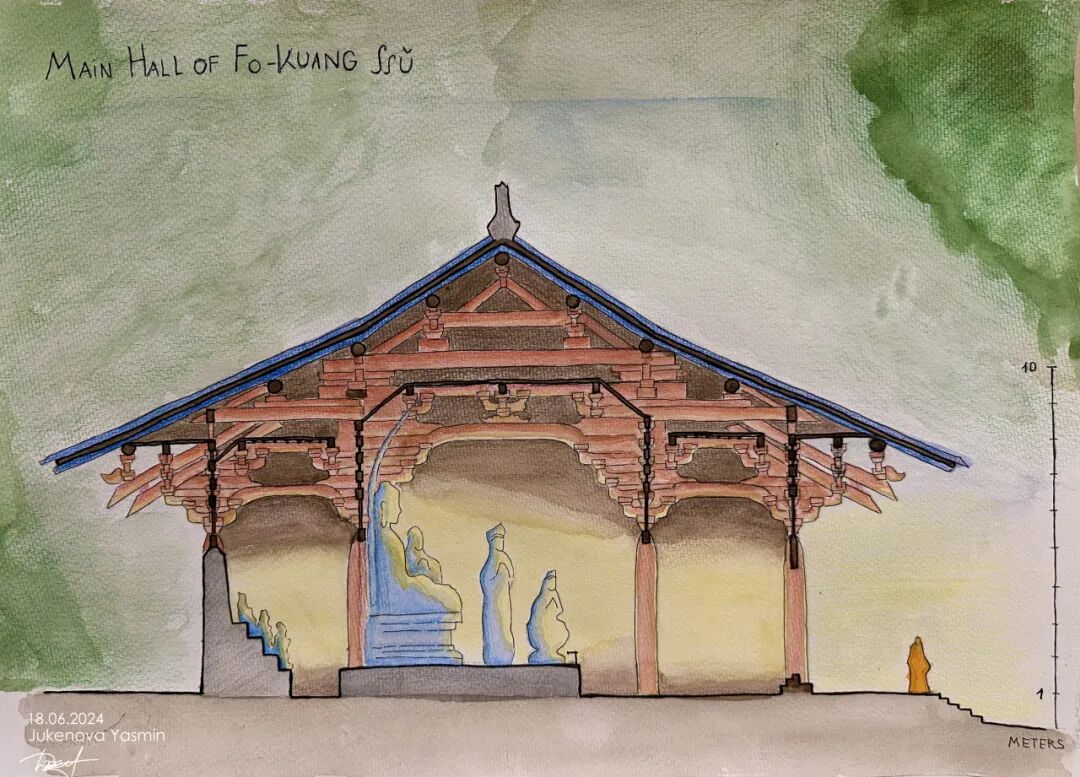
Cross section of the Main Hall of Foguang Temple (佛光寺大殿), Shanxi Province, China, 857 CE
佛光寺大殿剖面,山西,中国,公元 857 年
BY
JUKENOVA YASMIN
雪丽
Yasmin Jukenova is an enthusiastic student from Kazakhstan who is passionate about architecture. She is eager to immerse herself in this subject and hopes to contribute to the development of the fascinating world of architecture. She also enjoys collecting souvenir fridge magnets from around the world, through which she continually extends her collection and knowledge.
雪丽来自哈萨克斯坦,对建筑充满热情。她渴望沉浸在这一领域,为迷人的建筑世界做出贡献。除了对建筑感兴趣,她还喜欢收集世界各地的纪念冰箱贴,不断扩大自己的收藏和知识面。
Object Description
作品描述
Light filters through the latticed windows, casting gentle illumination upon the graceful lines of the interior space of the main hall of Foguang Temple. “Foguang” literally means “Buddha light.” Buddha’s glow is a source of inspiration and guidance in a quiet, dark space, and this leads to my idea for the drawing. The interaction of light enhances the sense of sacredness and intimacy. Consequently, a large part of my color scheme is composed of pale yellow, which stands for light. Overall, the use of imitative and conventional colors, including complementary ones, achieved a balanced scheme. The reddish-orange color imitates the material of the timber framework. Light blue goes for the statues as it is associated with calmness, spirituality, and inspiration. Green represents the adjacent natural environment of the building—a densely forested mountain that positively influences the mental state. My objective was not only to showcase the features of the main hall but also to deliver the religious and philosophical meaning of the temple.
光线透过直棂窗,柔和地照在佛光寺大殿室内优美的建筑线条上。佛光意为”佛的光芒“。在宁静黑暗的空间里,佛光是向导和灵感之源,这引出了我绘画的构思。光增强了神圣感和亲切感,因此我的作品中大面积使用了代表光的浅黄色。总体来说,画面中的模仿色和对比色形成了平衡。橘红色模仿了建筑结构的材料——木材。对于雕像,我使用了代表平静和灵性的浅蓝色。绿色用以表示建筑周围的环境——茂密的山林,这对人的精神状态有积极的影响。我不仅想展示建筑的特色,还想通过画面传达寺庙的宗教和哲学含义。
滑动查看更多
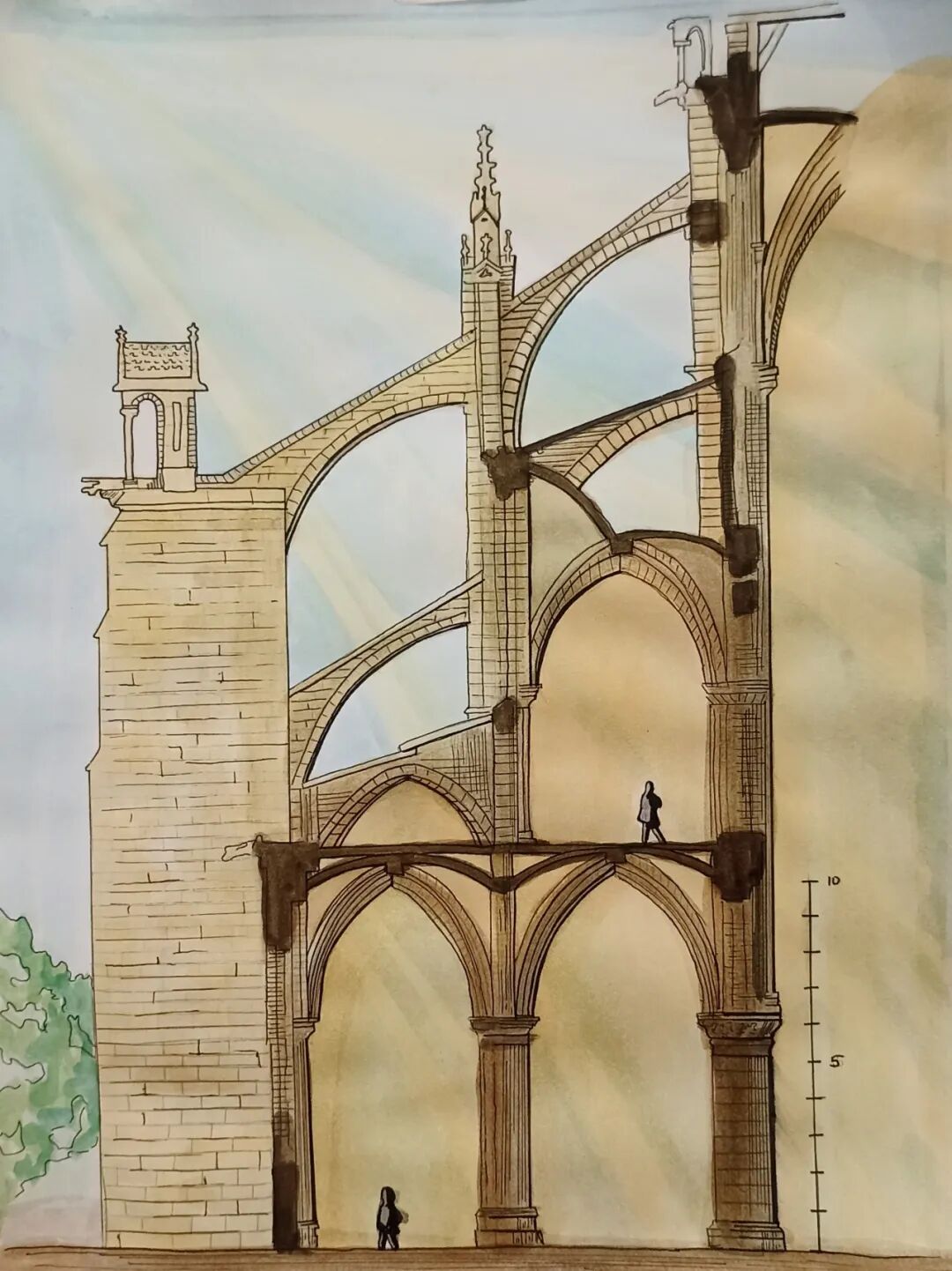
Sections of Notre-Dame de Paris (partial), Paris, France, 1163–1345
巴黎圣母院部分(部分),巴黎,法国,1163-1344年
BY
BORISOVA MARIA
波利索娃
Borisova Maria is an architecture student from Moscow, Russia. She is energetic and has many hobbies and interests, including reading, photography, mountain skiing, and sailing. She is excited to explore the world and experience everything it has to offer.
波利索娃是一名来自俄罗斯莫斯科的建筑学学生,性格活泼,兴趣广泛,从阅读、摄影到滑雪和帆船,样样涉猎。她渴望游历世界,体验各种不同的生活。
Object Description
作品描述
Notre-Dame de Paris, which was constructed in the 12th century and boasts a rich and captivating history, stands as one of the most remarkable Gothic cathedrals in the world. It continues to be a globally cherished and iconic landmark despite all the disasters and social upheavals it has suffered, including the French Revolution, World War II, and a devastating fire in 2019. I aimed to capture the cathedral's beauty through precise and accurate details that contribute to its distinctiveness and beauty. My goal was to create a clear representation that emphasized the cathedral itself without any unnecessary distractions.
巴黎圣母院建于12世纪,是世界上最令人赞叹的哥特式大教堂之一。尽管经历了多次灾难和毁坏,包括法国大革命、第二次世界大战以及2019年的毁灭性火灾,巴黎圣母院依然是全球人民珍视的标志性建筑。我力求通过精细和准确的表达来捕捉这座建筑的美丽,展示她独特的细节。我的目标是以清晰的形式突出大教堂本身,避免不必要的干扰。
滑动查看更多
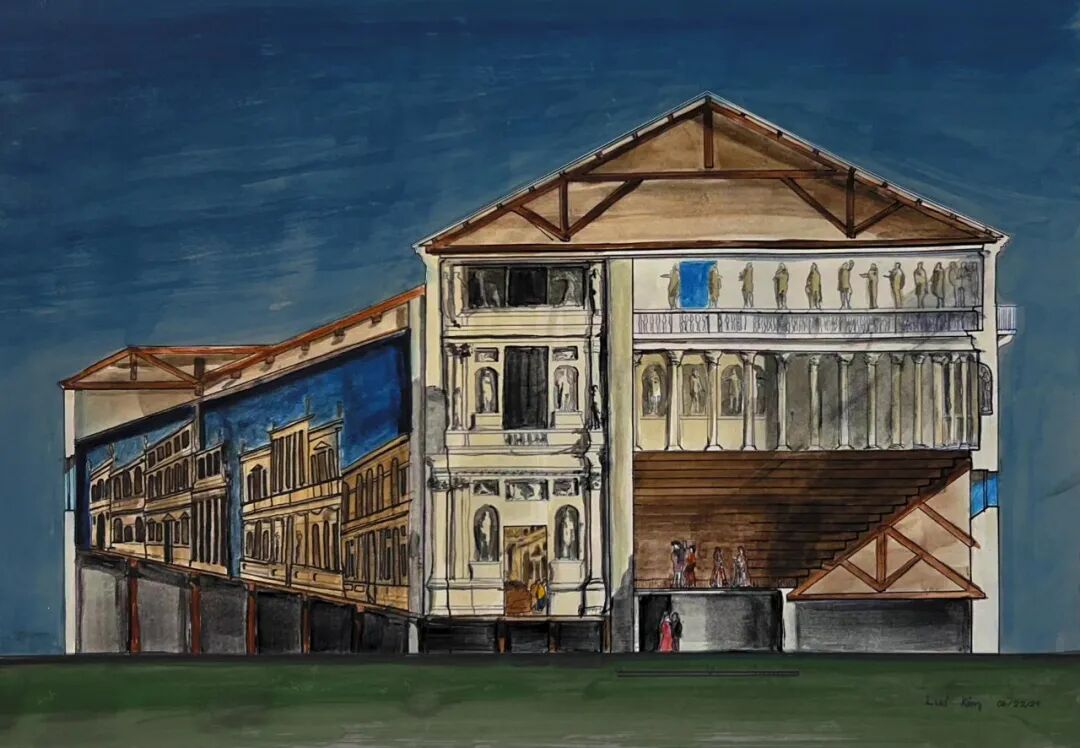
Cross section of Teatro Olimpico, Vicenza, Italy, 1580–1585
奥林匹克剧院的剖面,维琴察,意大利,1580-1585年
BY
KIM LUI
金路易
Lui Kim is an architecture student from South Korea. He enjoys deepening his understanding of architecture through history, design, and experience to discover its meaning.
金路易是一名来自韩国的建筑系学生。他希望通过历史、设计和实践来加深对建筑的理解,找到其内在的意义。
Object Description
作品描述
The Teatro Olimpico (1580–1585) in Vicenza, the world's oldest indoor theatre and the final work of Renaissance master Andrea Palladio (1508–1580), was completed by Vincenzo Scamozzi (1552–1616). It remains the iconic representation of classical Vitruvius building codes and perspective ingenuity.
My work is a watercolor and liner painting that transcribes Ottavio Bertotti Scamozzi’s sectional drawing of Teatro Olimpico from 1776. I used colors, lines, and users to represent the space, material, and illusionary design of the theater. Brown highlights the wood's importance to structure and acoustics, and lines and shadows within the oval seatings showcase the depth and subsequent sound projection. A subtle yellow hue on the statues and stage, appearing as marble, represents their actual formation of swamp reeds, tow, earthenware and mortar. Unusual for theaters at the time, only the aristocracy could use Teatro Olimpico. After staging Oedipus Rex, the Accademia, who sponsored the project, viewed the temporary stage as a precious piece of architecture. Thus, it has been preserved today since its inauguration, as is the awe of the spectators.
维琴察的奥林匹克剧院(1580-1585年)是世界上最古老的室内剧院,也是文艺复兴时期建筑大师安德烈亚-帕拉迪奥(Andrea Palladio,1508-1580 年)的最后作品,由文森佐-斯卡莫齐(Vincenzo Scamozzi,1552-1616 年)完成。
我的作品以Ottavio Bertotti Scamozzi 1776 年绘制的奥林匹克剧院剖面图为底图,利用色彩、线条和使用者来强化空间、材料和“视觉陷阱”的设计意图。棕色突出了木材对结构和音响效果的重要性,椭圆形座椅上的线条和阴影则展示了空间深度和声音的投射。雕像和舞台上微妙的黄色看似大理石,其实是由沼泽芦苇、丝束、陶器和灰泥制成的。在当时,只有贵族才能使用这座剧院。它的开幕典礼上演了《俄狄浦斯王》,为此而搭建的临时舞台被剧院的所有者奥林匹克学院认为是一件珍贵的作品而得以保留至今,见证了历代观众的敬畏之情。
滑动查看更多
Yin Yu Tang House, Peabody Essex Museum, Boston, USA, initially built in southeastern Huizhou region, China, late 18th century
荫余堂剖面,美国波士顿皮博迪埃塞克斯博物馆,最初建于18世纪末中国徽州东南部
BY
TIOCUARDY WINNIE
张沛晶
Winnie Tiocuardy, born in Indonesia, is an architecture student with an insatiable curiosity about the world. She loves exploring and discovering new horizons and constantly seeks to broaden her experiences and perspective.
张沛晶出生于印度尼西亚,是一名对世界充满好奇心的建筑系学生。她喜欢探索和发现,不断拓宽自己的经验和视野。
Object Description
作品描述
In this drawing, the essence of Yin Yu Tang house is captured by employing the concept of imitative colors. The wooden elements were depicted in brown, while the tiled roof was depicted in grey. A focal point is used in the center of the space to emphasize the main hall, a critical feature of the ground floor that was the site of ancestral worship and other significant rituals. Yellow was used not only to denote reverence and significance but also to provide a sense of warmth and illumination to the area, thereby indicating its function as the core of the family.
在这幅作品中,我通过使用接近真实的色彩来表现荫余堂的建筑精髓。暖棕色表现木材,屋顶使用了灰色。厅堂是祭祀祖先和举行重要仪式的场所,我使用了浅黄色,并在图纸中间绘制了一个焦点,从厅堂的中心辐射开来,吸引人们关注这一区域。黄色不仅象征重要和崇敬,还为空间带来温暖和明亮的感觉,表明其为家庭的精神核心。
滑动查看更多
Cross Section of Villa Müller, Prague, Czech, Adolf Loos, 1930
穆勒住宅剖面图,布拉格,捷克,阿道夫·路斯,1930年
BY
DATO LARA NICOLE
妮可
Thriving on exploring new avenues to fuel her creativity, Lara Nicole Dato is an architecture student from the Philippines who enjoys doing art and playing badminton. Aside from her passion for green architecture, she also values the minute elements that designers add to improve the user experience.
妮可是一名来自菲律宾的建筑系学生,她喜欢通过探索新的途径来激发自己的创造力。她喜欢制作艺术品和打羽毛球。除了对绿色建筑感兴趣之外,她还非常欣赏设计师在提升用户体验时加入的巧妙设计。
Object Description
作品描述
Villa Müller, which was commissioned in 1929 as a residence for František Müller, is a primary example of Adolf Loos’s Raumplan concept. The architectural form of this project combines numerous rectilinear forms piled orthogonally. The façade is plain, white concrete, and the windows are irregular in shape, as they are designed to accommodate the interior function. As Loos always preferred to use materials in their purest forms, I selected red, yellow, and blue (the purest colors) to distinguish between public and private areas within the house.
穆勒别墅始建于1929年,是阿道夫·卢斯“空间体积规划”(Raumplan)概念的体现。这座建筑由许多正交堆叠的直角形组成,拥有朴素的白色混凝土外墙和不规则的窗户,以满足其内部功能的需要。由于卢斯喜欢保持材料最纯粹的形式,因此我采用了最纯粹的颜色,即红色、黄色和蓝色,以区分建筑内部的公共空间和私人空间。
滑动查看更多