学院介绍
学院介绍
新闻中心



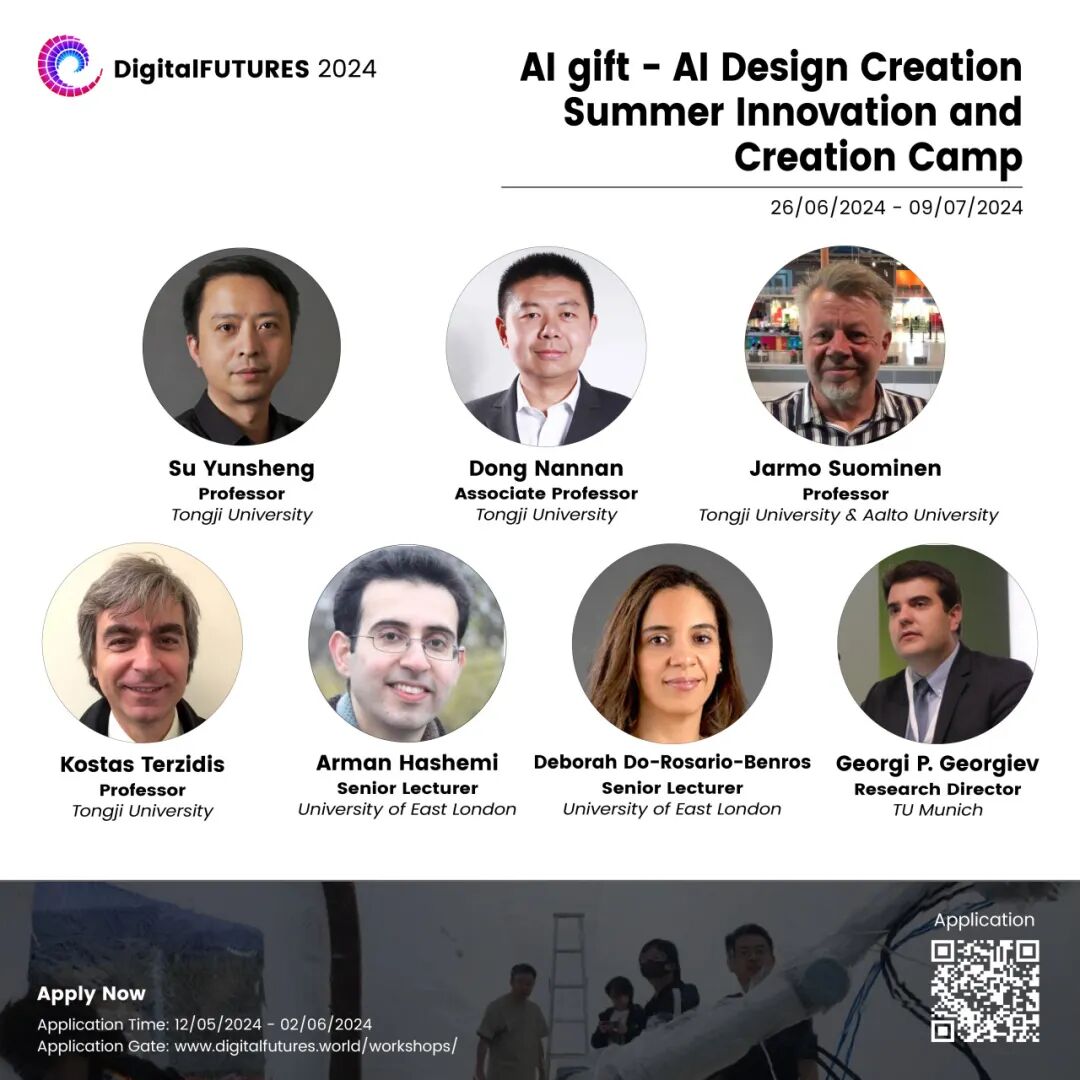
Ai的礼物——AI设计造物暑期创新创造营
Ai gift -- AI Design Creation Summer Innovation and Creation Camp
同济大学
苏运升 | 董楠楠 | Jarmo Suominen | Kostas Terzidis | Arman Hashemi | Do-Rosario-Benros | Georgi P. Georgiev
6.26 - 7.9 | 线下工作营 | 英文



主题
随着AIGC技术的日益成熟,内容创作呈现出前所未有的开放形式,不同个体创作的文字、图像、视频等大量涌入公共领域,引起了公众对人机协作和权责分工的关注和思考。
With the increasing maturity of AIGC technology, content creation has taken on an unprecedentedly open form, with text, images, and videos created by diverse individuals flooding the public domain, which aroused the public's concern and reflection on human-machine collaboration and the division of responsibilities and rights.
内容
在信息技术和能源利用日益受到重视的背景下,智能建筑、模块喷膜施工等前沿技术日益显示出优势,给各个领域带来新的机遇。特别是太阳能住宅,作为环保建筑的代表,可以有效利用太阳能资源,降低能源消耗,提供舒适环保的居住环境。
Against the background of the increasing importance of information technology and energy use, cutting-edge technologies, such as intelligent construction and module-membrane spraying construction, are increasingly showing their advantages and bringing new opportunities to various fields. In particular, solar houses, as representatives of eco-friendly buildings, can effectively use solar energy resources, reduce energy consumption, and provide a comfortable and environmentally friendly living environment.
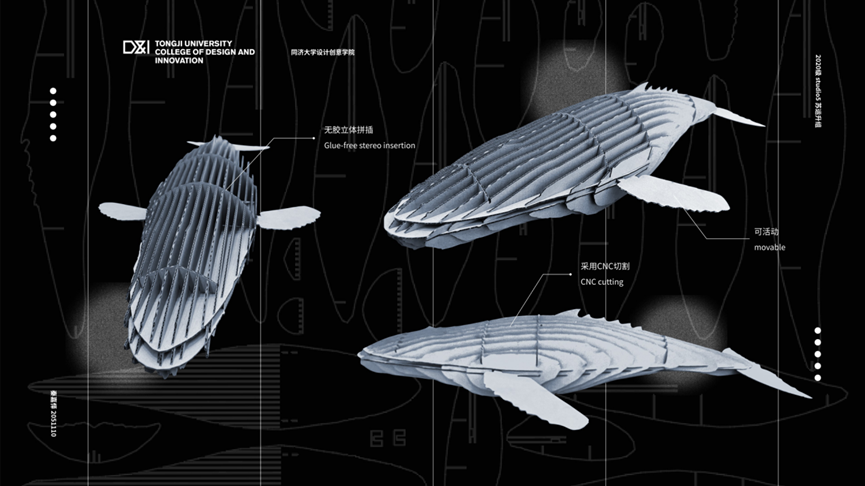
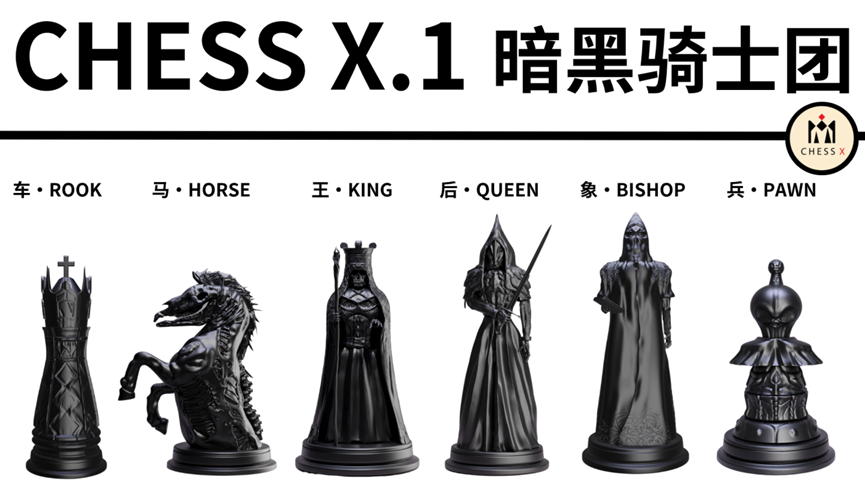
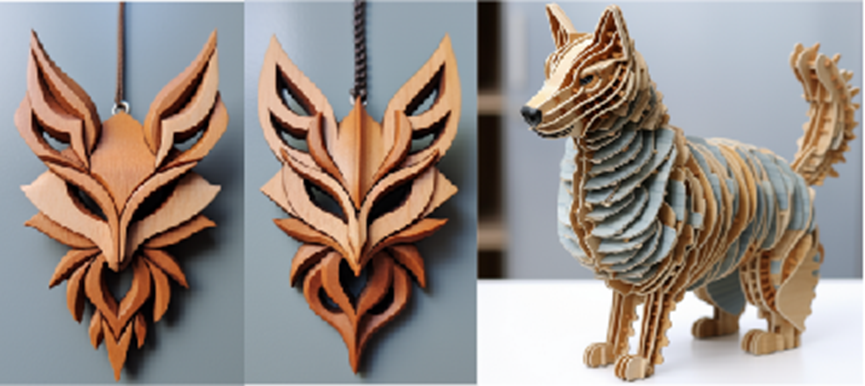
本次工作营汇聚了国内外专家与实践企业,旨在探索人机协同在智能建造、模膜喷筑、太阳能房屋及AI造物等领域的创新路径。我们将结合AIGC技术特点,开发适用于细分场景的AI工具,搭建众创设计转化平台,推动产业转化。
This time, the workcamp brings together domestic and foreign experts and enterprises, aiming to explore the innovation path of human-machine collaboration in the fields of intelligent construction, module-membrane spraying construction, solar house and AI creation. We will combine the characteristics of AIGC technology, develop AI tools suitable for subdivision scenarios, build a platform for mass innovation and design transformation, and promote industrial transformation and upgrading.
平台将引导用户,特别是设计师和消费者,积极参与内容完善与产业转化。我们将探索高效设计工作流程,让AI成为设计实践的助手,促进设计学科与实际生活的融合。
The platform will guide users, especially designers and consumers, to actively participate in content improvement and industrial transformation. We will explore efficient design workflows, make AI an assistant of design practice, and promote the integration of design disciplines and real life.
此外,我们还将关注智能建筑和太阳能房屋的发展趋势,研究人工智能技术在提高建筑效率和优化能源利用方面的应用,为可持续发展做出贡献。
In addition, we will also pay attention to the development trend of smart construction and solar houses, and study the application of AI technology in improving construction efficiency and optimizing energy utilization, contributing to sustainable development.
我们相信,这次夏令营将促进中国学生与国际学生之间的文化交流和了解,加深国际学生对中国的印象。这将促进中国和国际青年创造友好美好的未来,为设计学科的发展注入活力,助力生态建筑和可持续发展事业。
We believe that this workshop will promote cultural exchange and understanding between Chinese and international students, deepen international students' impression of China. This will promote Chinese and international youth to create a friendly and bright future, inject vitality into the development of the design discipline, and help the cause of eco-friendly building and sustainable development.
课程
在AIGC技术背景下,以人机协同创新为核心,成功汇聚国内外专家学者和实践企业,探索大众创新的设计与实践路径。通过设计实践,我们不仅在专业领域构建了具有定制能力、与场景匹配的AI工具,还搭建了大规模的设计转型平台,深入研究了AIGC的产业转型路径。用户,特别是设计师和消费者的积极参与,使人工智能生成的内容进一步细化和行业转型,推动更高效的设计工作流的形成。
Under the background of AIGC technology, with human-machine collaborative innovation as the core, this workshop successfully gathers domestic and international experts, scholars and practicing enterprises to explore the design and practice path of mass innovation. Through design practice, we not only structure AI tools with customization capability and matching with the scene in the professional field, but also built a mass design transformation platform, which deeply studies the industrial transformation path of AIGC. The active participation of users, especially designers and consumers, enables the further refinement and industry transformation of AI-generated content, driving the formation of more efficient design workflows.
依托同济-台州黄岩合作平台和同济大学教授开发的AIGC平台MuseDAM,实现AIGC2M的全过程研究。同时,通过邀请国内外专家学者开设专业课程和国际设计前沿讲座,组织文化交流活动,加强国际跨学科团队之间的合作学习和学术交流,拓宽学术视野,提出创造性的解决方案和机制。
Relying on the Tongji-Taizhou Huangyan cooperation platform and the MuseDAM, an AIGC platform developed by a professor in Tongji University, this workshop will realize the whole process research of AIGC2M. At the same time, by inviting domestic and foreign experts and scholars to set up professional courses and international design cutting-edge lectures, and organizing cultural exchange activities, we will strengthen cooperative learning and academic exchanges among international interdisciplinary teams, broaden academic horizons, and put forward creative solutions and mechanisms.
这次工作营不仅是一次知识的交流,也是一次行动的号召。我们共同设计与创造,将理念转化为实践,为设计学科与大众和实际生产生活的紧密结合提供了强有力的支持。展望未来,我们将推动人机协同设计创新机制的发展,推动AIGC实体的转型,使设计的影响更加广泛和深远。
This workcamp is not only an exchange of knowledge, but also a call to action. We jointly design and create, and transform the concept into practice, providing strong support for the close integration of the design discipline with the public and actual production and life. Looking forward to the future, we will promote the development of human-machine collaborative design innovation mechanisms, promote the transformation of AIGC entities, and make the influence of design more extensive and far-reaching.
关键词:
Digital architecture, membrane shell, AI creation, solar sustainability
技能要求:
Rhino,Grasshopper,AI software
软件需求:
Rhino,AI software(Midjourney、stable Diffusion and so on)
硬件要求:
笔记本电脑
学员数量:
20
现在报名

更多工作营信息可访问:
www.digitalfutures.world/
工作营导师
苏运升
同济大学
教授
上海国际设计创新研究院执行院长,德国达姆施坦大学兼职教授。擅长跨学科,跨尺度的人工智能城市的策划规划及城市内部智能空间产品和服务体系的创新设计。全程参与了上海 2010 年世博会的规划和设计,之前参与了北京通州副中心概念规划,也包括江南六镇在内的众多历史村镇的保护与发展规划,之后又参与过安哥拉、赞比亚、俄罗斯近 10 个国际城市的规划项目。
Executive Dean of Shanghai International Design Innovation Research Institute and adjunct professor at Damstein University in Germany. Proficient in interdisciplinary and cross scale planning of artificial intelligence cities, as well as innovative design of intelligent spatial products and service systems within cities. Participated in the planning and design of the 2010 World Expo in Shanghai throughout the entire process. Previously, participated in the conceptual planning of the Tongzhou Sub Center in Beijing, as well as the protection and development planning of many historical villages and towns, including the six towns in Jiangnan. Later, participated in planning projects for nearly 10 international cities in Angola, Zambia, and Russia.
董楠楠
同济大学
副教授
他正在协调中德BMBF在绿色基础设施和生态修复、低碳城市设计和资源循环利用领域的一系列项目。他一直专注于为中国的低碳发展研发跨学科的绿色技术。主要研究方向:高密度城市建筑绿地表现与营造、乡村生态空间精准修复技术、基于双碳发展目标的能源景观综合绿色技术。
He is coordinating series of Sino-German BMBF projects in the field of green infrastructure and ecological restoration, low-carbon urban design and resource recycling.
He has been focusing on the R&D of interdisciplinary green technology for Chinese low carbon development. His research interests include the performance and construction of building greenery in high-density cities, precise restoration technology for rural ecological space, and energy landscape integrated green technology based on the goal of double carbon development.
Jarmo Suominen
同济大学 & 阿尔托大学
教授
Jarmo Suominen 拥有建筑和设计背景,并且在这两个领域工作。他对建筑和设计中的服务逻辑的研究将以新颖且可持续的方式实现服务驱动的城市发展。目前的研究重点是基于服务逻辑和创新的新的学习、工作和生活方式。他领导的研究项目获得了大量资助和价值超过 500 万欧元的资助。他对学术要求和商业生活的实用性都有深刻的理解。他领导了工业界、学术界和公共组织的各种跨学科项目。Jarmo Suominen 曾多次赢得建筑竞赛,并在 20 个建筑和设计竞赛中获奖。
Jarmo Suominen has background from Architecture and Design and is working in both of these fields. His research on service logic in architecture and design will enable service driven urban development in novel and sustainable way. Current research is focusing on the new ways of learning, working, and living based on service logic and innovation. He has received numerous grants and over 5 million euros worth of funding for research projects he has led. He has strong understanding both of academic requirements and practicalities of business life. He has led various multidisciplinary projects among industry, academia and public organizations. Jarmo Suominen has won numerous architectural competitions and has got prizes from 20 architectural and design competitions.
Kostas Terzidis
同济大学
教授
此前,他曾担任哈佛大学设计研究生院副教授(2003-2011)和加州大学洛杉矶分校助理教授(1995-2003)。他拥有密歇根大学的博士学位、俄亥俄州立大学的硕士学位和亚里士多德大学的工程文凭。他的专业领域是语言、算法设计和人工智能。他是多篇学术论文的作者,也是四本学术书籍的唯一作者:《排列设计》(Routledge:2014)、《视觉设计算法》(Wiley:2009)、《算法架构》(Architectural Press:2006)和《表达形式》(Spon:2003)。他是 2008 年和 2009 年在哈佛大学举行的两次关键数字会议、2011 年的一次 Algode 会议以及 2019 年和 2021 年在同济大学关于设计/艺术和人工智能的两次 D&I 会议的组织者。2010年,他被授予ACADIA数字设计创新研究奖,并于2019年获得高端外国专家奖。2011 年至 2017 年间,他创办并经营了一家名为 Organic Parking, Inc. 的初创公司,该公司通过使用智能手机进行停车优化。
Previously, he was an associate professor at Harvard University Graduate School of Design (2003-2011) and assistant professor at the University of California at Los Angeles (1995-2003). He holds a PhD from the University of Michigan, a Masters from Ohio State University, and an engineering diploma from Aristotle University. His areas of concentration are language, algorithmic design, and AI. He is author of numerous academic papers and the sole author of four academic books: Permutation Design (Routledge: 2014), Algorithms for Visual Design (Wiley: 2009), Algorithmic Architecture (Architectural Press: 2006), and Expressive Form (Spon:2003). He is the organizer of two Critical Digital Conferences at Harvard in 2008 and 2009, one Algode conference in 2011, and two conferences at Tongji’s D&I on design/art and AI in 2019 and 2021. In 2010 he was awarded the ACADIA award for innovative research in digital design and in 2019 the high-end foreign expert. Between 2011-2017 he launched and ran a startup company called Organic Parking, Inc. that dealt with parking optimization through the use of smart phones.
Arman Hashemi
东伦敦大学
高级讲师
Hashemi 博士拥有英国卡迪夫大学威尔士建筑学院的博士学位以及伊朗德黑兰大学的建筑学硕士和学士学位。完成博士学位后,他加入伦敦大学学院巴特利特建筑学院担任博士后研究员,设计并建造了一个屡获殊荣的专利自动化建筑热快门系统。随后,他加入剑桥大学,担任首席博士后研究员,从事 EPSRC/DFID/DECC 资助的 75 万英镑研究项目:“能源和低收入热带住房”。
Hashemi 博士是高等教育学院 (FHEA) 院士、特许管理学院 (MCMI) 会员、英国特许建筑技术专家学会 (ACIAT) 准会员以及伊朗建筑工程师组织会员。
他目前正在监督三个受资助的博士项目,包括:健康住宅:改善居住者健康和福祉的设计和改造策略;EPSRC 资助了“为历史教堂改造空间供暖系统:满足保护、社区和环境可持续性的需求”的博士项目。SEAHA(艺术遗产和考古学科学与工程)是 EPSRC 资助的博士研究培训项目,由伦敦大学学院、牛津大学和布莱顿大学合作。
Dr Hashemi holds a PhD from the Welsh School of Architecture, Cardiff University, UK and an MSc and BSc in Architecture from University of Tehran, Iran. After completing his PhD, he joined the Bartlett School of Architecture at UCL as a postdoctoral research associate and designed and built an award-winning patented automated Thermal Shutter System. He then joined the University of Cambridge as the lead postdoctoral researcher working on a £0.75m EPSRC/DFID/DECC funded research project: Energy and Low-Income Tropical Housing.
Dr Hashemi is a Fellow of the Higher Education Academy (FHEA), a Member of the Chartered Management Institute (MCMI), an Associate Member of the Chartered institute of Architectural Technologists (ACIAT), and a Member of the Iranian Construction Engineers Organisation.
He is currently supervising three funded PhD projects including: Healthy Homes: Design and retrofit strategies for improved occupants' health and wellbeing; and EPSRC funded PhD project on 'Retrofitting space heating systems for historic churches: meeting the needs of conservation, community and environmental sustainability.' SEAHA (Science and Engineering in Arts Heritage and Archaeology) is an EPSRC funded PhD research training programme as a collaboration between UCL, Oxford and Brighton.
Deborah Do-Rosario-Benros
东伦敦大学
高级讲师
她拥有伦敦大学学院巴特利特学院 (UCL) 的博士学位,并且是麻省理工学院 (MIT) 的访问学生。
她在里斯本大学获得了建筑学硕士学位,并在那里教授设计工作室和计算机辅助设计。在实践中,她曾在多家建筑事务所工作,包括 Foster and Partners 和 Arup。
作为康奈尔大学的客座教授,她教授设计工作室和一门选修课程,重点关注她的研究领域,其中包括:形状语法和住房的大规模定制。
在UEL,她担任技术研究和代表方面的高级讲师。
Deborah Benrós is an ARB/RIBA UK registered architect and researcher.
She holds a doctorate from University College London - The Bartlett School (UCL) and was a visiting student at the Massachusetts Institute of Technology (MIT).
She attained a Masters in architecture from University of Lisbon, where she also taught design studio and computer aided design. In practice, she worked at several architectural offices including Foster and Partners, and Arup.
As visiting faculty at Cornell University, she taught design studio and an elective course focusing on her research field which includes: shape grammars and mass customisation of housing.
At UEL, she occupies a role of Senior Lecturer in Technical Studies and representation.
Georgi P. Georgiev
慕尼黑工业大学
研究主管
格奥尔基·p·格奥尔基耶夫教授,德国城市规划师,可持续建设和智慧城市管理专家,1987年1月22日出生。他毕业于亚琛工业大学,并获得弗劳恩霍夫/SRTI-BAS城市空中交通博士学位。Georgiev拥有丰富的职业生涯,包括在Fraunhofer IBP担任职务,在斯图加特大学担任学术职位,并在中国担任访问教授。他是Dr. Georgiev Consulting GmbH的首席执行官,在德国和欧盟提供c级咨询服务。他还是慕尼黑工业大学和先进空中机动研究所的研究主任,以及哈萨克斯坦的生产教授。格奥尔基耶夫精通德语、英语和保加利亚语,并因其在多学科创新团队中的领导地位和对欧盟标准化组织的贡献而受到认可。
Prof. Dr. Georgi P. Georgiev is a German urban planner and expert in sustainable construction and smart city management, born on January 22, 1987. He graduated with degrees from RWTH Aachen University and has a PhD from Fraunhofer/SRTI-BAS on urban air mobility. Georgiev has a rich career, including roles at Fraunhofer IBP, academic positions at the University of Stuttgart, and visiting professorships in China. He is CEO of Dr. Georgiev Consulting GmbH, offering C-level consultancy services in Germany and the EU. He is also a Research Director at TU Munich and the Advanced Air Mobility Institute, and a Production Professor in Kazakhstan. Georgiev is fluent in German, English, and Bulgarian, and is recognized for his leadership in multidisciplinary innovation teams and contributions to EU standardization.
日程安排
第一天 / 6月26日:抵达上海
•上午:抵达上海,前往酒店办理入住手续,休息调整时差。
•下午:适应环境,可在附近散步,体验上海的都市风情。
•晚上:品尝上海特色美食,如小笼包、生煎包等。
第二天 / 6月27日:参观同济大学范凌老师工作室
•上午:乘车前往参观同济大学,参观特赞,了解其AIGC设计平台与作品。
•下午:与范凌老师及工作室成员交流,探讨设计领域的最新动态与趋势。
•晚上:自由活动,可选择游览上海夜景,如外滩、陆家嘴等。
第三天 / 6月28日:参观黄浦文旅
城市数据采集预处理
Urban data collection and processing
第四天 / 6月29日:Digital FUTURES开幕式
•上午:参加Digital FUTURES开幕式。
•下午:收听讲座、团队分组
•晚上:可组织团队建设活动或自由交流,加深团队成员之间的了解与合作。
第五天 / 6月30日:前往台州黄岩
•上午:乘车前往台州黄岩
•下午:抵达后,安排入住当地酒店,休息调整状态。
•晚上:自由活动,漫步黄岩,感受当官河古街的风土人情。
第六天 / 7月1日:黄岩工厂参观与工作坊体验
•上午:参观黄岩的工厂,了解当地的工业制造与技术创新,包括生产线流程、产品制造过程等。(两轮车、三轮车工厂)
•下午:参与工作坊,与当地工匠共同创作,学习传统工艺与AI技术的结合应用。
•晚上:可组织团队建设活动或自由交流,加深团队成员之间的了解与合作。
第七天 / 7月2日:黄岩工厂参观与工作坊体验
•上午:参观黄岩的工厂,了解当地的工业制造与技术创新,包括生产线流程、产品制造过程等。(小商品制造工厂)
•下午:参与工作坊,与当地工匠共同创作,学习传统工艺与AI技术的结合应用。
•晚上:可组织团队建设活动或自由交流,加深团队成员之间的了解与合作。
第八天 / 7月3日:黄岩工厂参观与工作坊体验
•上午:参观黄岩的工厂,了解当地的工业制造与技术创新,包括生产线流程、产品制造过程等。(塑料制品制造工厂)
•下午:参与工作坊,与当地工匠共同创作,学习传统工艺与AI技术的结合应用。
•晚上:可组织团队建设活动或自由交流,加深团队成员之间的了解与合作。
第九天 / 7月4日:返回上海
•上午:乘车返回上海,途中回顾在黄岩的点滴经历。
•下午:抵达上海后,安排休息调整,为接下来的活动做好准备。
•晚上:准备第二天Digital FUTURES汇报
第十天 / 7月5日:作品完善
•上午:展览场地参观,规划展览布局及参展内容
•下午:准备展览材料
•晚上:团队成员进行布展进度讨论,总结当天工作,安排次日任务。
第十一天 / 7月6日:布展准备与细节调整
•上午:进行初步布展,将大型展品或重要元素放置在指定位置,进行初步调试。
•下午:进行细节调整,如标签、介绍文字等内容的检查和补充。
•晚上:自由活动,可选择参观其他文化场所或体验上海的夜生活。
第十二天 / 7月7日:DigitalFUTURES 汇报与总结
•上午:参加Digital FUTURES的汇报会议,与参与者分享在黄岩的所见所闻与心得体验,交流学习成果。
•下午:参加Digital FUTURES的汇报会议,与参与者分享在黄岩的所见所闻与心得体验,交流学习成果。
•晚上:团队交流,准备布展
第十三天 / 7月8日:自由活动
•全天:可自由参观游览上海
第十四天 / 7月9日:返程回国
•上午:办理退房手续,前往上海国际机场。
•下午:乘坐国际航班回国,结束愉快的暑期短期项目之旅。
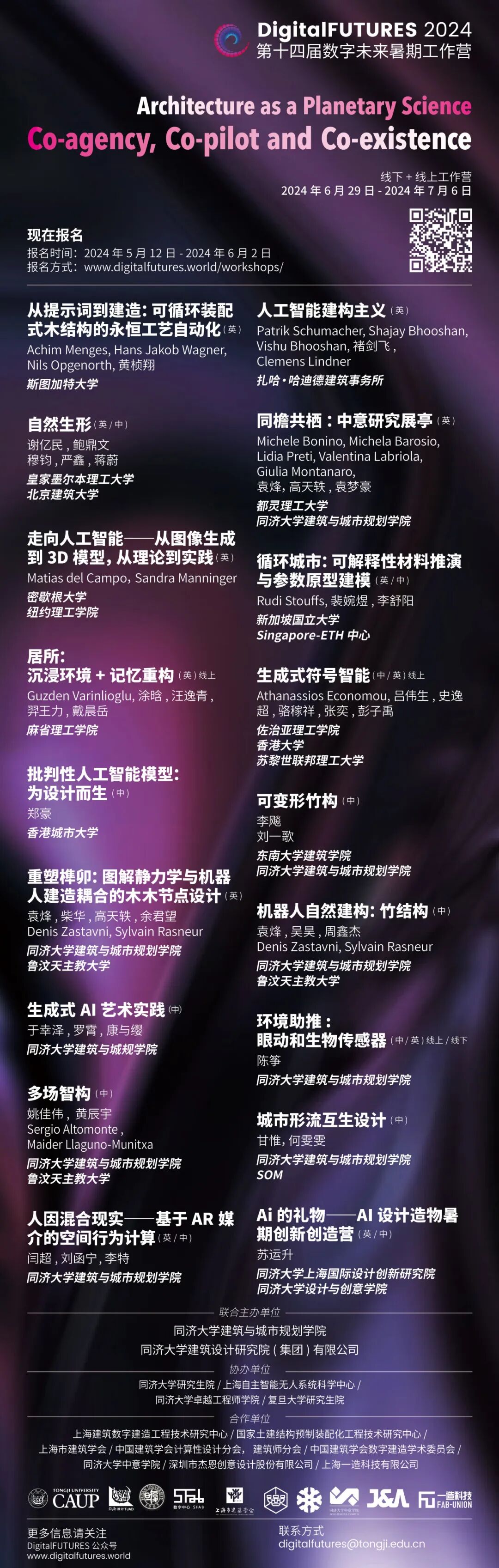
DigitalFUTURES 2024
学术支持
联合主办单位
同济大学建筑与城市规划学院
同济大学建筑设计研究院(集团)有限公司
协办单位
同济大学研究生院
上海自主智能无人系统科学中心
同济大学卓越工程师学院
复旦大学研究生院
支持单位
上海建筑数字建造工程技术研究中心
国家土建结构预制装配化工程技术研究中心
上海市建筑学会
中国建筑学会计算性设计分会, 建筑师分会
中国建筑学会数字建造学术委员会
同济大学中意学院
深圳市杰恩创意设计股份有限公司
上海一造科技有限公司
支持媒体
Architectural Intelligence | 建筑学报 | 时代建筑 | 世界建筑 | Architecture China | 西部人居环境学刊 | 南方建筑 | 建筑技艺 | 建筑实践 | 有方 | 谷德设计网 | ArchDaily | Dezeen
—THE END—
来源 | DigitalFUTURES